How to plan a kitchen work triangle, and why the concept still holds up
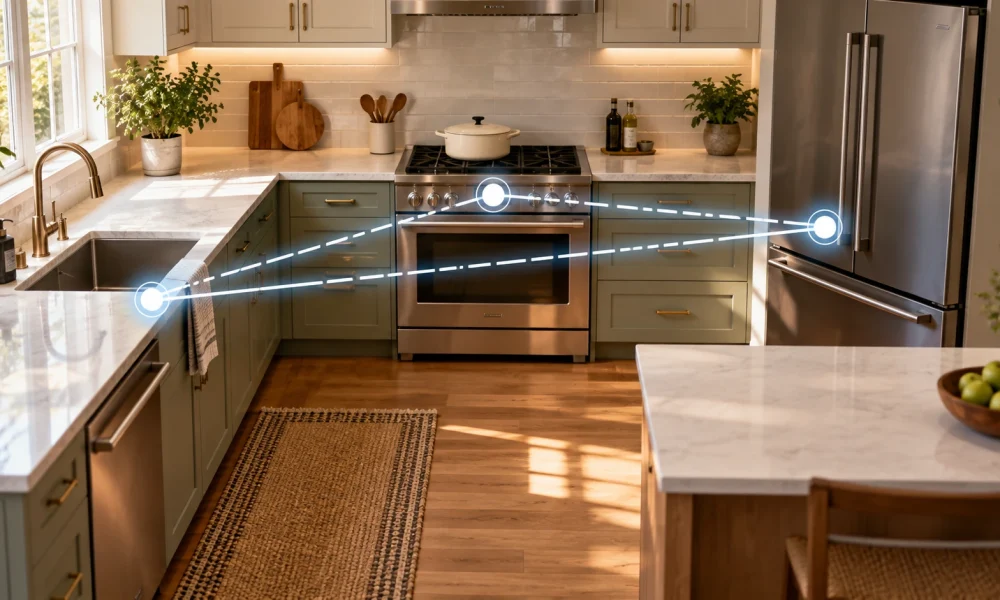
The kitchen work triangle, the geometric relationship between the sink, stove and refrigerator, has been a foundational kitchen design principle for decades, and despite kitchens evolving considerably since the concept was first developed, the underlying logic behind it still holds up well in most layouts.
The core idea is straightforward: the three points a cook moves between most frequently should be close enough to minimize unnecessary walking, but not so close that multiple people can’t work in the kitchen simultaneously without constantly bumping into each other. Traditional guidelines suggest each side of the triangle should measure between four and nine feet, with the total perimeter of all three sides falling somewhere between thirteen and twenty-six feet.
Modern open-concept kitchens with islands and multiple cooks have led some designers to expand the concept into multiple overlapping work zones rather than a single triangle, but the underlying principle, minimizing unnecessary movement between the most-used points in a kitchen, remains the same regardless of how many additional zones get layered on top of the original three-point framework.
None of this requires professional-level expertise, just a bit of deliberate attention before committing to something expensive or hard to undo, which tends to matter more than most homeowners assume until the mistake is already made.
Getting this right the first time saves considerably more hassle than fixing it later, once furniture is in place or a wall is already painted, which is exactly why it’s worth a bit of extra care upfront.
It’s a small piece of practical home knowledge, but one that tends to save real money and frustration down the line, well beyond what its modest complexity would suggest.
None of it guarantees a flawless result by itself, but it removes one more variable from a project that already has enough that can go wrong along the way.