Malta Changes Its Gaming Tax Framework as Europe Tightens Oversight of Online Gambling
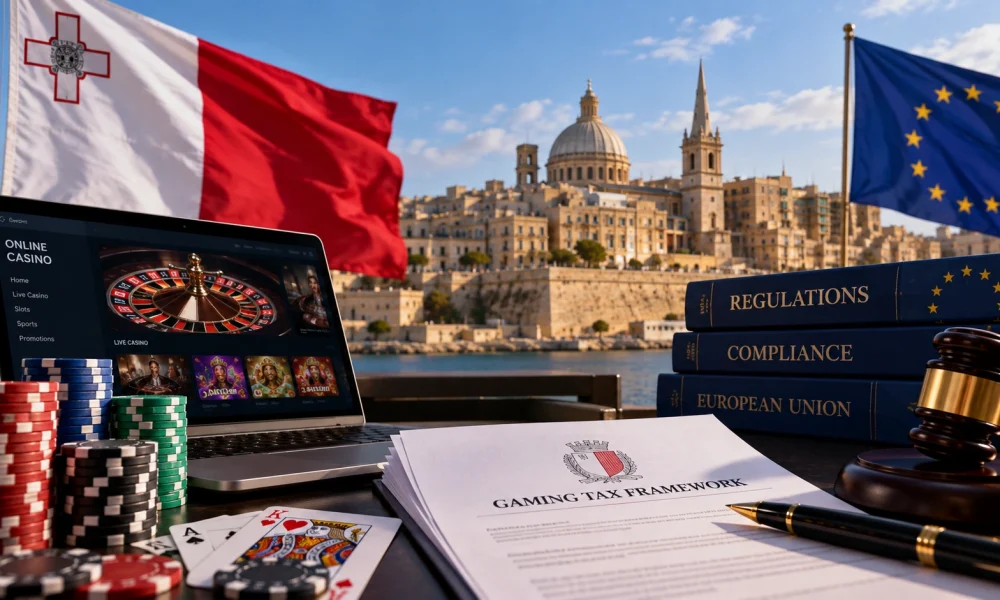
Malta has introduced a revised gaming tax and VAT framework that took effect on October 1, creating a new regulatory environment for one of Europe’s most important online gambling jurisdictions.
The new framework introduces gaming tax rates of 15%, 10% and 5%, depending on the activity and applicable category.
The changes come as European gambling markets become increasingly focused on taxation, player protection and the distinction between licensed operators and offshore platforms.
Malta remains central to European iGaming
Malta has developed one of Europe’s largest gaming ecosystems over the past two decades.
The island is home to operators, game developers, payment companies, compliance specialists and technology providers serving customers across multiple regulated markets.
Its importance means changes to the Maltese tax framework can affect companies far beyond the country itself.
For operators, taxation is one component of a much larger cost structure that includes licensing, compliance, technology, marketing and responsible gambling systems.
Regulation is becoming more fragmented
The European iGaming market does not operate under one unified gambling regime.
Individual countries have developed their own licensing systems, advertising rules, taxation models and consumer protection requirements.
That creates opportunities for operators but also increases compliance costs.
Companies expanding internationally must adapt products and marketing strategies to each jurisdiction rather than simply launching the same platform across Europe.
AI creates a new regulatory challenge
The industry is also entering a period in which artificial intelligence is increasingly used for marketing, fraud detection, customer segmentation and responsible gambling tools.
At the same time, questions are emerging over how AI is used to identify and target customers.
A proposed class action in Massachusetts has accused DraftKings of using AI to target people with gambling problems. The allegations have not been established in court, but the case illustrates the regulatory questions created when increasingly sophisticated algorithms are used in gambling.
The market is becoming more professionalised
The direction of travel is clear: European gambling companies are being asked to demonstrate greater control over customers, advertising, payments and technology.
For operators, taxation is only one part of that equation.
The companies able to combine technology with strong compliance systems are likely to have greater flexibility when entering regulated markets.
Malta’s new framework is therefore part of a wider European transformation in which gambling is increasingly treated as a highly regulated digital industry rather than simply an entertainment business.
Sources: Malta gaming authorities, European Gaming, GamblingNews, iGaming industry reports.