Prime London Housing Records Its First Quarterly Price Growth in Four Years
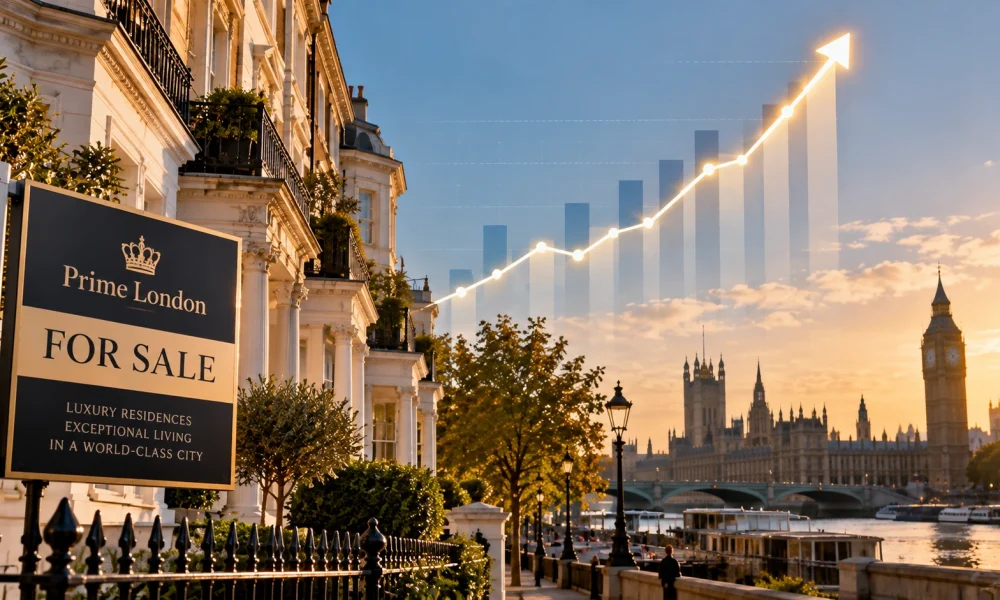
Prime central London has recorded its first quarterly increase in residential prices in four years, according to Knight Frank data reported on October 2.
The development suggests that the high-end London market is showing signs of stabilisation after a prolonged period of weaker activity.
A difficult period for London’s luxury market
Prime London property has faced several pressures in recent years.
Higher interest rates increased financing costs, while tax changes and uncertainty around the treatment of high-value property affected buyer behaviour.
The result was a market where sellers often had to adjust expectations and buyers became more selective.
The latest quarterly increase does not reverse the entire cycle, but it represents a notable change in direction.
Buyers are looking for value
Knight Frank’s interpretation is that buyers are beginning to identify opportunities after several years of price adjustment.
The shift is particularly relevant in prime areas, where properties can command substantial premiums based on location, architecture and scarcity.
For international buyers, currency movements also influence the effective cost of London property.
London’s global position remains important
London continues to attract international wealth because of its financial sector, universities, legal system and cultural institutions.
The city also benefits from a deep professional services economy.
These factors continue to support demand for high-quality residential property, even when the broader housing market is under pressure.
A wider wealth migration
The latest market data also comes as global wealth is becoming increasingly mobile.
Savills has been examining which cities are best positioned to attract and retain younger high-net-worth individuals as wealth shifts between countries and generations. London remains one of the major global centres in this competition.
Recovery is likely to remain uneven
The latest quarterly increase should not be interpreted as a uniform recovery across the entire London housing market.
Prime property behaves differently from mainstream housing, and demand can vary considerably between neighbourhoods and price brackets.
The more important development is that the market appears to be moving away from the sharp declines seen in previous years.
For investors, developers and international buyers, the coming quarters will show whether the latest improvement develops into a sustained recovery.