European Airlines Expand Winter Networks Despite Continued Aviation Volatility
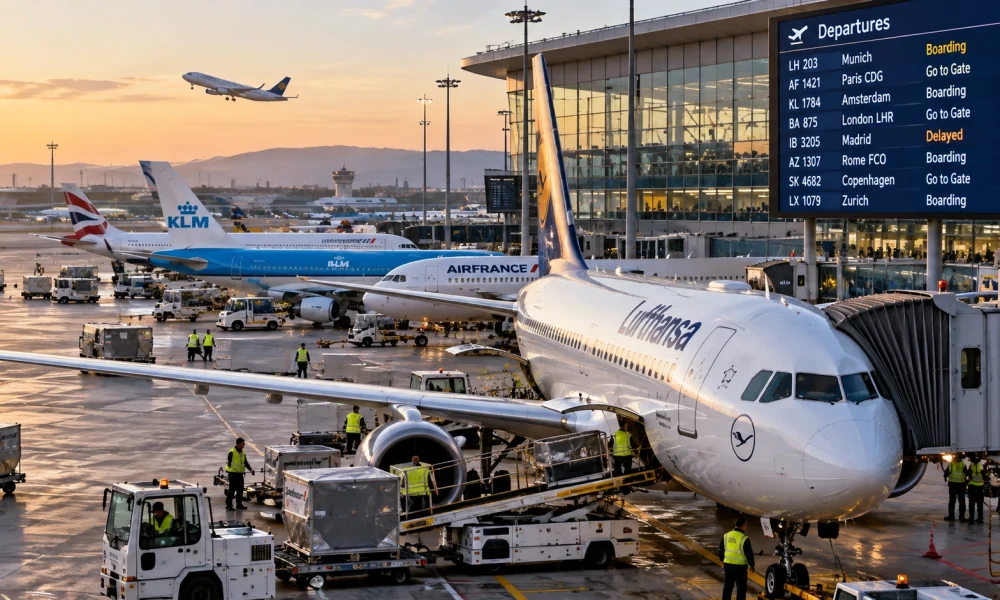
European airlines are continuing to expand their winter schedules, adding new routes and restoring connections even as fuel costs, security concerns and geopolitical uncertainty remain significant challenges.
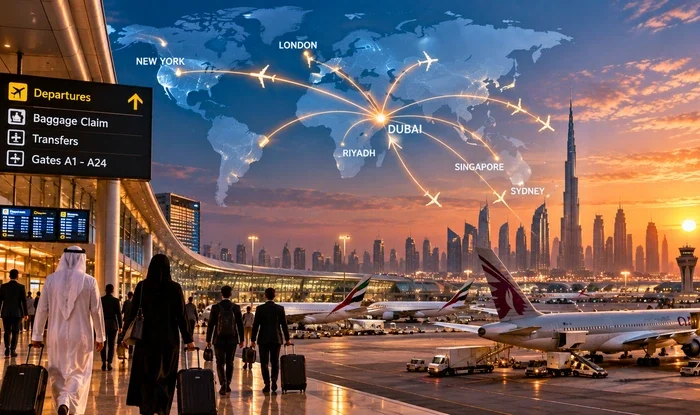
Among the latest announcements, Lufthansa plans to launch a nonstop Frankfurt-Kuala Lumpur service on October 25, while Emirates is introducing daily Dubai-Helsinki flights with Airbus A350 aircraft. Etihad is also preparing a new Abu Dhabi-Red Sea International connection.
Airlines are rebuilding international networks
The expansion shows that airlines are still investing in long-haul and regional connectivity.
The post-pandemic recovery has created strong demand for international travel, particularly between Europe, the Gulf and Asia.
Airlines are responding by adjusting aircraft allocations and opening routes that can support year-round traffic.
The Gulf remains a major aviation hub
Dubai and Abu Dhabi continue to expand their role as transfer points between Europe, Asia and Africa.
The Gulf carriers benefit from their geographical position and large hub airports.
The introduction of new aircraft such as the Airbus A350 also allows airlines to operate long-haul routes with improved fuel efficiency.
Security remains a major variable
The latest developments come against a complicated geopolitical backdrop.
Flydubai suspended flights to Israel after a serious security incident involving one of its aircraft, while regional aviation has continued to face uncertainty linked to conflict and airspace restrictions.
Airlines therefore have to balance demand with operational and security considerations.
Tourism is still expanding
Turkey welcomed 34.83 million foreign visitors during the first eight months of 2026, illustrating the continued scale of international tourism.
Airline capacity remains an important factor in sustaining these flows.
New routes can quickly change the accessibility of destinations and influence hotel demand, business travel and tourism investment.
Winter 2026-27 will be a test
The new schedules show that airlines are not simply maintaining existing networks.
They are actively reallocating aircraft toward routes where they see sustainable demand.
For travellers, that means more choice, but also a more dynamic schedule in which routes can be introduced, reduced or suspended quickly.
The European aviation market is therefore entering the winter season with a combination of expansion and caution.