Sweden’s Magdalena Andersson Gets a Second Chance to Form a Government
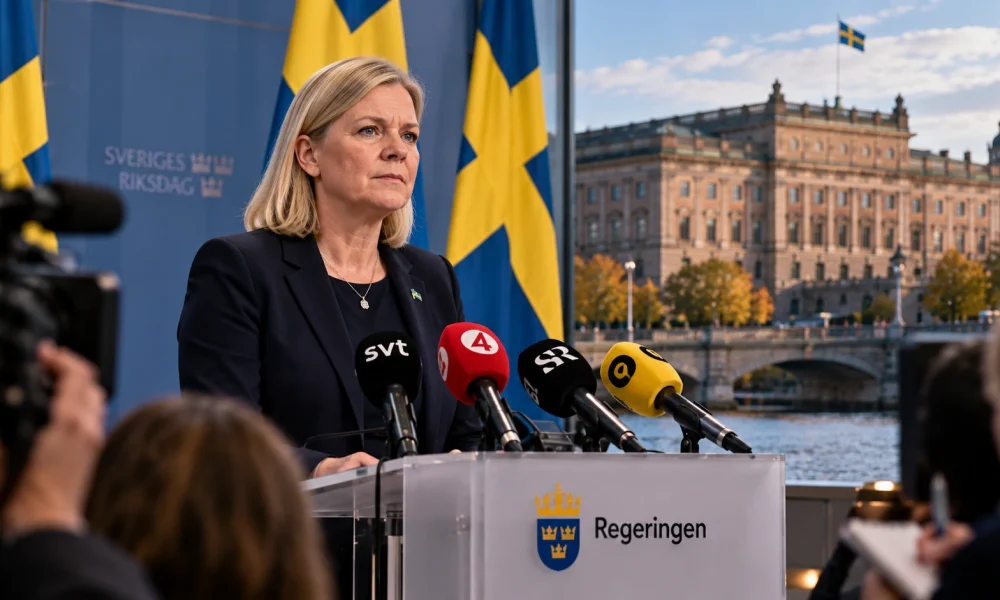
Sweden’s parliament speaker has asked Social Democratic leader Magdalena Andersson to make a new attempt to form a government after the country’s political parties failed to establish a governing coalition.
The decision was announced on October 2 and represents another stage in Sweden’s parliamentary negotiations.
Coalition talks remain complicated
Sweden’s parliamentary system requires governments to secure sufficient parliamentary support to take office.
The Social Democrats must therefore negotiate with other parties to determine whether Andersson can assemble a workable coalition or secure the parliamentary conditions required to govern.
The negotiations are taking place in a politically fragmented environment.
The wider European context
Sweden is not the only European country facing difficult coalition negotiations.
Political fragmentation has become more common across Europe, with traditional parties increasingly required to negotiate with smaller parties.
This can make government formation slower and coalition agreements more detailed.
Economic policy is part of the negotiations
The next Swedish government will face several important policy questions.
These include defence spending, energy policy, taxation, welfare services and Sweden’s role in European security.
Sweden has significantly increased defence-related spending in recent years following changes in the European security environment.
The process is still ongoing
The second attempt to form a government does not itself determine the final composition of Sweden’s next administration.
Further negotiations and parliamentary procedures are required.
For businesses and investors, the process matters because government formation can influence fiscal policy, infrastructure decisions and regulatory priorities.
Sweden’s political system remains stable
Despite the difficulty of coalition negotiations, Sweden’s parliamentary institutions continue to operate through established procedures.
The next stage will depend on whether Andersson can build sufficient parliamentary support.
The outcome will also influence the balance between Sweden’s major political blocs and the country’s policy direction during the next parliamentary period.