Global Food Prices Reach a Near Four-Year High as Weather and Transport Disruptions Hit Supply
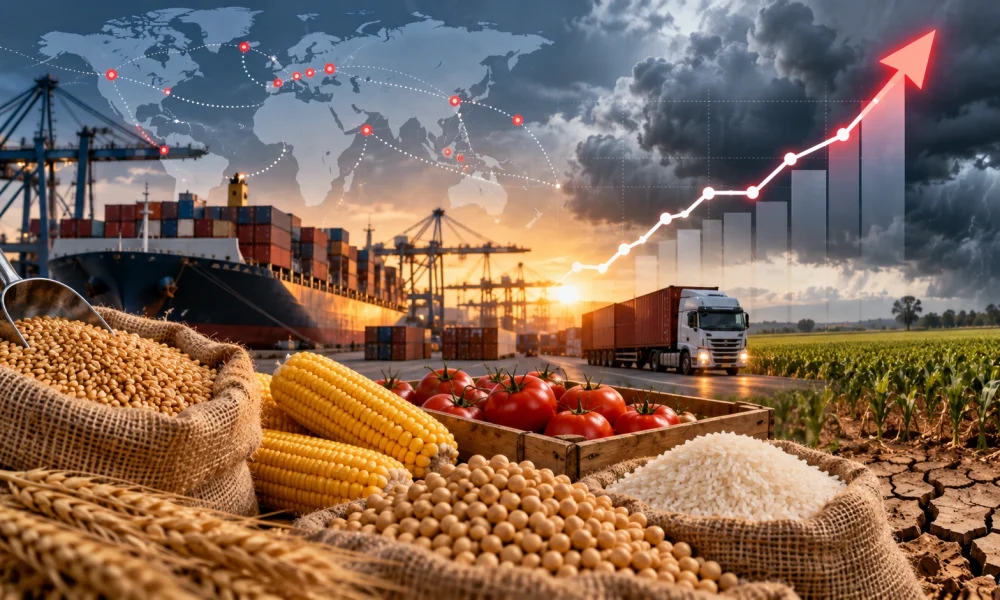
Global food commodity prices rose sharply in September, reaching their highest level in almost four years, according to the latest Food and Agriculture Organization of the United Nations data.
The FAO Food Price Index averaged 136 points in September, up 1.5% from August and 5.8% compared with September 2025.
Sugar and cereals lead the increase
Sugar prices rose 6.1% during September, reaching their highest level since April 2025.
The cereal index increased 5.1%, with wheat prices reaching their highest level since August 2023.
The increases were influenced by weather conditions, lower production expectations in some markets and continued disruptions affecting grain exports through the Black Sea.
Weather is becoming a bigger factor
The possibility of an El Niño weather pattern is adding uncertainty to agricultural markets.
Changes in rainfall and temperatures can affect major crops in countries such as Brazil, India and Thailand.
Sugar markets are particularly sensitive to weather because a relatively small change in production can have a significant impact on global prices.
Transport costs add another layer
Food commodities are also being affected by transportation disruptions.
The FAO cited problems around the Strait of Hormuz and the Black Sea as factors increasing pressure on energy, transport and food commodity markets.
Higher transport costs eventually feed into the price of processed food and beverages.
Not every category is becoming more expensive
The food price increase is not uniform.
Vegetable oil prices rose 0.9% in September, while the meat price index declined 1.1%.
Dairy prices were relatively stable.
This difference matters for consumers because food inflation depends on the composition of individual household spending.
The supply outlook remains complicated
The FAO maintained its forecast for global cereal production at 2.979 billion tonnes in 2026, which would still represent the second-highest level on record.
However, the organisation reduced its forecast for cereal trade during the 2026-27 season because of lower expectations for wheat and maize exports.
The latest data show that global food markets are being influenced simultaneously by climate, geopolitics and transportation.
For consumers, that combination creates a risk of continued price volatility even when global agricultural production remains historically high.