Interior Design Moves Toward Softer Materials and More Personal Spaces for 2027
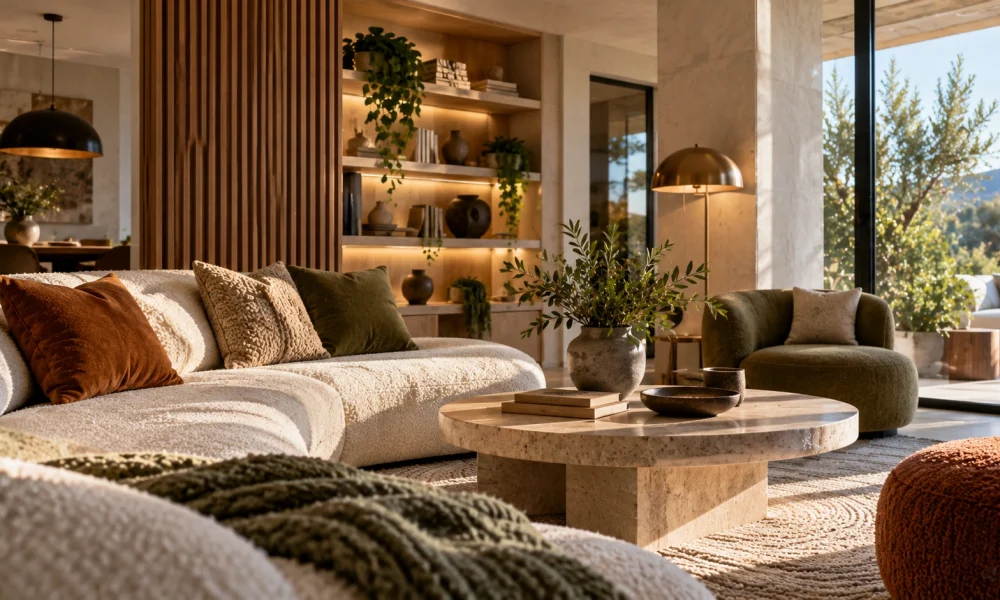
Interior designers are already looking toward 2027, and the latest trends point toward a broader shift away from highly uniform interiors.
Design publications and professionals are increasingly highlighting warmer materials, sculptural details, personal collections and spaces that feel lived-in rather than perfectly coordinated.
Recent trend forecasts for 2027 emphasise personality, comfort and a greater connection with natural materials.
The end of perfectly coordinated rooms
For several years, minimalist interiors dominated design conversations.
Neutral colours, simple furniture and clean lines became the standard language of contemporary interiors.
The new direction is more layered.
Designers are increasingly combining different materials, textures and periods rather than buying entire rooms from a single collection.
The objective is to create spaces that feel personal.
Natural materials remain important
Wood, stone, ceramics and natural textiles continue to be widely used.
The difference is in how they are combined.
Instead of large quantities of decorative objects, designers are focusing on fewer pieces with stronger visual impact.
Sculptural lighting, textured walls and handmade ceramics can become focal points without making a room feel crowded.
Small homes influence design
Urban housing is also influencing the industry.
Smaller apartments require furniture that can serve several functions and storage solutions that do not dominate the room.
The global market for storage furniture is expected to benefit from urbanisation and the continued growth of compact living spaces.
This is pushing manufacturers toward modular products and more flexible layouts.
Consumers want individuality
The strongest shift may be cultural rather than aesthetic.
Consumers increasingly want homes that reflect their identity rather than spaces that look identical to images on social media.
Vintage pieces, artwork, books and objects collected during travel are being incorporated into contemporary interiors.
This creates opportunities for smaller design studios and independent furniture makers.
What it means for the industry
Furniture manufacturers and retailers are responding by expanding customisation, offering smaller collections and investing in digital visualisation tools.
For consumers, the result is a broader range of styles.
For designers, the challenge is finding the balance between individuality and functionality.
The next phase of home design appears less interested in creating the perfect room and more interested in creating a home that feels genuinely occupied and personal.
Sources: Homes & Gardens, Real Simple, Furniture News, global interior design reports.