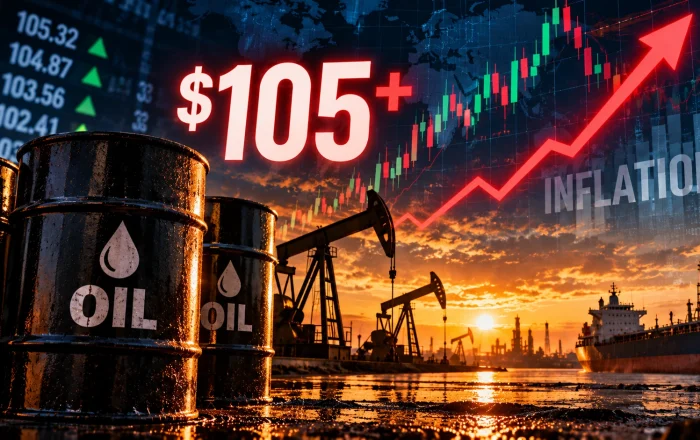
Oil Eases From Recent Highs, but Bond Yields Keep Investors on Edge
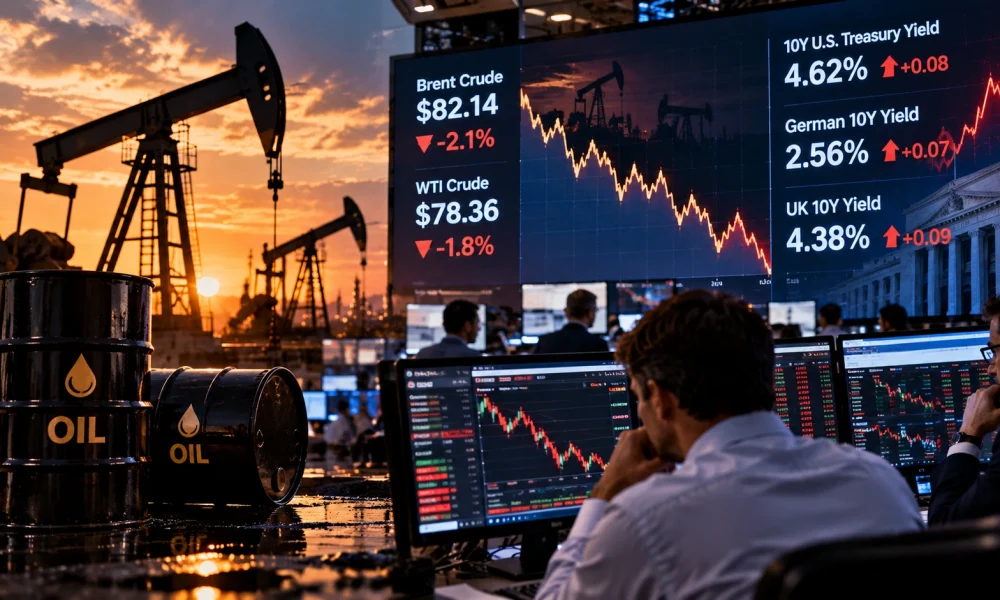
Global financial markets received some relief on Friday as oil prices retreated from recent highs, but investors remained cautious about inflation, government borrowing costs and the economic consequences of geopolitical disruption.
Brent crude had been trading above $100 a barrel amid concerns about supply from the Middle East. Comments suggesting a possible easing of tensions helped reduce oil prices, while equities recovered some ground. The US 10-year Treasury yield remained near 5.26%, its highest level since 2002, according to market reporting.
Lower oil prices do not remove the risk
Oil is one of the most important inputs into the global economy. A sustained increase affects transport, manufacturing, agriculture and household energy costs.
A decline in prices can ease some of that pressure, but markets remain sensitive to any sign that supply disruptions could return.
For companies, uncertainty makes it harder to plan fuel costs, shipping budgets and pricing decisions. For households, energy prices can affect how much money remains available for other spending.
Bond yields are the other major concern
Government bond yields influence borrowing costs across the economy. When yields rise, governments may pay more to refinance debt, while businesses and households can face higher financing costs.
The US Treasury market is especially important because its yields influence pricing across global financial markets.
Higher yields can also make bonds more attractive relative to shares. That can put pressure on stock valuations, particularly for companies whose expected profits lie far in the future.
Inflation complicates central-bank decisions
If energy prices remain elevated, inflation may prove more persistent than policymakers would like.
Central banks must then balance the need to control inflation against the risk of weakening economic activity. Cutting rates too quickly could allow inflation to accelerate, while keeping them high can increase pressure on borrowers.
This uncertainty is particularly difficult for companies deciding whether to invest, hire or expand.
Markets are increasingly selective
Investors are not responding to every sector in the same way. Businesses with strong cash flow and pricing power may be better positioned to withstand higher costs.
Companies dependent on cheap financing or consumer spending may be more vulnerable.
The growing investment in artificial intelligence adds another dimension. Technology firms are spending heavily on infrastructure, but investors still need evidence that these investments will generate sustainable returns.
What investors will watch next
The immediate direction of oil prices remains important, but it is only one part of the picture.
Investors will also monitor inflation data, central-bank signals, corporate earnings and the cost of government borrowing.
A short-term decline in oil can improve market sentiment, but it does not automatically resolve the underlying risks.
For households and businesses, the practical issue is the same: the cost of energy and credit remains central to financial planning.