Advertising Enters the Age of AI Agents as Brands Begin Automating Decisions Once Made by Human Teams
The global marketing industry is entering a new phase of automation in which artificial intelligence is no longer used only for analysis or content generation, but is beginning to participate directly in campaign planning and optimisation.
Carat and NBCUniversal have announced new AI agent capabilities for planning, buying and optimising advertising across television and streaming inventory.
From tool to agent
The difference is important.
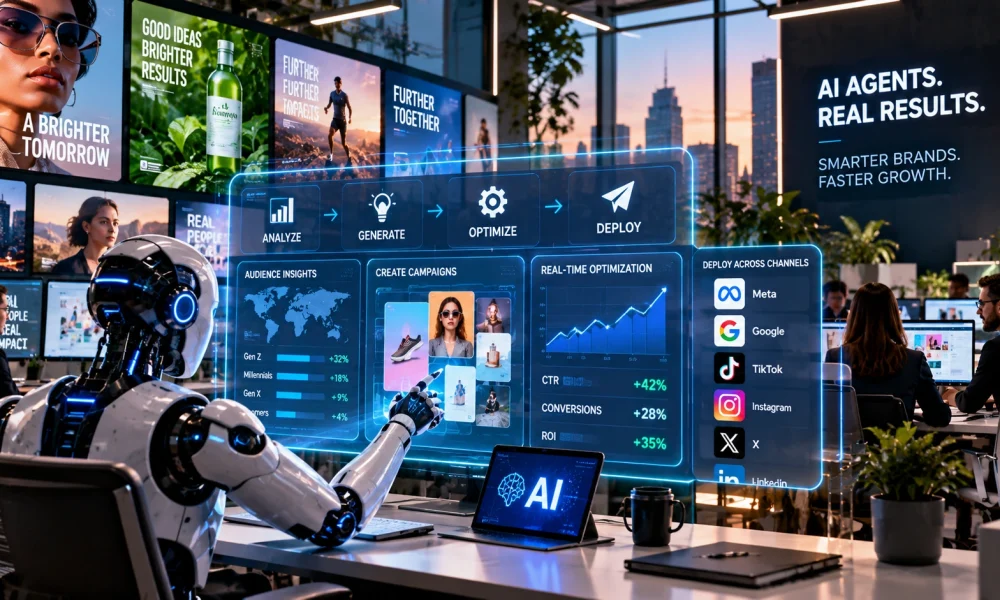
An AI tool can analyse data and provide recommendations.
An AI agent can execute a series of tasks automatically.
In advertising, that can mean identifying audiences, selecting channels, adjusting budgets and optimising campaigns based on results.
For agencies and brands, the change could reduce the time between analysis and decision-making.
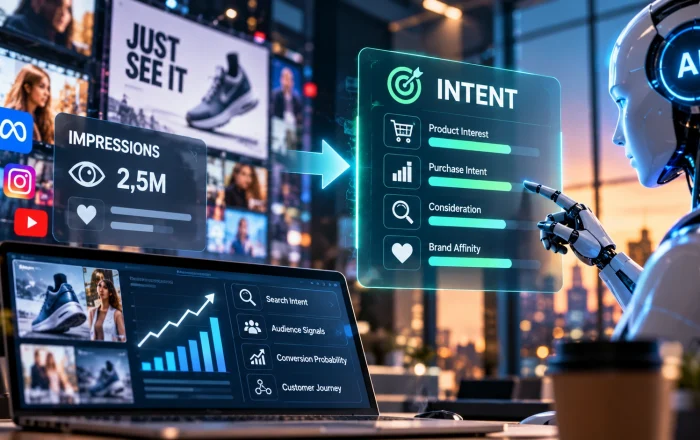
Advertising is no longer only about impressions
The industry has traditionally measured success through indicators such as reach, impressions and clicks.
These metrics remain important, but brands increasingly want to know whether audiences are genuinely interested.
AI can combine large volumes of data to identify intent and behaviour.
In theory, campaigns can become more precise.
In practice, the outcome depends heavily on the quality of the data.
Data is becoming the main resource
An AI system can be extremely powerful, but if it receives poor data, its recommendations can also be poor.
Brands need to understand which information they can legally use and how consumer privacy can be protected.
Data regulation is therefore becoming almost as important as the technology itself.
Creators are not disappearing
Automation does not mean marketing will become completely mechanical.
Creativity remains essential.
A system can optimise where an advertisement is distributed, but it cannot fully replace cultural understanding of an audience.
Brands still need to create messages that have meaning.
AI can assist with distribution, testing and analysis.
The central idea still needs to be relevant to people.
ChatGPT is also becoming an advertising channel
Another important development is the expansion of advertising into conversational interfaces.
Razorpay Engage has announced a partnership with OpenAI to expand ChatGPT advertising in India.
That could create an entirely new category for marketers.
Instead of seeing an advertisement in a social feed, a user could encounter a commercial message within a conversation.
That fundamentally changes how a campaign can be designed.
Context becomes more important
An advertisement in a social feed appears regardless of the user’s exact intention.
In a conversation, context can be much more precise.
If a consumer is already searching for information about travel, products or services, marketing can potentially appear at a moment when interest already exists.
That could increase relevance.
But it also raises questions about transparency.
Consumers need to know when they are interacting with commercial messaging.
Agencies must adapt
Traditional agencies are unlikely to disappear, but their roles may change.
Less time may be spent on repetitive operational work.
More time can be allocated to strategy, creativity and interpretation.
Companies that adopt AI solely to cut costs risk achieving short-term savings without building a sustainable competitive advantage.
Marketing is entering a new phase
AI is transforming advertising from a largely sequential process into a system that can operate almost continuously.
Data comes in.
The system analyses it.
The campaign is adjusted.
Results are measured.
The process begins again.
For brands, the advantage will probably belong to those that can combine this speed with creative ideas and consumer trust.