VALORANT Champions Shanghai Shows How Global Esports Is Becoming a More Mature Business
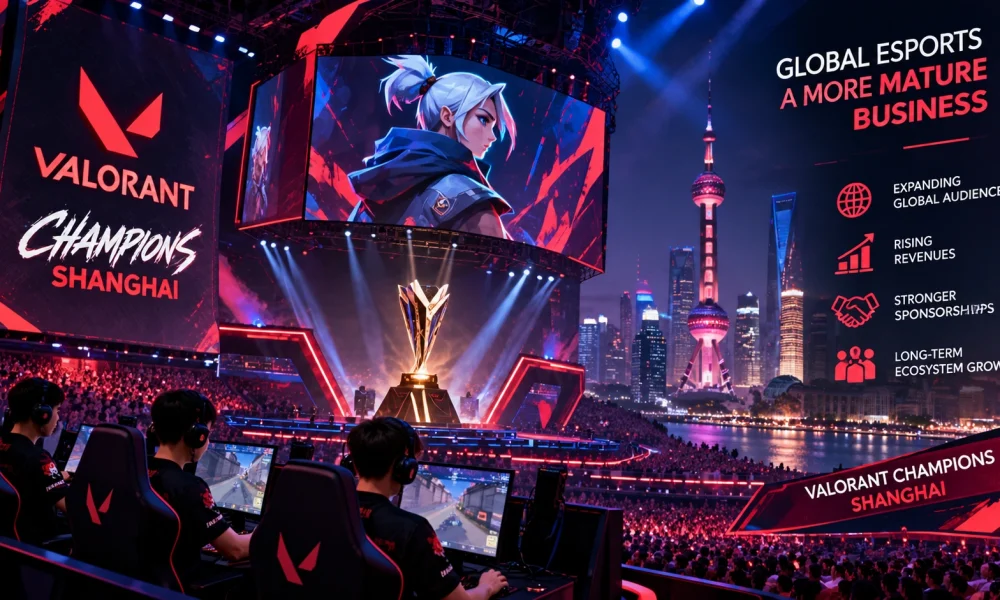
VALORANT’s international championship season illustrates how competitive gaming has developed into a global entertainment business built around professional teams, publishers, sponsors and online audiences.
The competitive scene is no longer limited to individual tournaments. It depends on a connected ecosystem of regional leagues, international events, content creators and commercial partnerships.
Competition is only one part of the product
At the highest level, esports organisations need to manage much more than player performance.
They recruit talent, employ coaches and analysts, produce digital content, negotiate sponsorship agreements and build communities around their teams.
The strongest organisations increasingly operate like professional sports businesses. Their challenge is to turn a passionate audience into sustainable revenue without losing the authenticity that attracted fans in the first place.
Publishers control the ecosystem
Unlike many traditional sports, competitive gaming depends on games owned and managed by private publishers.
Companies such as Riot Games control important elements of competition, including game updates, tournament structures and access to official events.
This gives publishers significant influence over the long-term health of the ecosystem. Changes to a game can affect competitive balance, viewership and the value of sponsorships.
For teams, that makes the relationship with the publisher especially important.
Global events create commercial opportunities
International championships offer brands access to audiences across multiple countries. Gaming communities are often highly engaged, digitally connected and comfortable with online content.
That makes esports attractive to sponsors seeking to reach younger audiences.
However, sponsorship growth depends on more than viewer numbers. Brands also look at audience demographics, engagement, brand safety and whether partnerships generate measurable commercial results.
The challenge of sustainable teams
Esports organisations have faced questions about whether revenue can consistently support the costs of elite competition.
Player salaries, travel, coaching and content production can be expensive. Sponsorships and prize money may fluctuate, while audiences can move quickly between games.
Teams therefore need diversified revenue sources. Merchandise, memberships, content partnerships and local fan communities can provide greater stability than relying on tournament results alone.
Technology is changing the viewing experience
Streaming platforms have made esports accessible worldwide, while live statistics, alternate camera views and creator commentary give viewers different ways to follow events.
These formats can make competitions more interactive than traditional broadcasts.
The challenge is ensuring that new features improve the experience rather than overwhelming casual viewers.
What comes next
Esports has established itself as a major part of digital entertainment, but its long-term success depends on building durable businesses around competition.
Publishers need healthy leagues. Teams need sustainable finances. Players need professional support, and audiences need compelling events.
The industry’s next stage will be defined not only by championship results, but by whether esports can turn international attention into stable careers and lasting commercial value.