Oil Surges Above $100 as Middle East Tensions Shake European Markets and Raise Inflation Risks
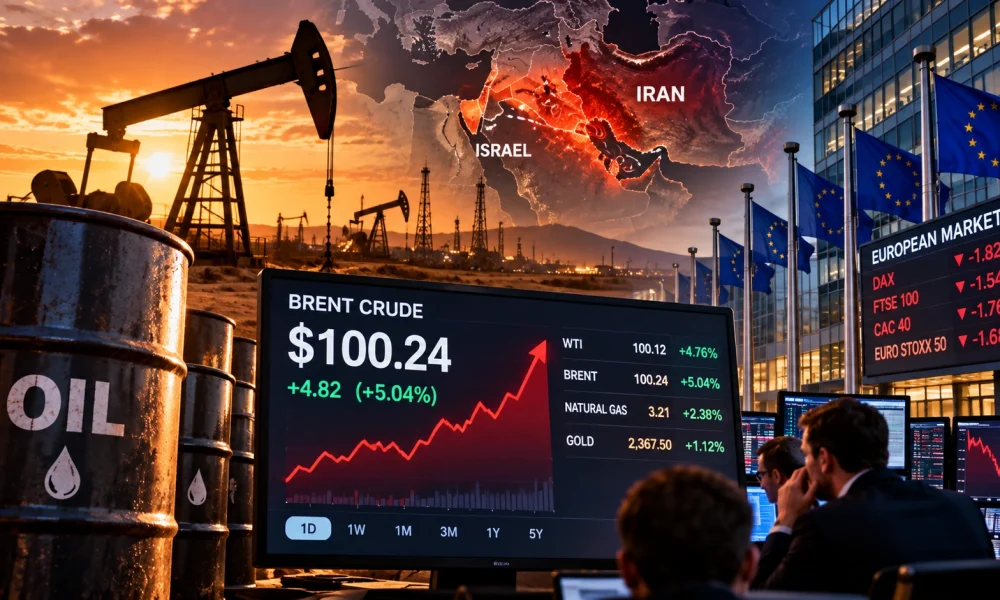
Global financial markets are facing renewed pressure as oil prices climb above $100 per barrel, with investors increasingly concerned about supply disruptions linked to escalating tensions in the Middle East.
European stocks and the euro fell on October 7, while Brent crude rose above $101 per barrel. The move came as attacks involving Yemen’s Houthi movement and Saudi Arabia added to concerns over energy supplies.
The financial implications extend far beyond the energy sector.
Oil prices affect transportation, manufacturing, food production and household budgets.
A sustained increase can therefore push inflation higher across the global economy.
Europe is particularly vulnerable
European economies remain sensitive to energy prices because the region depends heavily on imported energy.
Higher crude prices can increase costs for airlines, logistics companies, manufacturers and consumers.
That creates a difficult environment for the European Central Bank.
If inflation rises again, policymakers may have less room to reduce interest rates.
If the economy weakens at the same time, central banks face a difficult trade-off between supporting growth and controlling prices.
The euro is under pressure
The euro has fallen toward a 17-month low against the dollar.
Currency movements matter because a weaker euro makes imported goods and energy more expensive.
That can reinforce inflation.
At the same time, European exporters can benefit because their products become cheaper for foreign customers.
The effect is therefore mixed.
For consumers, however, higher import costs can quickly become visible through energy and consumer prices.
Bond markets are also sending warnings
The global bond market is experiencing significant pressure.
The yield on the US 30-year Treasury bond briefly reached a 24-year high of 5.7041%, according to market data reported on October 7.
Higher long-term yields reflect concerns about inflation, government debt and the future path of monetary policy.
They also increase borrowing costs for governments.
Countries with large debt burdens can therefore face greater pressure when yields rise.
The Federal Reserve remains central
Investors are waiting for the minutes of the Federal Reserve’s September meeting.
The document is expected to provide additional information about the debate over interest rates.
Markets have become less certain about the timing and scale of future rate moves because energy prices have changed the inflation outlook.
The Fed must balance employment, economic growth and inflation.
A renewed energy shock could make that balance more difficult.
Investors are still buying technology stocks
Despite the pressure in energy and bond markets, US technology stocks have remained comparatively resilient.
Artificial intelligence continues to attract significant investment.
Companies such as Nvidia, Marvell and AMD are benefiting from demand for AI infrastructure.
That has helped US equities reach record levels even as other markets weaken.
The divergence illustrates the unusual nature of the current market.
Investors are simultaneously worried about inflation and excited about technological growth.
Oil could determine the next phase
The direction of crude prices will therefore be crucial.
If tensions ease and supply risks decline, energy prices could fall and give central banks more room.
If disruptions continue, inflation could become more persistent.
That would put pressure on interest rates and potentially reduce valuations across stock and bond markets.
The financial system is entering a sensitive period
The combination of high oil prices, elevated bond yields and geopolitical uncertainty creates a challenging environment.
Investors are increasingly focused on protecting portfolios against renewed inflation.
Businesses are also reassessing energy costs and borrowing plans.
For households, the consequences may appear through higher transport and heating costs.
The financial markets are therefore reacting not only to today’s oil price but to the possibility that the energy shock could last.
The next few weeks will show whether the latest rise represents a temporary geopolitical spike or the beginning of a longer period of energy-driven inflation.