Euro Falls to a 17-Month Low as Investors Focus on France’s Fiscal Outlook

Euro Falls to a 17-Month Low as Investors Focus on France’s Fiscal Outlook
The euro came under renewed pressure on October 5, falling to a 17-month low as investors became increasingly concerned about France’s public finances and the wider political uncertainty surrounding Europe’s second-largest economy.
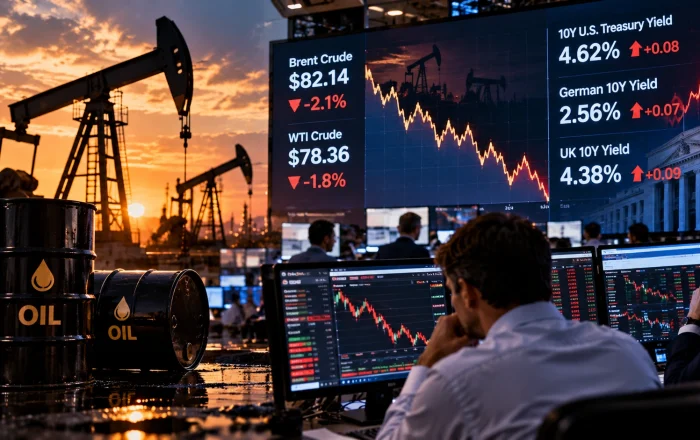
The move added another layer of complexity to global financial markets, where investors are already assessing interest-rate expectations, high government borrowing costs and elevated energy prices. Reuters reported that concerns about France’s fiscal position were weighing on the euro and French assets.
Currency markets often react strongly when investors begin questioning the fiscal stability of a major economy.
France is particularly important because of the size of its economy and its position at the centre of the euro zone.
France faces pressure over public spending
France has struggled for years to reduce its fiscal deficit.
Political disagreements over spending cuts and tax policy have made it difficult for successive governments to present a convincing long-term strategy for stabilising public finances.
The latest market reaction shows that the issue is no longer confined to domestic politics.
Investors are pricing the risk that political uncertainty could make fiscal consolidation more difficult.
Higher borrowing costs create an additional challenge because governments must spend more money servicing their debt when bond yields rise.
Why the euro is affected
The euro is influenced by the financial stability of the entire currency bloc.
When investors become concerned about one of its largest economies, the effect can spread to the currency as a whole.
The situation is particularly sensitive when France and Germany are already dealing with different economic challenges.
Germany remains focused on weak industrial activity and structural competitiveness, while France is facing intense pressure over government spending and debt.
This creates uncertainty about the overall direction of European economic policy.
Interest rates remain important
The euro’s decline also reflects expectations surrounding monetary policy.
Markets are closely watching economic data from the United States and Europe as investors assess whether central banks will continue tightening, hold rates steady or eventually move toward lower borrowing costs.
Recent US employment data was softer than expected, reducing expectations for another immediate Federal Reserve rate increase.
That development has influenced the dollar, bond yields and global equity markets.
European investors are therefore watching developments in both Washington and Frankfurt.
Oil adds another risk
Energy prices remain another important factor.
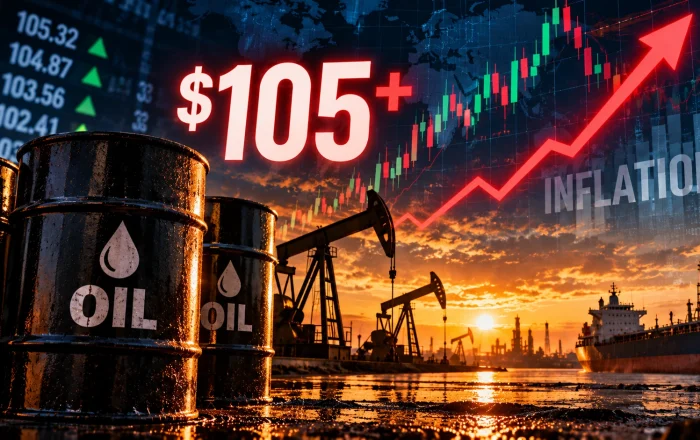
Geopolitical tensions have affected crude oil transportation and created uncertainty around global supply chains.
Higher energy prices can increase inflation and put pressure on European consumers and businesses.
For countries that are heavily dependent on energy imports, this can complicate monetary policy.
If inflation rises again, central banks have less room to reduce interest rates.
Investors become more selective
The latest euro move highlights a broader change in financial markets.
Investors are increasingly differentiating between countries rather than treating Europe as a single economic story.
Fiscal policy, political stability, debt levels and economic growth are becoming increasingly important when investors decide where to allocate capital.
France’s situation will therefore remain closely watched in the coming weeks.
A weaker euro can provide some support to exporters because their products become cheaper in foreign currencies, but it also makes imported goods and energy more expensive.
The impact is therefore mixed.
For financial markets, the immediate issue is confidence.
If investors believe France can stabilise its public finances and maintain political credibility, pressure on the euro could ease.
If uncertainty continues, the currency could remain vulnerable.