Food and Travel Businesses Face a Tougher Season as Higher Fuel Costs Change Consumer Spending
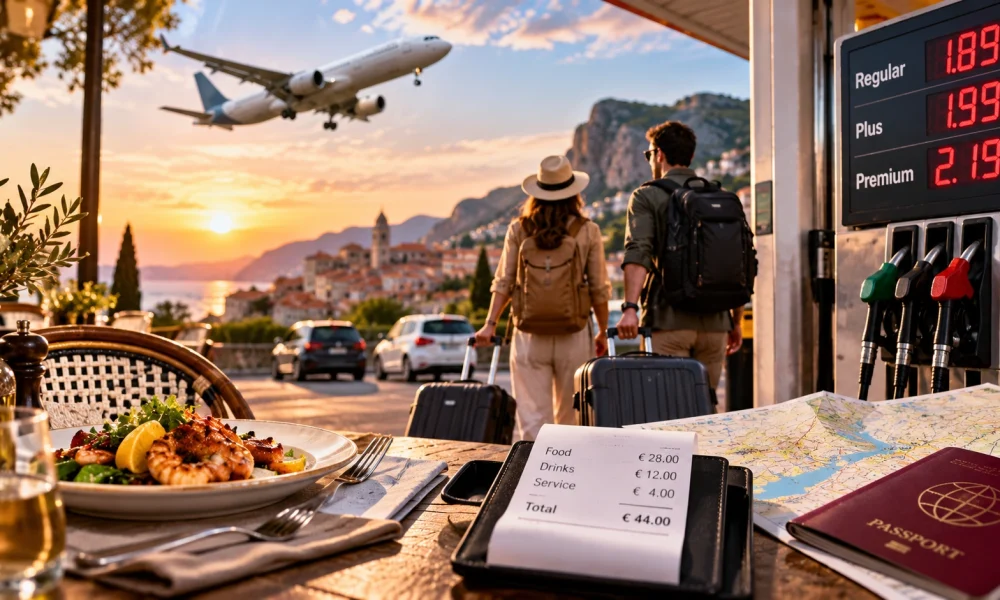
Higher fuel prices and uncertainty surrounding international travel are putting pressure on businesses that depend on people moving through airports, railway stations and holiday destinations.
SSP Group, the operator behind travel-food brands including Upper Crust, warned on October 9 that its annual operating profit could fall slightly below previous expectations. Weaker summer travel in North America outweighed growth in the United Kingdom, while the Middle East conflict and higher airline costs continued to affect the sector.
Travel spending affects more than airlines
When flights become more expensive, the effects spread beyond aviation.
Travellers may shorten trips, choose cheaper destinations or spend less at airports and stations. Restaurants and cafes that depend on passenger traffic can feel the impact even if their own prices have not changed.
The effect is especially significant for businesses operating in transport hubs, where customers often have limited alternatives and where rents and operating costs can be high.
Budget-conscious travellers are changing their habits
Higher ticket prices can lead consumers to reconsider discretionary spending.
Some travellers may continue taking holidays but reduce spending on food, drinks and retail purchases. Others may choose fewer trips or avoid expensive destinations.
This creates a difficult situation for travel-food operators. Passenger numbers may remain relatively resilient while the amount spent by each customer declines.
Food companies face their own cost pressures
Food and beverage businesses are also dealing with higher costs for ingredients, labour, energy and distribution.
When these expenses rise together, companies must decide whether to increase prices, reduce costs or accept lower margins.
Raising prices can protect profitability, but it may also encourage customers to buy less or switch to cheaper alternatives.
Convenience remains important
Despite the pressure, travellers still need convenient food options.
People travelling early in the morning, changing trains or waiting for flights often prefer products that are quick and predictable.
This gives established travel-food brands an advantage, provided they can maintain quality and value.
Companies that understand local demand and manage stock efficiently may be better placed to protect margins.
The wider consumer trend
The latest warning reflects a broader shift in consumer behaviour. People are still travelling and spending, but they are becoming more selective about where their money goes.
For the food industry, this means value is becoming increasingly important alongside brand recognition.
Customers may be willing to pay for convenience, but they are less likely to accept price increases without a clear benefit.
What businesses need to do
Travel-food operators must manage costs while keeping their offerings relevant to different types of customers.
That can involve simplifying menus, improving purchasing, reducing waste and offering products at several price points.
The broader lesson is that food businesses are increasingly exposed to forces beyond the kitchen. Fuel costs, airline capacity and household budgets can influence sales as much as menu innovation.