Porsche’s Sales Decline Highlights the Growing Pressure on Premium Carmakers in China
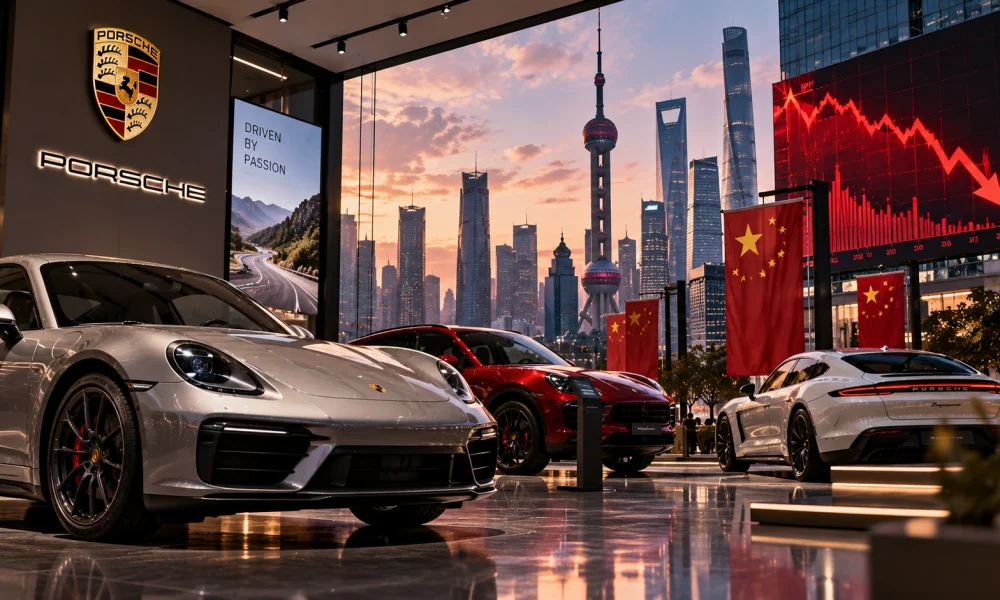
Porsche is facing another difficult year as weaker demand in China weighs on sales and forces the German manufacturer to reconsider its approach to growth. The company’s global deliveries fell by 16% during the first nine months of 2026, according to figures reported on October 9. The decline highlights the challenges confronting premium automakers as consumers become more selective and competition intensifies.
China is changing the luxury-car market
China has been one of the most important markets for premium automotive brands. Rising incomes and demand for high-end vehicles helped European manufacturers build substantial businesses in the country.
That environment has become more difficult. Local manufacturers have expanded their electric vehicle ranges, improved digital features and competed aggressively on price. Chinese consumers now have more domestic alternatives, including vehicles offering advanced technology at prices that can undercut imported premium models.
For established brands such as Porsche, the challenge is no longer simply to maintain a prestigious image. They must also demonstrate that their products offer meaningful advantages over increasingly capable competitors.
Growth is giving way to value
The industry is being forced to reconsider the assumption that higher sales volumes should always be the main objective.
Porsche and other premium manufacturers must balance pricing, profitability and demand. Discounting can help clear inventory, but excessive price reductions may weaken brand positioning and affect resale values.
This creates a difficult strategic choice. Maintaining high prices protects exclusivity, but can leave manufacturers vulnerable when consumers reduce spending or switch to competitors.
Electrification adds another layer of complexity
Electric vehicles remain central to the industry’s long-term transformation, but the transition is uneven. Buyers in different markets have different expectations about range, charging infrastructure, price and technology.
Manufacturers must therefore manage investments in electric platforms while continuing to support existing petrol and hybrid models.
That requires significant capital at a time when demand is becoming less predictable.
Why the trend matters beyond Porsche
The difficulties facing Porsche reflect a broader change in the global automotive market. Established brands can no longer rely solely on heritage and reputation to defend their market positions.
Technology, pricing and local consumer preferences are becoming more important. Chinese manufacturers are also expanding internationally, increasing competitive pressure in Europe and other markets.
For consumers, greater competition could mean more choice and better-equipped vehicles. For manufacturers, it means that premium positioning must be supported by products that justify their price.
Porsche’s latest figures do not determine the brand’s long-term prospects, but they underline a clear challenge: the next phase of luxury motoring will depend on the ability to adapt to a market in which consumer loyalty can no longer be taken for granted.