Jaguar Is Radically Changing Direction With a New Electric Model in a Bid to Return to the Premium Spotlight
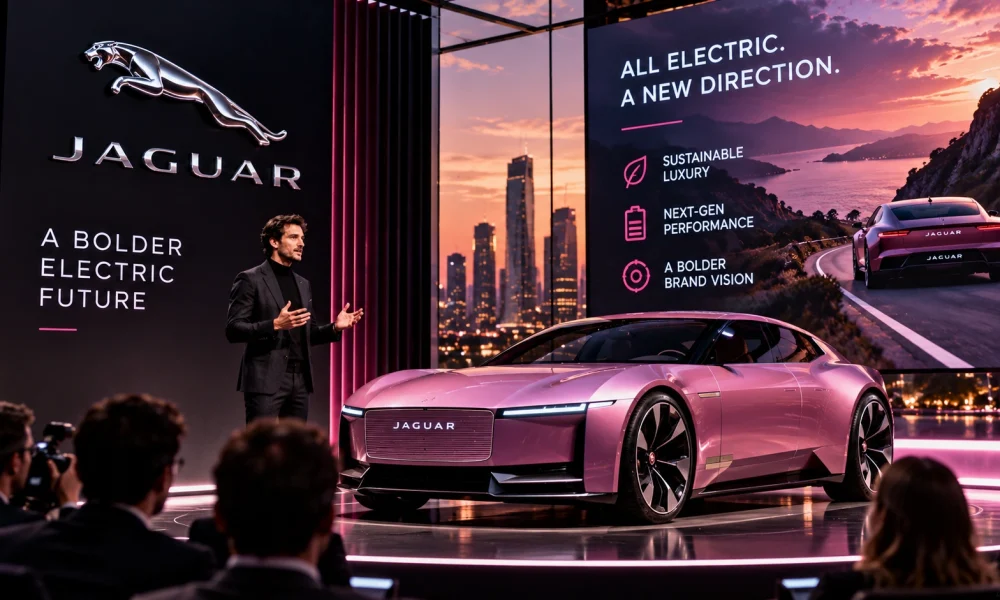
Jaguar is attempting to rebuild its global identity with a new electric model, the Type 01, presented in New York as the first step in a completely new generation of vehicles for the British brand.
The model is significant not only because it is electric, but also because of its radical design. Jaguar is trying to move away from the conventional image of premium cars and create a product that can be immediately recognised in a market where many electric vehicles have begun to look increasingly similar.
The Type 01 is a four-door coupe with a very long bonnet, an unusual profile and an interior dominated by technology. With a starting price of around $130,500, it is clearly positioned in the premium segment. The launch comes at a difficult moment for the global automotive industry, as manufacturers face changing consumer demand and intensifying competition in electric vehicles.
A relaunch at a difficult time
Jaguar needs a major change.
The brand, controlled by India’s Tata Motors, has gone through a difficult period in recent years, while the premium automotive market has become increasingly competitive.
German manufacturers are investing heavily in electrification, while American and Chinese companies have gained ground rapidly in software and electric vehicles.
In this environment, Jaguar is not simply trying to launch a new car. It is trying to redefine what the Jaguar brand means.
Electric vehicles become the centre of the strategy
The transformation comes at a time when electrification continues to reshape the industry, although the pace of adoption differs considerably between markets.
Mercedes-Benz, for example, recently reported a decline in global vehicle sales, particularly because of weaker demand in China, even as electric vehicle sales increased strongly.
For Jaguar, this represents both an opportunity and a risk.
A brand focused on electric vehicles can avoid some of the costs associated with transitioning from traditional engines to electrified models. At the same time, it must convince consumers that its products are worth a premium price in a category where competition is expanding rapidly.
Design becomes a commercial tool
One of Jaguar’s most important decisions is to use design as a differentiator.
The Type 01 does not attempt to be discreet. Its silhouette, proportions and aerodynamic solutions are designed to create a distinctive visual identity.
This strategy could become increasingly important as the underlying technology of electric vehicles becomes more similar across manufacturers.
Range, software, charging and driver-assistance systems remain important, but premium consumers still buy into image and identity.
The US market is crucial
The decision to launch the model in New York is not accidental.
The United States remains one of the world’s most important markets for premium vehicles and high-performance electric cars.
Jaguar hopes to attract technology-sector consumers as well as high-income buyers looking for something different.
Success, however, will depend on more than design.
Jaguar must demonstrate that the new generation offers technology, range, quality and reliability at the level expected from a premium vehicle.
A bigger bet than a single model
The Type 01 is essentially a test for Jaguar’s future.
If the model attracts attention and generates demand, the company can build a new product range around the same identity.
If it fails, Jaguar will face greater difficulty justifying the investment required for a broader relaunch.
The automotive industry is entering a period in which electric power alone is no longer enough to differentiate a vehicle. Manufacturers also need a clear identity.
Jaguar is betting that design, technology and exclusivity can transform a struggling brand into a relevant premium competitor for the next decade.