PepsiCo Cuts Profit Forecast as American Consumers Become Increasingly Price-Conscious
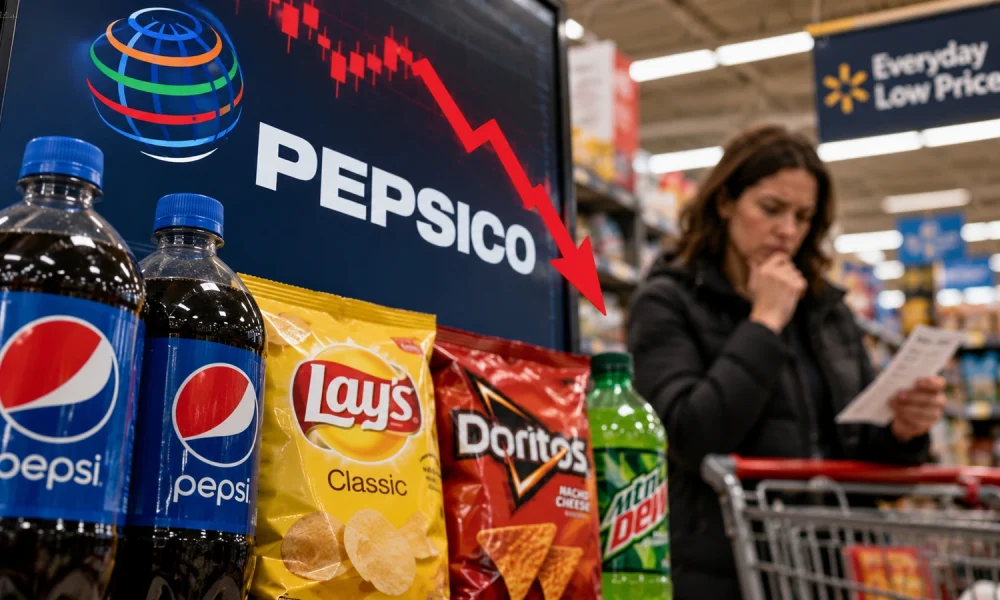
PepsiCo has lowered its 2026 profit outlook and announced additional cost-cutting measures after the recovery of its North American business proved more difficult than the company had expected.
The producer of Pepsi, Lay’s, Doritos and Gatorade is dealing with inflation, higher raw material costs and consumers who are becoming more careful about spending. The company said pressure on margins is expected to continue in North America during the final quarter of the year.
Consumers are becoming more selective
One of the most important changes in the food industry is consumer behaviour.
During periods of inflation, people do not necessarily abandon their favourite products.
Instead, they compare prices more carefully.
They buy smaller packages.
They wait for promotions.
They switch brands.
These changes may appear small at an individual level, but they can have major effects on companies selling billions of products every year.
North America remains the main problem
PepsiCo reported weaker performance in North America.
Beverage volumes fell by 2% in the third quarter, while food volumes remained broadly stable.
The region’s underlying operating margin declined, and the company believes the recovery will take longer than initially expected.
International operations, by comparison, remain more resilient.
That difference matters to investors because it shows how differently the same category of products can perform from one market to another.
GLP-1 drugs are also changing the food industry
Another factor is becoming increasingly important.
Weight-loss drugs in the GLP-1 category are changing how some consumers think about food and beverages.
If appetite declines, consumers may reduce the amount of snacks and drinks they consume.
Food companies are responding by developing products with more protein, different portion sizes and products perceived as healthier.
PepsiCo has expanded its portfolio of higher-protein products and is attempting to develop categories that can benefit from changing eating habits.
Prices are becoming a problem again
The company reduced prices on certain products earlier in the year to stimulate demand.
Now, cost pressures are forcing it to prepare new price increases for selected products.
Doritos, Ruffles and SunChips are among the products expected to see price increases in the low single digits.
This is a delicate problem.
Consumers are already highly price-sensitive, but companies cannot absorb higher costs indefinitely.
The industry is searching for a new strategy
PepsiCo is not the only company facing these pressures.
Packaged food manufacturers are investing more in promotions, affordable packages and new products.
At the same time, they are trying to reduce internal costs.
For PepsiCo, the pressure is amplified by the involvement of activist investor Elliott Investment Management, which has invested roughly $4 billion in the company and called for improved performance.
The next quarters will be decisive
PepsiCo still has an extremely strong global position.
But its North American results show that size does not automatically protect a brand from changing consumer behaviour.
The company has to find a balance between price, volume, health, innovation and profitability.
In an economy where consumers are increasingly careful about every dollar they spend, the battle between major food brands is shifting from brand recognition toward perceived value.