Nestlé Turns to the NBA to Reconnect Its Brands With Younger Consumers
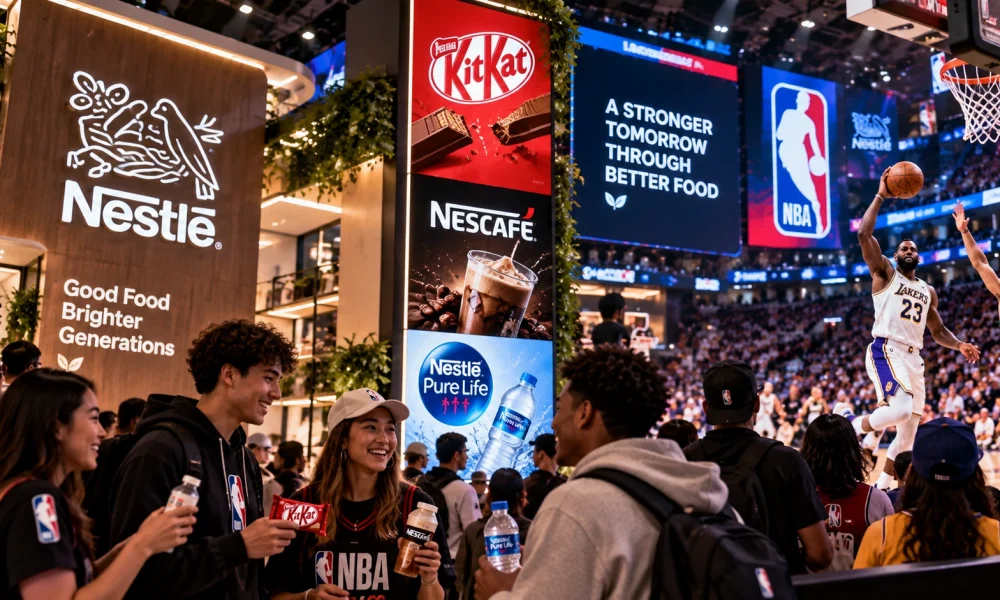
Nestlé is making its largest international sports sponsorship investment to date through a new partnership with the NBA, as the food giant looks for more effective ways to connect with younger consumers.
The agreement covers 21 countries across four continents and focuses on Nestlé’s cocoa and malt beverage business. Reuters reported on October 7 that the partnership reflects a wider shift among consumer companies toward sports properties with strong Gen Z and Gen Alpha audiences.
The deal illustrates how the food and beverage industry is adapting to changing consumer behaviour.
Younger consumers are increasingly concerned about health, authenticity and lifestyle.
Traditional advertising can struggle to capture their attention.
Sports provide a different route.
Why basketball matters
The NBA has developed one of the world’s strongest international sports brands.
Its popularity extends well beyond the United States, particularly among younger audiences who follow players and teams through social media.
That makes the league attractive to consumer companies seeking international reach.
Nestlé can use the partnership to connect its products with entertainment, sport and lifestyle rather than relying solely on traditional advertising.
Health-conscious consumers are changing food marketing
Food companies face a particular challenge with younger consumers.
People are increasingly aware of sugar, calories and nutritional content.
That does not mean consumers have abandoned indulgent products.
Instead, they are becoming more selective.
Brands need to demonstrate relevance beyond simple consumption.
Sports partnerships can help create associations with energy, activity and community.
Nestlé is not alone
The strategy reflects a wider trend.
PepsiCo, Coca-Cola and Unilever have also invested heavily in sports partnerships.
Sports provide enormous audiences and allow brands to build campaigns across television, digital platforms, stadiums and social media.
The NBA is particularly valuable because its international audience is highly engaged online.
Sponsorship is becoming more measurable
Modern sports sponsorship is also increasingly data-driven.
Companies want to know not simply how many people saw a logo but whether the partnership influenced awareness, engagement or purchasing behaviour.
Digital platforms make that measurement easier.
A basketball partnership can generate social content, influencer campaigns, competitions and interactive experiences.
That gives brands more opportunities to measure engagement than traditional billboard advertising.
The Gen Z challenge
Younger consumers are often harder to reach through conventional advertising.
They use multiple platforms and quickly ignore content that feels repetitive.
They also expect brands to have clear identities.
Sports can provide a natural environment for storytelling.
Players become cultural figures.
Teams create communities.
Major games become shared experiences.
That gives food brands a way to participate in conversations rather than simply interrupt them.
Globalisation is changing consumer brands
Nestlé’s partnership also reflects the increasing globalisation of food brands.
A product may have different names or flavours in different markets, but the underlying brand can still be connected through global campaigns.
The NBA provides a common international platform.
A consumer in Europe, Asia or Latin America can recognise the same basketball stars and teams.
That creates an efficient way for Nestlé to build a consistent global marketing message.
The commercial challenge remains
A large sponsorship does not automatically generate sales.
The company still needs effective local marketing.
It must adapt campaigns to different cultures and consumer preferences.
It must also ensure that the products associated with the campaign remain relevant to health-conscious audiences.
The NBA partnership is therefore an investment in long-term brand relevance.
Nestlé is betting that sport can help it remain visible to younger consumers at a time when food choices are becoming increasingly connected to lifestyle and identity.
The strategy reflects a broader truth about the modern food industry.
Companies are no longer competing only on taste and price.
They are competing for cultural relevance.