Food Industry Turns to Diagnostics and Technology as Safety Rules Become More Demanding
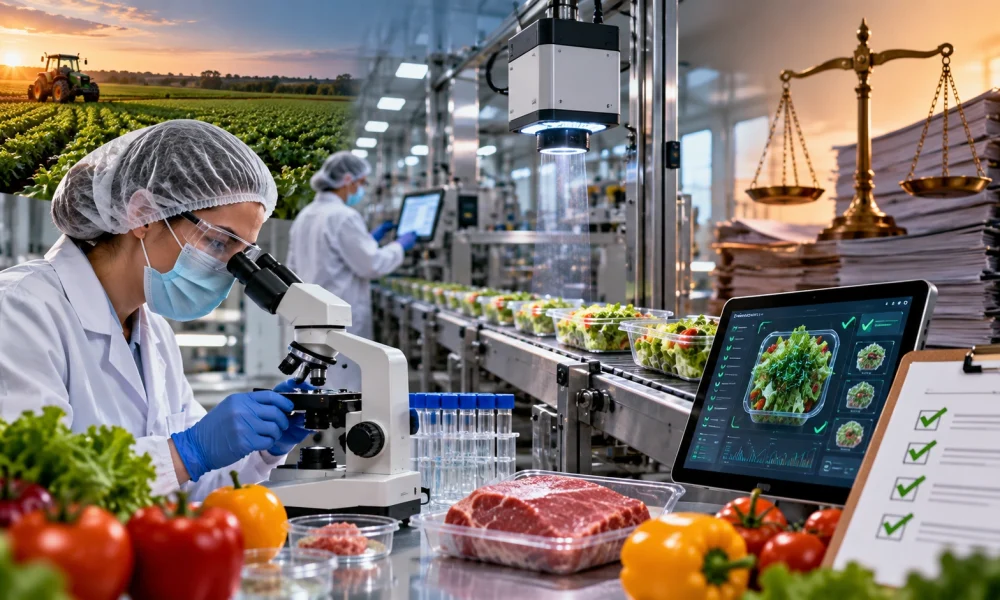
Food manufacturers are investing more heavily in testing and diagnostics as governments increase food-safety requirements and supply chains become more complex.
New market research published October 4 points to continued expansion of the global food diagnostics sector, driven by stricter regulation and the growing complexity of international food production.
Food safety becomes a larger business issue
Modern food production involves ingredients sourced from multiple countries and processed across complex supply networks.
That makes contamination difficult to detect without sophisticated testing systems.
Manufacturers are therefore increasingly investing in technologies capable of identifying bacteria, allergens, chemical contaminants and other risks.
Regulation is pushing innovation
Governments are also increasing pressure on food companies to demonstrate that products are safe before reaching consumers.
Stricter standards can increase costs for manufacturers, but they also create demand for faster and more accurate diagnostic technologies.
Technology changes testing
Traditional food testing can require significant time.
Newer technologies are being developed to provide faster results, allowing manufacturers to identify potential problems before contaminated products reach retailers.
This can reduce the scale of recalls and protect consumers.
Global supply chains add complexity
The international nature of the food industry makes traceability increasingly important.
A single product can contain ingredients sourced from several countries.
If a problem emerges, manufacturers need to identify where an ingredient came from and which products may have been affected.
Digital traceability systems are therefore becoming increasingly important.
Consumers expect transparency
Food safety is also becoming part of brand reputation.
Consumers expect manufacturers to provide clear information about ingredients, allergens and production standards.
A major contamination incident can damage consumer trust long after the original problem has been resolved.
A growing technology market
The food diagnostics industry is therefore benefiting from several simultaneous trends.
Regulation is becoming stricter, supply chains are becoming more complicated and consumers are demanding greater transparency.
For food companies, investment in testing is increasingly viewed not simply as a compliance cost but as part of protecting the brand itself.