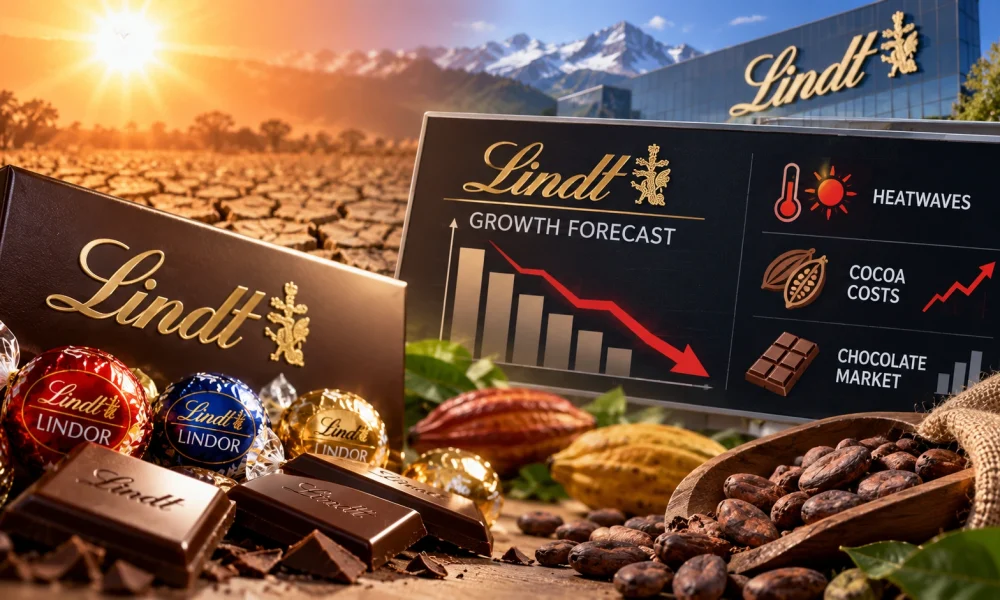
Lindt Cuts Growth Forecast as Heatwaves and Cocoa Costs Reshape the Chocolate Market
The global chocolate industry is entering a more difficult phase as high cocoa prices, weaker consumer demand and extreme summer temperatures combine to challenge one of Europe’s best-known premium confectionery producers.
Swiss chocolate maker Lindt & Sprüngli has reduced its 2026 organic sales growth forecast for the second time this year. The company now expects growth of between 0% and 2%, down from its previous forecast of 4% to 6%.
The revision highlights the pressure facing premium chocolate brands as producers attempt to protect margins while consumers become more sensitive to higher prices.
Cocoa has become a major cost problem
One of the central issues is the price of cocoa.
Lindt said cocoa costs had increased sharply, with the company reporting an 80% rise in cocoa prices over a six-month period.
Chocolate manufacturers have responded by increasing retail prices, but higher prices can quickly affect consumer behaviour.
The effect is particularly visible in premium products, where consumers have more alternatives and may postpone purchases or choose smaller products when prices rise.
Heatwaves changed seasonal demand
Europe’s unusually hot summer created another challenge.
Chocolate sales traditionally benefit from seasonal gifting, tourism and events, but very high temperatures can discourage consumers from purchasing products that are sensitive to heat.
Lindt said demand was particularly weak for seasonal products, while premium gift boxes and pralines experienced stronger volume declines.
This is significant because premium confectionery relies heavily on products bought for occasions rather than everyday consumption.
Smaller products could become more important
Lindt is responding by adjusting its product and packaging strategy.
The company has indicated that it plans to place greater emphasis on smaller and more affordable formats, giving consumers a way to continue buying the brand without paying the price of larger premium products.
This reflects a broader trend across the food industry.
When inflation changes purchasing behaviour, brands often respond by introducing smaller portions, new price points and formats designed to keep products accessible.
The strategy can protect volumes, but it also creates a challenge for manufacturers because smaller products can increase packaging and distribution costs per unit.
The chocolate industry is looking beyond traditional cocoa
Lindt’s results arrive as the wider chocolate industry is examining alternatives to conventional cocoa.
Food manufacturers and ingredient companies are increasingly exploring cocoa-free or hybrid ingredients as a way to reduce exposure to supply shortages, weather-related disruption and extreme price volatility.
FoodNavigator reported that alternative cocoa is moving from a niche innovation toward a more serious strategic option for manufacturers. The interest is being driven by the gap between growing chocolate demand and uncertainty surrounding future cocoa production.
The technology still faces major challenges, particularly around taste, price and consumer acceptance.
Premium chocolate enters a new phase
Lindt has maintained its operating profit targets for 2026 and its longer-term growth ambitions despite the weaker sales outlook.
The company is also implementing cost-saving measures and a hiring freeze, while saying it does not currently plan job cuts.
The bigger question is whether the current pressure is temporary or represents a structural change in the economics of chocolate.
If cocoa prices remain elevated and consumers continue to resist higher retail prices, manufacturers will have to rethink everything from product size and packaging to sourcing and ingredients.
For consumers, the result could be a chocolate market with fewer large premium purchases, more smaller formats and greater experimentation with alternative ingredients.