Food Companies Adapt to the GLP-1 Era as Weight-Loss Drugs Change Consumer Demand
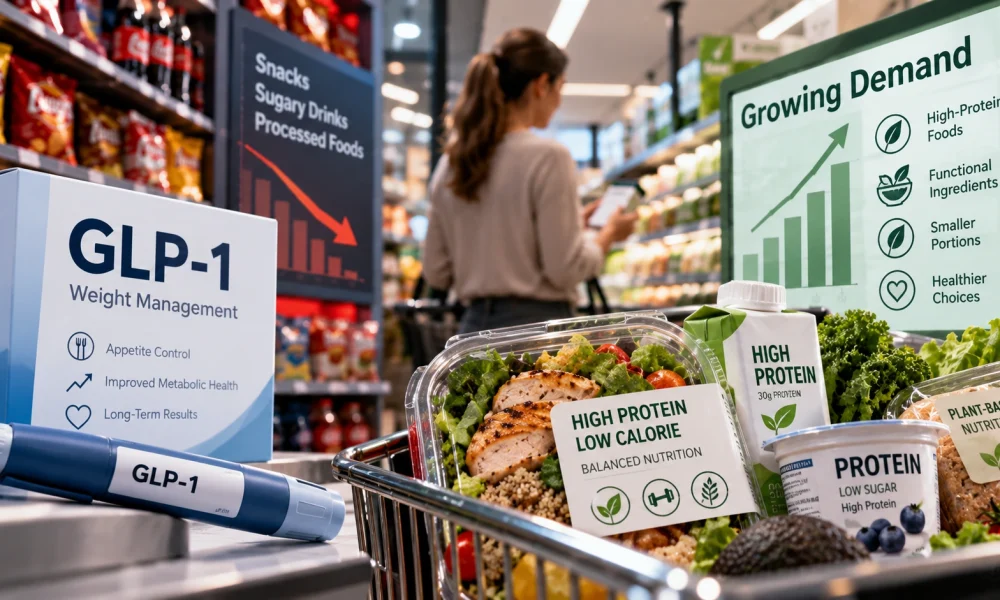
The rapid growth of GLP-1 weight-loss medicines is creating a new challenge for the global food and beverage industry, while also opening a new market for products designed around the nutritional needs of people taking these treatments.
Drugs such as Ozempic and Wegovy reduce appetite and have raised questions about whether lower food consumption could eventually affect demand for snacks, packaged meals, beverages and other products traditionally sold by large food companies.
For manufacturers, the response is increasingly moving beyond simply defending existing categories.
From threat to new consumer segment
Nestlé is among the companies trying to turn the change into a business opportunity.
The company is using artificial intelligence and nutritional research to develop products aimed specifically at consumers taking GLP-1 medicines.
According to Reuters, Nestlé is analysing clinical research and using technology to identify combinations of nutrients that could address some of the nutritional challenges associated with rapid weight loss.
The company has already introduced products positioned around higher protein intake and muscle health.
Protein becomes more important
One of the major issues associated with rapid weight loss is the potential loss of lean muscle mass.
That has encouraged food manufacturers to focus on products containing more protein and nutrients designed to support muscle health.
Nestlé has added collagen protein to products sold under its Vital Proteins brand and has developed Boost Advanced Nutrition Shake in the United States, containing 35 grams of protein.
The company has also introduced a higher-protein version of Milo in Asian and Australian markets.
These products illustrate how the influence of GLP-1 medicines could extend beyond traditional diet foods.
Portion size is also changing
Food companies are examining portion sizes as consumers change how much they eat.
A person taking an appetite-suppressing medicine may still want familiar foods, but in smaller quantities.
That creates opportunities for manufacturers to sell smaller portions, higher-protein snacks and products designed to deliver more nutrients in less food.
The change could affect everything from ice cream and confectionery to breakfast products and ready meals.
A challenge for traditional categories
The implications for the food industry could be substantial if GLP-1 medicines continue to gain users globally.
Snack foods and other calorie-dense products have traditionally benefited from impulse purchases and large serving sizes.
If consumers eat less frequently or prioritise nutritional value, manufacturers may need to rethink product portfolios.
The industry’s response is already visible in the expansion of high-protein and functional products.
AI becomes part of food innovation
The GLP-1 trend is also accelerating the use of artificial intelligence in food development.
Nestlé says it is using AI to examine scientific research and identify potential nutritional combinations.
For large food companies, this could reduce the time needed to identify consumer needs and develop products around emerging health trends.
However, turning scientific findings into commercially successful food products still requires consumer acceptance, competitive pricing and strong distribution.
A long-term change or a passing trend?
The biggest uncertainty is the scale and duration of the GLP-1 effect.
The medicines are still reshaping the weight-loss market, and their long-term impact on consumer food habits remains difficult to predict.
For food manufacturers, however, the direction of travel is already clear.
Instead of treating GLP-1 drugs exclusively as a threat to food consumption, companies are increasingly developing products for the consumers taking them.
That could lead to a broader transformation of the food market, where protein content, portion size, nutritional density and functional benefits become increasingly important factors in product development.