Cancer Blood Test Moves Closer to FDA Approval as Coverage Becomes the Next Big Question
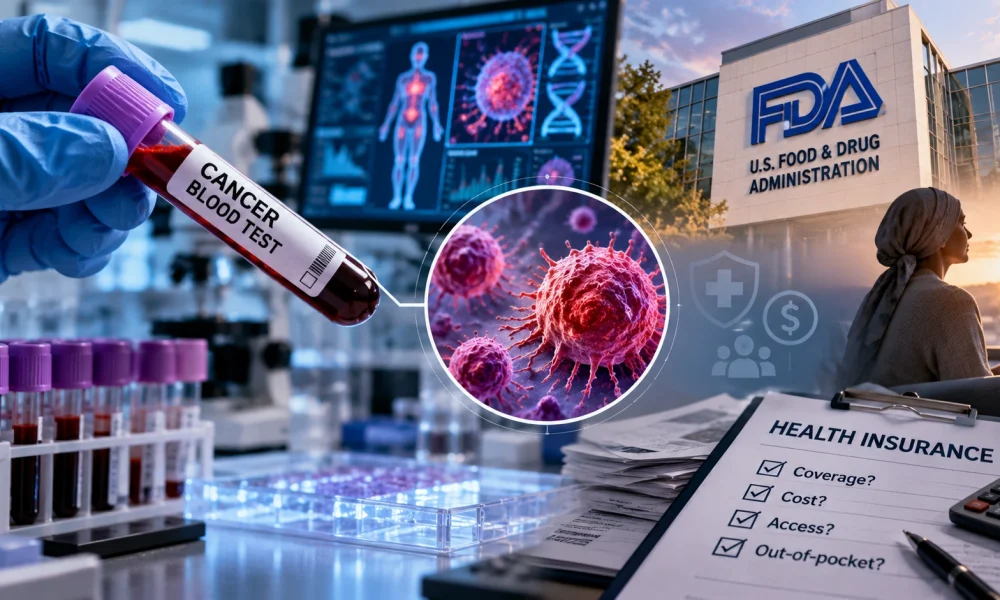
A blood test designed to detect multiple types of cancer at an early stage has moved closer to possible approval in the United States after an advisory panel to the Food and Drug Administration backed the potential benefits of Grail’s Galleri test.
The panel concluded that the test’s potential benefits outweigh its risks, bringing the technology closer to a regulatory decision. The FDA is not required to follow the panel’s recommendation, although it frequently does. (reuters.com)
The development could represent an important moment for the growing field of multi-cancer early detection.
The idea behind the test
Galleri is designed to identify signals in blood that may indicate the presence of cancer.
Instead of screening for one specific disease, the test aims to detect biological signals associated with multiple cancer types from a single blood sample.
That approach has attracted significant interest because many cancers are difficult to detect early using conventional screening methods.
However, the test is not designed to replace established screening programmes.
Approval would change the regulatory landscape
Galleri is currently marketed in the United States as a laboratory-developed test.
It is not FDA-approved and is not generally covered by Medicare or private health insurance.
Patients who use the test currently pay out of pocket, with the price reported at around $700.
FDA approval would therefore be more than a regulatory milestone.
It could potentially change how the test is prescribed, reimbursed and integrated into the American healthcare system.
Insurance coverage remains a major obstacle
Even if the FDA approves Galleri, widespread access would not necessarily follow immediately.
US health insurers and government programmes would have to determine how the test should be covered.
A new US law could make FDA-approved multi-cancer detection tests eligible for Medicare coverage beginning in 2028, according to Reuters.
Private insurers could also face pressure to cover the tests if the US Preventive Services Task Force eventually recommends their use. (reuters.com)
Early detection still has scientific questions
The appeal of the technology is straightforward: detecting cancer earlier can potentially increase the number of treatment options available to patients.
But early detection does not automatically guarantee better outcomes.
Researchers need to establish whether detecting a cancer through blood testing actually reduces mortality and whether the tests can distinguish clinically significant cancers from abnormalities that might never become dangerous.
False-positive results can also lead to additional scans, biopsies and anxiety.
These questions are central to the regulatory and medical debate surrounding multi-cancer detection tests.
A growing field
Grail is not the only company developing this type of technology.
Abbott is also developing a blood-based cancer detection test known as Cancerguard.
The emergence of several competing products suggests that the sector could become an important part of preventive healthcare if clinical evidence continues to improve.
The challenge will be integrating the technology into existing healthcare pathways without creating unnecessary testing or widening inequalities in access.
The next stage
The FDA will make the final regulatory decision on Galleri.
If approval follows, attention will quickly shift toward insurance coverage, clinical guidelines and the evidence required to determine which patients should be offered the test.
The technology is therefore approaching an important transition point.
It is moving from a privately paid laboratory service toward the possibility of becoming part of mainstream preventive medicine.
Whether that happens will depend not only on the FDA decision, but also on evidence, medical guidelines and the willingness of healthcare systems to pay for widespread screening.