UK Puts £80 Million Behind Faster Dementia Diagnosis Using AI, Blood Tests and Rapid MRI
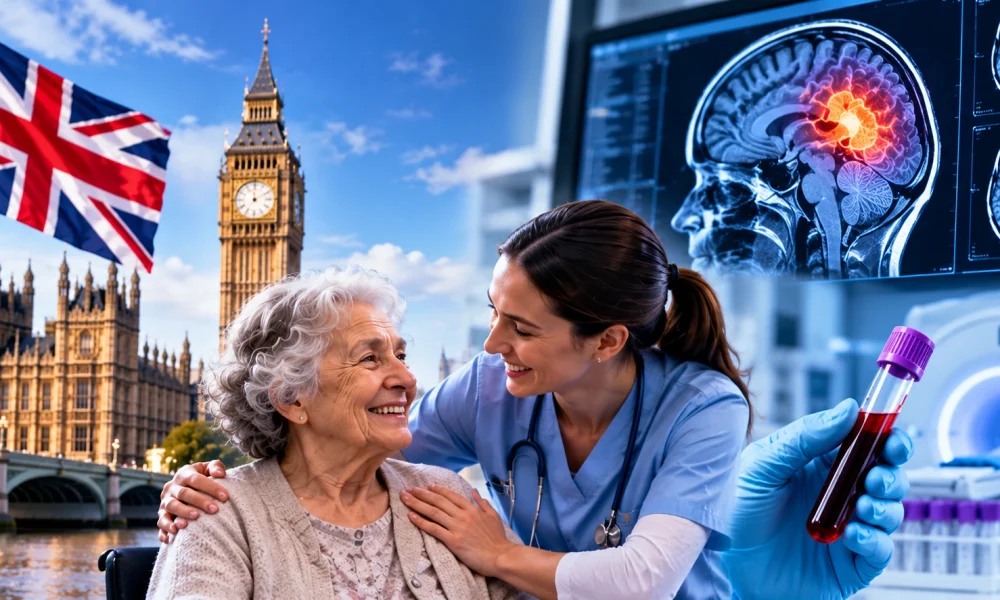
The United Kingdom is investing up to £80 million in a new programme designed to accelerate dementia diagnosis, with nine technologies set to be tested in real National Health Service settings.
The programme includes faster MRI scans, blood-based biomarkers, artificial intelligence tools and a 15-minute remote cognitive assessment. The goal is to increase the proportion of patients receiving a dementia diagnosis within 18 weeks of referral from around 60% today to 92%. (ukri.org)
The initiative comes as healthcare systems face growing pressure from ageing populations and increasing demand for cognitive assessment.
Diagnosis can take more than a year
Patients referred for dementia assessment can currently face lengthy waiting periods.
UK Research and Innovation says some patients wait more than a year for a diagnosis.
The new programme aims to shorten that process by testing technologies that can reduce the amount of time required for scans, improve the accuracy of assessments and allow some monitoring to take place outside hospitals.
MRI scans could become much faster
One of the projects aims to reduce the duration of a brain MRI scan from approximately 20 minutes to around seven minutes.
Shorter scans could allow hospitals to process more patients using existing equipment.
The project is being led by University College London and the UK Dementia Research Institute.
If the approach proves effective in real-world NHS settings, it could help reduce one of the bottlenecks in dementia assessment.
Blood biomarkers are also being tested
Another project will examine how blood-based biomarkers can be incorporated into routine NHS memory services.
Blood tests could potentially provide doctors with additional information when evaluating patients with suspected dementia.
The attraction is partly practical.
Blood samples are easier to collect than more invasive or time-consuming diagnostic procedures, and biomarkers could eventually help doctors distinguish between different forms of neurodegenerative disease.
However, their value depends on accuracy and appropriate clinical interpretation.
AI enters the diagnostic pathway
Several of the projects use artificial intelligence.
Researchers at the University of Cambridge are developing an AI-supported clinical decision tool that will analyse routinely collected information such as medical records, blood tests and cognitive assessments.
Another project at Imperial College London will use sensors and AI to monitor people in their homes.
The objective is to identify changes that could allow earlier intervention and more personalised care.
Remote assessment could reduce pressure on clinics
A separate project is testing a 15-minute digital cognitive assessment that can be completed remotely.
Remote testing could make assessment more accessible for people who have difficulty travelling to specialist clinics.
It could also help healthcare services prioritise patients who need more detailed clinical evaluation.
The technology will need to be tested carefully across different age groups and levels of digital access before any wider implementation.
Faster diagnosis is becoming more important
Earlier diagnosis can give patients and families more time to understand the condition, plan future care and make decisions about treatment and finances.
It can also become increasingly important as new treatments for some forms of dementia are introduced.
However, speed cannot come at the expense of accuracy.
The UKRI programme is therefore designed around real-world testing. Projects will receive further funding only if they demonstrate that they work in practice.
A broader transformation of dementia care
The £80 million initiative is not simply an investment in new machines or software.
It represents an attempt to redesign part of the dementia diagnostic pathway around faster imaging, biomarkers, digital monitoring and clinical decision support.
The success of the programme will ultimately depend on whether these technologies can move from research environments into routine healthcare while maintaining accuracy and patient support.
If they do, the programme could change how dementia is diagnosed across the NHS.