Congo Tests Experimental Ebola Drug as Deadliest Outbreak Pushes Health Systems to the Limit
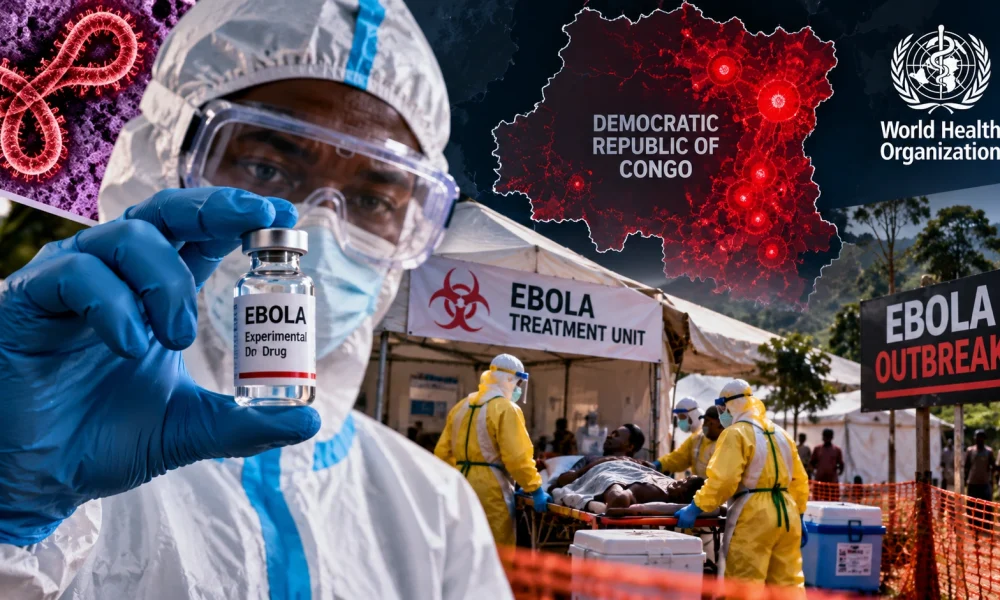
An experimental antiviral drug is being tested in the Democratic Republic of Congo as health authorities and international partners attempt to contain the country’s largest Ebola outbreak and develop new tools against the virus.
More than 250 people have already enrolled in a clinical trial testing obeldesivir, an experimental drug developed by Gilead Sciences. The study is taking place in Ituri province, one of the areas most affected by the current outbreak. (apnews.com)
The trial is particularly significant because the outbreak is being caused by the Bundibugyo species of Ebola, for which there is currently no approved vaccine or specific treatment.
Testing a drug before symptoms appear
The trial is using obeldesivir as post-exposure prophylaxis.
Participants who have been exposed to an infected person receive the medicine before they develop symptoms. Researchers then monitor them closely for 21 days, the period during which Ebola symptoms could emerge following exposure.
The objective is to determine whether the drug can prevent infection or reduce the risk of developing serious disease.
The study is expected to eventually include almost 1,000 participants.
A difficult outbreak to control
The outbreak was declared in May and has spread across several provinces.
More than 8,300 confirmed cases and more than 4,000 deaths have been recorded, according to data cited by international health organisations.
The scale of the outbreak has placed enormous pressure on local health services.
Healthcare workers are among those exposed to the virus, while the movement of patients and contacts between communities makes it difficult to break transmission chains.
The outbreak has also been complicated by insecurity and logistical problems in parts of eastern Congo.
Vaccination is already underway
Health authorities have started vaccinating healthcare workers and other people considered to be at high risk.
The Ervebo Ebola vaccine has proved effective against the Zaire species in previous outbreaks, but its effectiveness against Bundibugyo virus is still being investigated.
That distinction is important.
Ebola is not a single virus strain, and vaccines or treatments developed for one species cannot automatically be assumed to work equally well against another.
The current outbreak therefore represents both an emergency response and a test of how quickly medical research can adapt to a different viral threat.
The trial involves people directly exposed to the outbreak
Participants include healthcare workers, relatives of infected patients and other people who have been exposed to Ebola.
Doctors involved in the study must balance the urgency of the situation with the requirements of clinical research.
Participants are monitored closely, and anyone who develops symptoms can receive medical treatment immediately.
For researchers, the outbreak provides an opportunity to collect evidence under real-world conditions that would be difficult to reproduce elsewhere.
Why the research matters beyond Congo
A successful treatment would have implications beyond the current outbreak.
Bundibugyo Ebola has caused previous outbreaks in Central Africa, but research into specific treatments has remained limited because cases are relatively rare.
Developing an effective therapy could therefore give health authorities another tool for future outbreaks.
It could also demonstrate the value of maintaining research programmes for diseases that may not generate large commercial markets but can have devastating consequences when outbreaks occur.
The wider public health challenge
The experimental treatment is only one part of the response.
Containing Ebola requires rapid diagnosis, isolation, contact tracing, vaccination where appropriate and sustained community cooperation.
Medical teams also have to work in areas where transportation and security can make basic healthcare difficult.
The current trial is therefore taking place against a much larger public health challenge.
If obeldesivir proves effective, it could become an important addition to the medical response to Bundibugyo Ebola. But researchers will need more data before its effectiveness and safety can be established.
For now, the trial represents one of the most closely watched efforts to develop a new line of defence against the outbreak.