Europe’s Electric Car Market Hits a New Milestone as Affordable Models Push EV Sales Higher

Europe’s electric vehicle market is entering a new phase, with sales reaching record levels this year as more affordable models arrive and manufacturers face increasing pressure to meet emissions targets.
New data highlighted by Transport & Environment and reported by Reuters shows that electric car sales across Europe have accelerated significantly in 2026. The increase comes at a critical moment for the automotive industry, as manufacturers are attempting to balance the cost of developing new electric models with increasingly demanding environmental regulations and changing consumer preferences.
For several years, the European electric vehicle market was dominated by premium models and early adopters. High prices, limited charging infrastructure and concerns about driving range kept many consumers from switching from petrol and diesel vehicles.
That situation is beginning to change.
Affordability becomes the key issue
The arrival of more competitively priced electric cars is becoming one of the most important developments in Europe’s transition away from combustion engines.
Consumers who previously considered electric vehicles too expensive are now seeing a broader range of models positioned closer to the prices of conventional cars.
This matters because the next stage of electrification depends less on convincing wealthy early adopters and more on reaching the mass market.
The European automotive industry has increasingly recognised that battery technology alone will not determine the success of the transition. Manufacturing costs, vehicle pricing, financing conditions and charging availability are becoming equally important.
Automakers that can produce affordable electric cars at scale are likely to be better positioned as European consumers become more price-sensitive.
Carmakers face regulatory pressure
The growth in EV sales is also connected to European emissions targets.
Manufacturers are under pressure to reduce the average emissions of their fleets, making electric vehicles an increasingly important part of their product strategies.
This has created a difficult environment for companies that still depend heavily on combustion-engine models.
The transition requires enormous investments in batteries, software, factories and supply chains. At the same time, manufacturers must continue producing profitable vehicles while dealing with competition from Chinese companies that have expanded rapidly in the electric segment.
Chinese competition remains a major factor
European automakers are not operating in an isolated market.
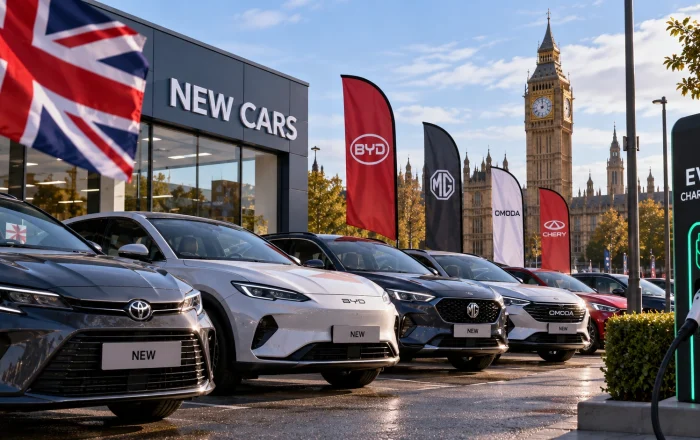
Chinese electric vehicle manufacturers have become increasingly visible across Europe, offering models that compete on price, technology and equipment.
The arrival of these companies has forced established European brands to reconsider how quickly they can bring affordable EVs to market.
Competition is particularly important because consumers increasingly expect electric cars to offer the same convenience and performance as traditional vehicles without carrying a substantial price premium.
The market is moving beyond early adopters
The latest figures suggest that the European EV market is gradually becoming more mainstream.
That does not mean the transition is complete.
Charging networks still vary significantly between countries, electricity prices remain important for consumers, and many drivers continue to prefer petrol or hybrid vehicles because of concerns about charging times and long-distance travel.
But the growing number of affordable electric models is changing the equation.
The industry’s challenge is now to maintain momentum while making electric mobility accessible to a much broader section of the population.
For European automakers, 2026 could therefore become an important turning point. The electric car is no longer simply a technology project or a premium product. It is increasingly becoming a central part of the mass-market automotive business.