Airlines and Airports Race to Modernise Global Travel as Passenger Growth Tests Infrastructure
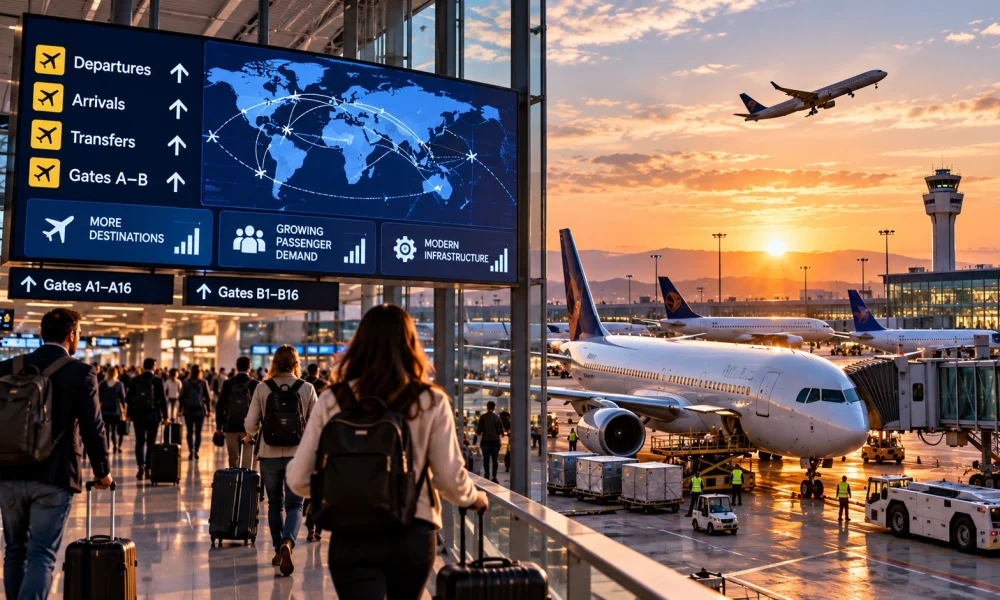
The international travel industry is entering another period of rapid expansion, but airlines and airports are facing increasing pressure to modernise infrastructure and make passenger journeys more efficient.
Travel industry organisations and companies are announcing new initiatives this week focused on airport operations, air traffic management and route development.
Travel Daily News reported on October 6 that the International Civil Aviation Organization is accelerating reforms to global air traffic flows, while airport-airline cooperation is becoming a central issue for the industry.
The developments reflect a basic challenge.
More people want to travel, but aviation infrastructure must expand at the same time.
Airport capacity is becoming a strategic issue
Airports in major cities are operating under increasing pressure.
Passenger numbers have recovered strongly from the pandemic period and continue to grow in many markets.
But airports cannot simply add flights indefinitely.
Runways, terminals, gates, baggage systems and air traffic networks all have physical limits.
That makes efficiency increasingly important.
Air traffic management needs to change
ICAO is working on reforms designed to improve global air traffic flows.
The objective is to reduce congestion and make better use of existing capacity.
Even small improvements in air traffic management can have significant effects when applied across thousands of daily flights.
Better routing can reduce delays, fuel consumption and operating costs.
Airlines continue expanding networks
Airlines are also adding new routes.
Gulf Air launched a new direct service between Bahrain and Kuala Lumpur on October 6, strengthening connections between the Gulf and Southeast Asia.
New routes are important because they can stimulate tourism and business travel while strengthening the position of airports as regional hubs.
The Gulf has become particularly important in this respect.
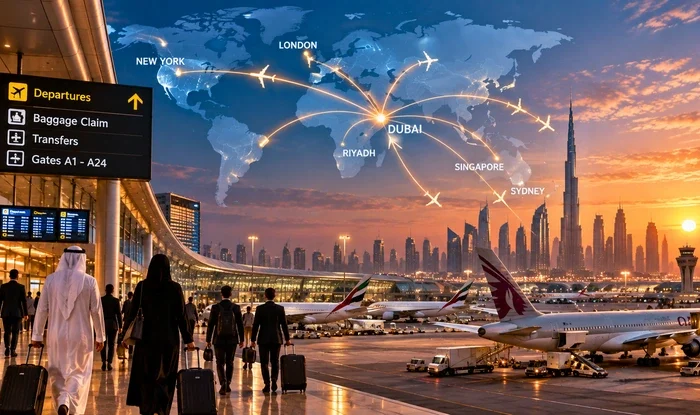
Airlines based in the region connect Europe, Asia, Africa and Australia through major hubs.
Hotels are expanding too
The travel industry’s growth is also visible in hospitality.
Travel Daily News reported several hotel expansion projects on October 6, including the arrival of Ruby Hotels in France and new projects in Greece.
Hotel companies are increasingly targeting destinations where demand is expected to grow.
Travellers want more than more flights
The modern traveller is also becoming more selective.
Travel trends indicate growing interest in longer stays, simpler itineraries and experiences that feel more meaningful.
Euronews reported on October 6 that travellers are increasingly considering slower and less-planned holidays, with nearby destinations also gaining attention.
That could influence the way tourism companies design products.
Instead of encouraging travellers to visit several cities in a short period, operators may increasingly promote longer stays in one destination.
Technology is changing the journey
Digital technology is becoming another major part of the travel experience.
AI systems can help travellers compare destinations, plan itineraries and organise bookings.
Airports are also investing in digital identity, biometric processing and automated security systems.
The objective is to reduce friction.
Travellers increasingly expect airports to operate with the same digital convenience they experience in other parts of their lives.
Sustainability remains a major challenge
Aviation growth also creates environmental pressure.
Airlines are investing in more efficient aircraft and sustainable aviation fuel, while airports are examining electrification and energy efficiency.
The industry faces a difficult balance.
Demand for international travel remains strong, but governments and consumers are increasingly concerned about emissions.
The future of travel will depend on efficiency
The next phase of global tourism will therefore not simply be about adding more passengers.
It will be about moving them more efficiently.
Airports need better infrastructure.
Airlines need more efficient aircraft and networks.
Air traffic systems need to reduce congestion.
Hotels need to adapt to changing traveller expectations.
And digital services need to make the journey easier without removing the human element.
The global travel industry has entered a period of expansion, but its long-term success will depend on whether infrastructure and technology can keep pace with the number of people who want to explore the world.