Italian Football Faces a Leadership Shake-Up as Giovanni Malagò Prepares to Leave His Post
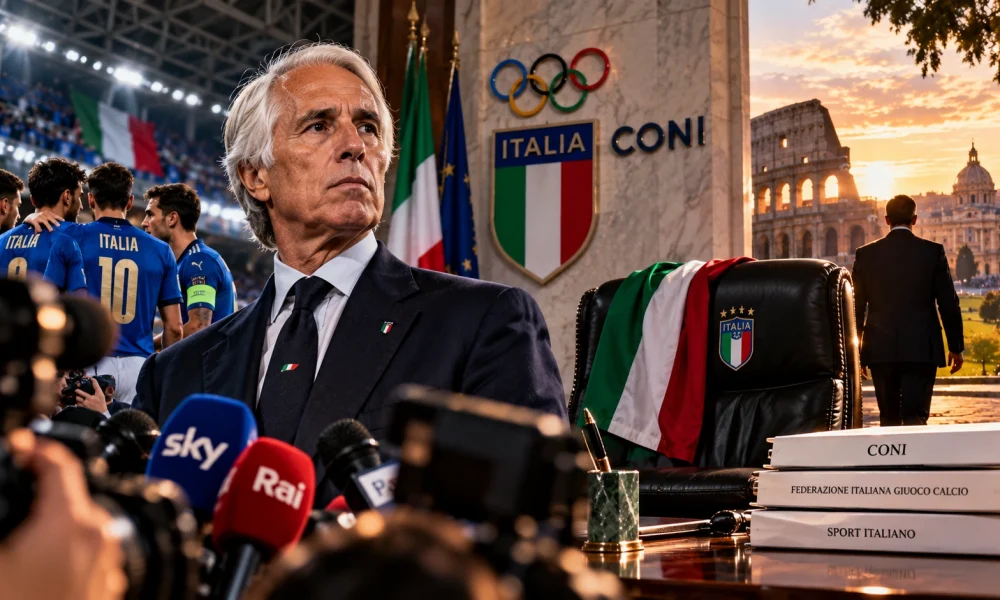
Italian football is preparing for a change at the top of its national governing structure, with FIGC president Giovanni Malagò expected to leave his position and return as a special administrator under a compromise arrangement.
Reuters reported on October 6 that Malagò is set to lose his position as president of the Italian Football Federation while remaining involved in the administration of the sport.
The development comes at a sensitive time for Italian football.
The country is trying to strengthen its national football structures while maintaining competitiveness at international level and addressing wider debates over governance.
Why the leadership change matters
Football governance in Italy is closely connected to the organisation of the national team, domestic competitions and relationships between professional clubs.
The FIGC plays a central role in managing the sport.
A change in leadership can therefore influence how the federation approaches financial rules, competitions, youth development and relations with Serie A clubs.
Italy remains a major football country
Italy has one of the strongest football traditions in the world.
The national team has won four World Cups and remains one of Europe’s most recognisable football brands.
Serie A clubs also have enormous international audiences.
But the Italian game has faced structural challenges in recent years.
Stadium infrastructure, commercial growth and financial sustainability have all been major subjects of debate.
Governance has become increasingly important
European football is changing rapidly.
The largest clubs are generating enormous revenues from broadcasting, sponsorship and international audiences.
At the same time, governing bodies are attempting to ensure competitive balance and financial sustainability.
Italy therefore needs a governance structure capable of dealing with increasingly complex commercial and sporting demands.
Domestic competition is changing
Italian clubs are also facing stronger competition from other European leagues.
The Premier League continues to dominate international commercial revenues.
Spanish, German and French clubs are also developing global strategies.
Italian football has strong brands but has sometimes struggled to translate that heritage into comparable commercial growth.
The federation’s leadership has a role in creating conditions that allow clubs to modernise.
Youth development remains essential
Another long-term challenge is the development of Italian players.
The national team has experienced periods when concerns over the availability of elite young talent became a major topic.
Youth academies and opportunities for domestic players therefore remain important.
A stable football administration can help coordinate these systems.
The special administrator role
Malagò’s expected return as a special administrator suggests that the transition is intended to maintain continuity.
Rather than creating an entirely new structure immediately, the compromise could allow the federation to continue operating while broader governance questions are addressed.
The arrangement will be closely watched by clubs, players and supporters.
Italy’s football future depends on more than one appointment
The leadership change should therefore be viewed as part of a wider discussion about the future of Italian football.
The country has enormous sporting heritage and a passionate domestic audience.
But maintaining competitiveness requires investment, modern infrastructure and effective governance.
The coming period will reveal whether the federation can turn the current leadership transition into an opportunity for structural reform.
For Italian football, the central challenge is not simply choosing a new leader.
It is building a system capable of competing successfully in an increasingly commercial and global football industry.