WHO Recommends Lifestyle Changes Over GLP-1 Drugs for Children With Obesity
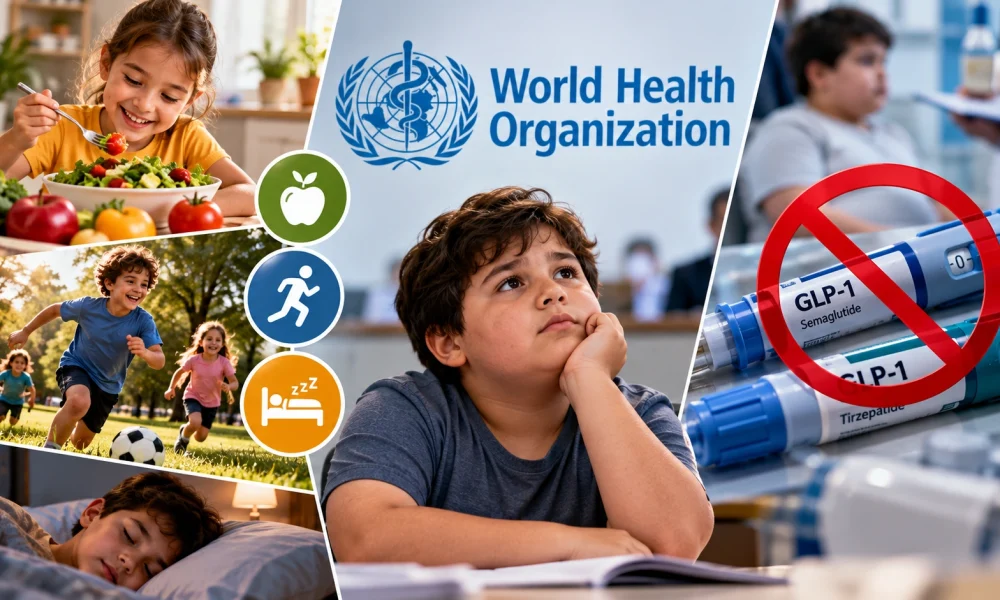
The World Health Organization has issued new guidance on childhood obesity, recommending diet, physical activity and counselling rather than relying primarily on GLP-1 weight-loss medicines for children.
The guidance, reported by Reuters on October 7, comes as powerful weight-loss drugs become increasingly common among adults and pharmaceutical companies expand efforts to develop treatments for younger patients.
The WHO’s position is important because childhood obesity has become a major global health issue.
At the same time, GLP-1 medicines have transformed the treatment of obesity in adults.
The challenge for health authorities is determining where these drugs fit into the treatment of children.
Childhood obesity is different from adult obesity
Children are still developing physically and psychologically.
Treatment therefore needs to consider growth, nutrition and long-term development.
A medication that is appropriate for some adults cannot automatically be considered appropriate for children.
The WHO guidance emphasises broader interventions that involve diet, exercise and behavioural support.
Why GLP-1 drugs have attracted attention
GLP-1 medicines can significantly reduce appetite and help many adults lose weight.
The success of drugs such as semaglutide and tirzepatide has created enormous demand.
Pharmaceutical companies are now researching additional uses and age groups.
However, access, cost, side effects and long-term effects remain important considerations.
For children, those questions become even more significant because treatment may continue over many years.
Lifestyle interventions remain fundamental
The WHO’s recommendation does not mean that obesity should be treated simply as an issue of personal responsibility.
Childhood obesity is influenced by many factors.
Family income, food availability, urban design, school environments, advertising and access to physical activity all play roles.
Effective interventions therefore need to address the environment around children.
Food companies are also affected
The WHO guidance comes as major food companies are responding to the wider GLP-1 phenomenon.
Manufacturers are developing products with higher protein content, smaller portions and greater nutritional density.
The growth of weight-loss medicines has created uncertainty for companies whose business models rely heavily on high-calorie snacks and large portions.
Childhood obesity adds another layer to the discussion.
Schools can play an important role
Schools are among the most important environments for preventing unhealthy weight gain.
They influence what children eat during the day and how much physical activity they receive.
School-based programmes can also provide nutrition education.
The challenge is making these programmes effective without creating stigma.
Stigma is a major concern
Health experts increasingly recognise that obesity treatment must avoid blaming children.
Weight stigma can contribute to anxiety, social isolation and unhealthy behaviours.
A medical approach should therefore focus on health rather than appearance.
That is particularly important for adolescents.
The pharmaceutical industry will continue researching
The growing market for obesity treatment means pharmaceutical companies are unlikely to abandon research into paediatric applications.
Clinical trials may eventually provide more evidence about which children could benefit from medication.
The WHO guidance can therefore evolve as scientific knowledge changes.
A broader health strategy is needed
For now, the WHO’s position emphasises that lifestyle and environmental interventions remain central to childhood obesity prevention and treatment.
That approach requires governments, schools, families, healthcare systems and food companies to work together.
The global obesity crisis cannot be solved by medication alone.
GLP-1 medicines may become part of the medical toolkit for some patients in the future, but for children, the WHO is making clear that healthy food, physical activity and behavioural support remain fundamental.