UN Adopts New Global Pandemic Declaration as Countries Face Pressure to Turn COVID-19 Lessons Into Action
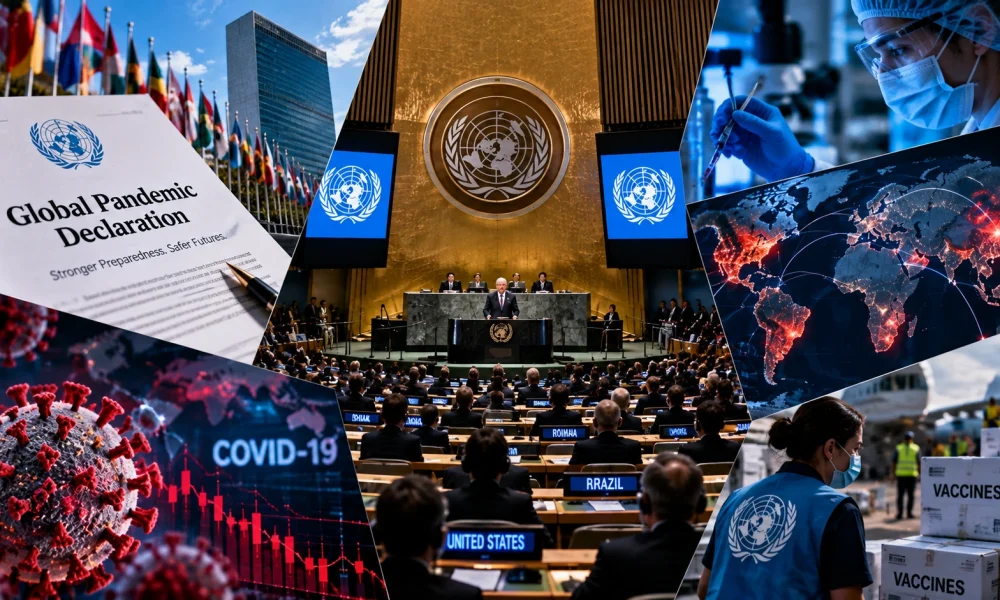
The United Nations General Assembly adopted a new political declaration on pandemic prevention, preparedness and response on October 12, renewing international commitments to strengthen health systems and improve cooperation against future outbreaks. The declaration was adopted by 153 votes in favour, with the United States, Israel and Argentina voting against it and New Zealand and Paraguay abstaining, according to reporting by Global Issues citing UN information. The outcome comes as governments continue to negotiate how to share pathogen information, distribute medical products more equitably and ensure that countries are better prepared for the next major health emergency.
A political commitment, not a new emergency power
The declaration establishes a shared political agenda, but it is not itself a binding international treaty. Its adoption does not automatically create new enforcement powers or guarantee that governments will provide additional funding.
Instead, it renews pressure on countries to strengthen the systems needed to prevent, detect and respond to outbreaks. These include disease surveillance, laboratory capacity, trained health workers, reliable supply chains and the ability to communicate risks to the public.
The World Health Organization welcomed the decision, describing it as a renewed commitment to international cooperation. WHO Director-General Tedros Adhanom Ghebreyesus urged governments to fulfil their promises, particularly by completing negotiations on an important component of the WHO Pandemic Agreement.
The declaration reflects a central lesson of COVID-19: an outbreak that begins in one location can quickly affect health systems, travel, trade and economic activity across the world.
The unfinished question of sharing pathogens and benefits
One of the most important issues is the proposed Pathogen Access and Benefit-Sharing system, known as PABS.
The system is intended to help establish how pathogen samples and related information can be shared for research and development, while ensuring that the benefits of resulting products are distributed more equitably.
Access to pathogen information can be crucial when researchers are identifying a new disease, developing diagnostic tests or designing vaccines and treatments. However, governments have different concerns about how such information should be used and how countries providing samples should benefit from the products developed from them.
The negotiations are therefore about more than scientific cooperation. They also involve questions of fairness, manufacturing capacity, access to medicines and the distribution of responsibilities between wealthier and lower-income countries.
WHO says the outcome of the PABS negotiations will be considered at the next World Health Assembly in May 2027, or earlier through a special session. Finalising this work is a key step towards enabling the broader Pandemic Agreement to enter into force.
Why equitable access matters
During a major outbreak, the ability to manufacture and distribute vaccines, treatments and diagnostic tests can determine how quickly health systems respond.
Countries with strong research institutions and pharmaceutical manufacturing capacity may be able to secure supplies more quickly. Others can face delays, limited production capacity or difficulties financing purchases.
The new declaration calls for stronger local and regional manufacturing, greater investment in research and development, improved surveillance and sustainable financing.
These measures could help reduce dependence on a small number of suppliers during emergencies. However, building manufacturing capacity takes time, investment and technical expertise. Facilities must also be able to meet quality standards and remain useful between major outbreaks.
Equitable access is therefore not simply a question of distributing products after they have been developed. It also depends on where research takes place, how information is shared and whether countries can manufacture or procure essential supplies when demand rises sharply.
Preparedness must extend beyond hospitals
Pandemic preparedness also involves coordination between health authorities, governments, communities and sectors such as agriculture, transport and education.
Disease surveillance needs to detect unusual patterns early. Health systems need plans to expand capacity without abandoning routine care. Authorities need clear communication strategies so that people understand risks and can make informed decisions.
The declaration also supports a broader approach that recognises the connections between human, animal and environmental health. This matters because some infectious diseases can emerge or spread through interactions between people, animals and changing environments.
Preparedness requires investment before a crisis begins, when the immediate political pressure to spend money may be lower.
The challenge of turning commitments into results
The vote itself illustrates that international consensus remains difficult. While the declaration received broad support, three countries voted against it and two abstained.
A political declaration can establish priorities, but implementation depends on national budgets, legislation, institutions and continued international cooperation. Countries may agree on the need for preparedness while disagreeing about funding, access to technology or the obligations attached to international agreements.
The absence of automatic enforcement also means that progress will need to be assessed through concrete measures: stronger surveillance, improved emergency planning, more reliable supply chains and better access to essential health products.
What comes next?
The next major milestone is the continuing work on the Pandemic Agreement and the PABS system. Governments will need to resolve outstanding questions before the wider framework can become operational.
For the public, the significance of the declaration will ultimately depend on whether it helps countries detect outbreaks earlier, respond more effectively and avoid the unequal access to medical products seen during previous emergencies.
The vote renews a global commitment, but it is only one stage in a longer process. Preparedness will be measured not by the language of the declaration, but by the systems countries build before the next health emergency arrives.