Kenya Confirms Second Ebola Case as Health Authorities Expand Contact Tracing
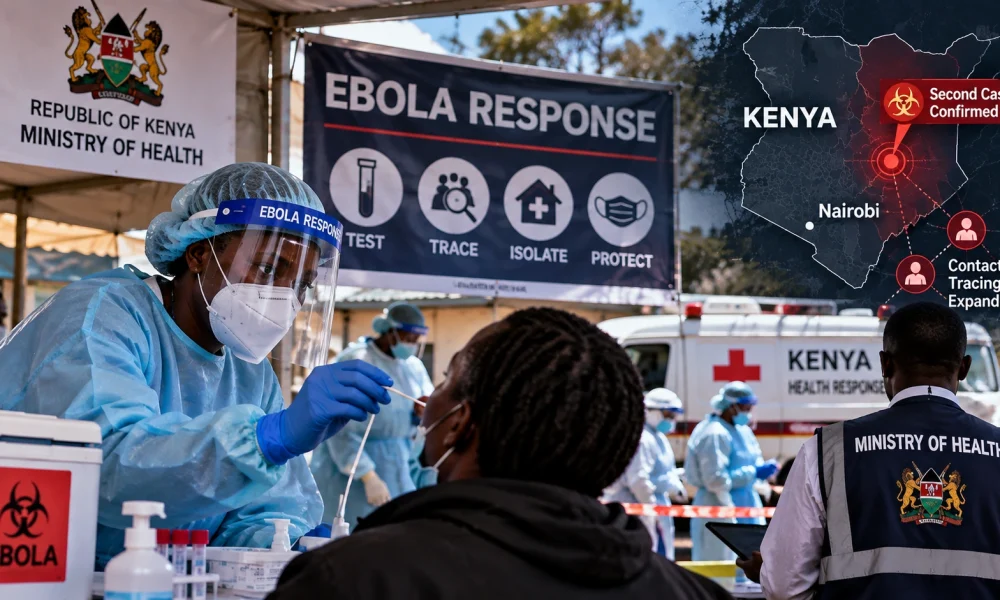
Kenya has confirmed a second Ebola case linked to its first recorded infection, intensifying efforts to contain the virus after the initial patient died in Nairobi earlier this month. The newly confirmed patient, a 39-year-old close relative of the first case, had already been placed in quarantine and was isolated after developing symptoms, according to the country’s health authorities.
Officials said the two infections are epidemiologically linked and that there is currently no evidence of wider community transmission. The second case nevertheless adds urgency to contact tracing, monitoring and infection-control measures, particularly because the initial patient had travelled across several countries before the infection was identified.
The development comes as regional authorities continue responding to an Ebola outbreak associated with the Democratic Republic of the Congo. Kenya is now among the countries reporting infections connected to the wider outbreak, increasing the importance of coordination across borders.
Quarantine and contact tracing remain central
Kenyan authorities have identified 128 contacts linked to the first patient. As of the latest reported update, 113 had been traced, with 108 in quarantine in Kenya. Five contacts were outside the country, and authorities said the relevant health agencies abroad had been informed. Efforts to locate the remaining contacts were continuing.
The second patient’s identification while already in quarantine is an important detail for public-health officials. Monitoring people who have been exposed to a confirmed case can help health workers detect symptoms quickly and isolate patients before further transmission occurs.
Authorities are also assessing people who may have come into contact with the second patient after symptoms developed, including healthcare workers and staff at the quarantine facility. Such investigations help determine whether additional people require monitoring and whether infection-prevention procedures need to be strengthened.
Kenya has tightened screening at airports and border crossings, including measures for travellers arriving from countries associated with the outbreak. Screening can help identify potential cases, but it cannot detect every infection. Early symptoms may be difficult to distinguish from those of other illnesses, making travel histories, contact tracing and prompt medical assessment essential parts of the response.
Why the regional outbreak matters
The wider outbreak is centred in the Democratic Republic of the Congo, where health authorities and international partners have reported thousands of confirmed infections and more than 4,000 confirmed deaths in the latest available figures. The outbreak involves the Bundibugyo strain of Ebola virus, for which there are currently no approved vaccines or specific treatments.
Ebola is transmitted through direct contact with the blood or other bodily fluids of an infected person, or with contaminated materials. Symptoms can include fever, fatigue, muscle or joint pain and, in more severe cases, vomiting, diarrhoea and bleeding. The disease can become life-threatening, making early clinical assessment and infection-control measures especially important.
The absence of an approved vaccine or specific treatment for the Bundibugyo strain complicates the response. Healthcare teams must focus on rapid identification, isolation, supportive medical care, protective equipment and the careful monitoring of contacts. Public communication is equally important, as misinformation can undermine trust and delay people from seeking medical help.
No evidence of community spread, but vigilance continues
Kenyan authorities have urged the public to remain calm while following official health guidance. The confirmation of a second case does not, on its own, mean that the virus is spreading widely in the community. However, the situation will depend on whether further infections are identified and whether contacts can be traced and monitored effectively.
The coming days will be important for determining whether the response can contain the infections within the known transmission chain. Health authorities will need to keep the public informed, support affected patients and healthcare workers, and maintain surveillance without creating unnecessary panic.
For the wider region, the case also underlines the limits of relying on border screening alone. Cross-border coordination, transparent reporting and rapid communication between health agencies remain crucial when an outbreak moves across national boundaries.