World Bank Discusses Crisis Assistance With Up to 40 Countries as Energy Costs Rise and Debt Pressures Mount
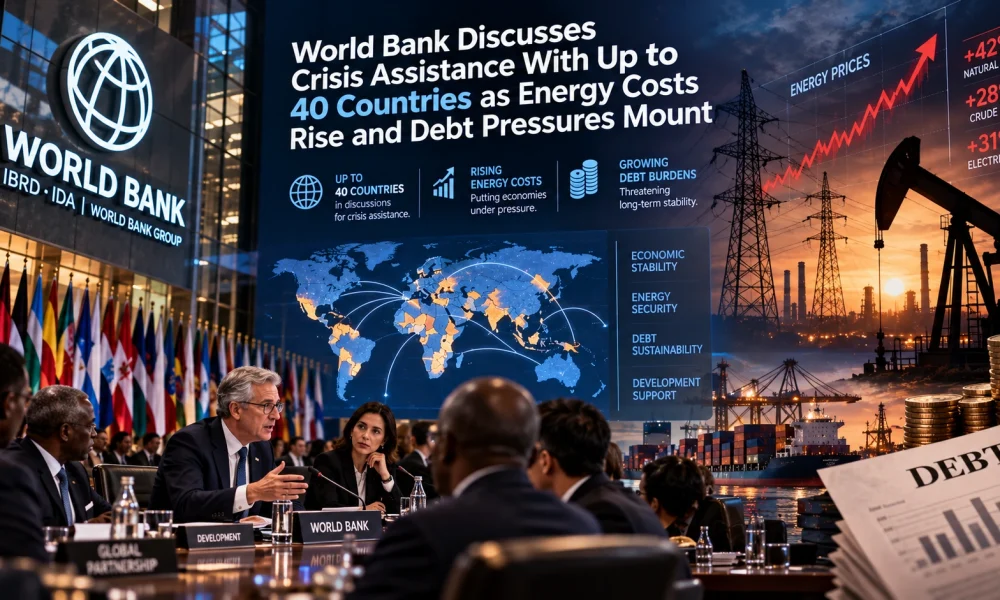
The World Bank is holding discussions with approximately 30 to 40 countries about potential crisis assistance as rising energy prices and the consequences of conflict in the Middle East place additional pressure on national economies. World Bank President Ajay Banga said on Sunday, October 11, that higher diesel and fertiliser costs, elevated debt burdens and climate risks were making conditions more difficult for many countries. The institution’s previously available $25 billion crisis support fund could potentially be expanded to as much as $100 billion if circumstances require it.
Why higher energy prices put economies under pressure
Energy affects transportation, manufacturing, agriculture and distribution. When fuel becomes more expensive, the impact spreads through the economy. Companies face higher operating costs, transport operators may increase their rates, and agricultural producers must pay more for machinery, logistics and fertilisers.
Some of these additional expenses eventually reach consumers through higher prices for food and other goods. In lower-income countries, where households spend a larger share of their budgets on essentials, rising costs can quickly erode purchasing power.
Governments may try to limit the impact through subsidies, assistance for vulnerable households or support for businesses. These measures require public funding, however, and countries already carrying substantial debt have less room to respond without worsening their fiscal position.
Why the World Bank is considering additional support
Banga said some countries prefer to redirect funding from existing projects rather than immediately seek new financing. This approach can help mobilise resources more quickly, but it also involves difficult choices: money redirected towards an emergency can no longer be used simultaneously for all its original purposes.
A larger crisis fund could provide additional flexibility, particularly for countries that need to support households or maintain essential public services. The availability of funding does not mean that every country will automatically receive assistance. Support depends on individual needs, programme conditions and the institution’s financing procedures.
For economies under pressure, access to funding can help reduce the risk of sudden budget cuts. Over the longer term, however, emergency assistance needs to be incorporated into a credible plan for managing debt and strengthening public finances.
Debt is making the response more difficult
Banga has also highlighted the high external debt obligations facing developing economies. These countries must fund public services, infrastructure and social protection while repayments and interest costs consume a significant portion of government budgets.
When interest rates are high, refinancing debt becomes more expensive. A government may end up allocating more resources to creditors and fewer to investment in education, healthcare or infrastructure.
The problem cannot be solved through additional borrowing alone. Some countries need more effective revenue collection, investment that supports economic growth and, in certain circumstances, debt restructuring. These processes can be difficult because they involve negotiations with creditors and politically sensitive decisions.
Climate risks add another layer of uncertainty
Alongside energy prices and debt, the World Bank is monitoring the risks associated with a potentially strong El Niño event. Extreme weather can damage crops, disrupt water supplies and harm infrastructure, affecting food prices and agricultural incomes.
For countries already dealing with higher fuel costs, an additional agricultural shock could intensify pressure on public budgets and vulnerable households.
The combination of energy inflation, climate risks and expensive borrowing can leave governments with fewer options when responding to emergencies.
What this means for companies and investors
The developments matter to businesses that depend on fuel, international transportation, agriculture and global supply chains. Higher costs can reduce profit margins and encourage companies to delay investment or pass some expenses on to customers.
Investors are also monitoring countries’ ability to finance their debt and maintain economic stability. Access to international assistance may reduce some risks, but it does not eliminate structural weaknesses.
Businesses operating in emerging markets may need to reassess costs, demand forecasts and exposure to countries facing financial pressure.
The next few weeks will be important
Discussions during the World Bank and International Monetary Fund meetings should provide more clarity about which countries require assistance, the conditions attached to financing and whether existing funds are sufficient.
The central message is that energy shocks affect far more than oil and gas markets. They can influence government budgets, business costs and household prices. Countries’ ability to manage these pressures while addressing debt obligations will be important for global economic stability in the months ahead.