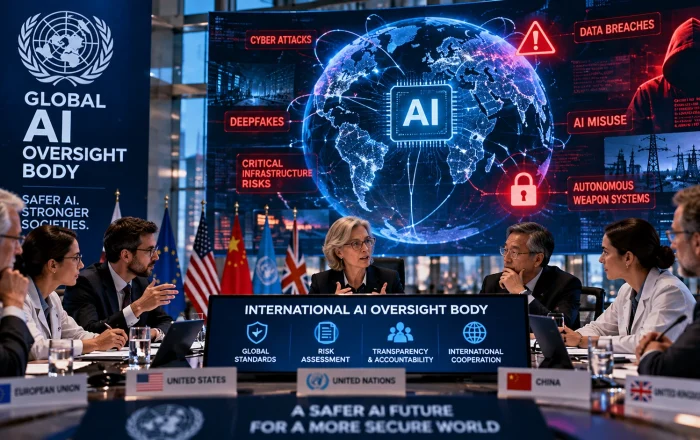
Tech giants agree to voluntary AI safety rules as governments push for stronger oversight
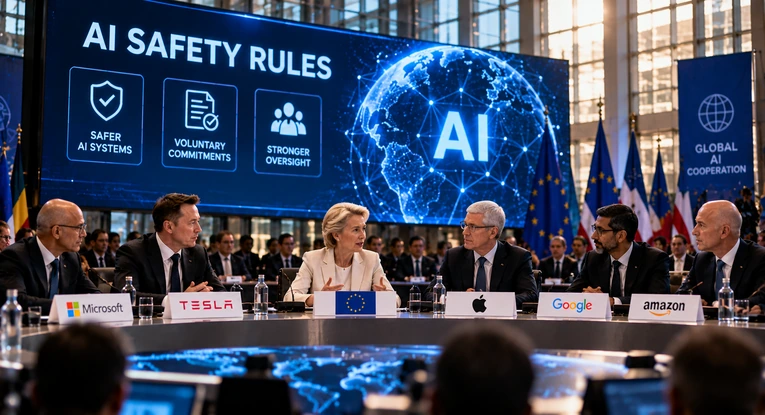
Some of the world’s biggest technology and artificial intelligence companies have agreed to a new voluntary framework for managing the risks associated with AI development, in a move that places greater responsibility on companies themselves as governments continue to debate formal regulation.
Executives from Google, Meta, OpenAI, Nvidia, Anthropic and xAI joined a White House meeting on September 29 where the agreement was presented. The framework includes internal controls, cooperation with independent external auditors and the creation of board-level committees to review the results of AI safety assessments.
The agreement is not legally binding. That distinction is important because the technology industry is developing faster than many regulatory systems can adapt. Companies are increasingly being asked to demonstrate that new AI models are safe before they are deployed at scale, particularly when those models can operate autonomously or interact with sensitive information.
The decision to rely on voluntary commitments also reflects the difficulty of establishing one global set of AI rules. The United States, European Union and other major economies have adopted different approaches to artificial intelligence, ranging from detailed regulation to more flexible frameworks focused on innovation.
For technology companies, external auditing could become particularly important. Internal safety reviews can identify problems, but independent assessments can provide additional scrutiny and potentially increase public confidence.
The agreement also comes as AI development becomes increasingly expensive. Training advanced models requires large amounts of computing power and energy, while companies are investing billions of dollars in data centres and specialised chips.
The next question is whether voluntary commitments will be sufficient as AI becomes more capable.
The industry has already moved beyond simple chatbots. AI systems are increasingly being used for coding, research, customer service, data analysis and automated decision-making. As their role expands, the consequences of failures can become more significant.
The new framework therefore represents another step in the industry’s attempt to combine rapid innovation with safety controls. Whether it becomes a meaningful standard will depend on how transparent the audits are and whether companies actually change their development practices as a result.
Sources: Associated Press, White House, participating technology companies.