Zelenskyy Asks Europe for €70 Billion as Ukraine Faces Russian Attacks and Uncertain US Support
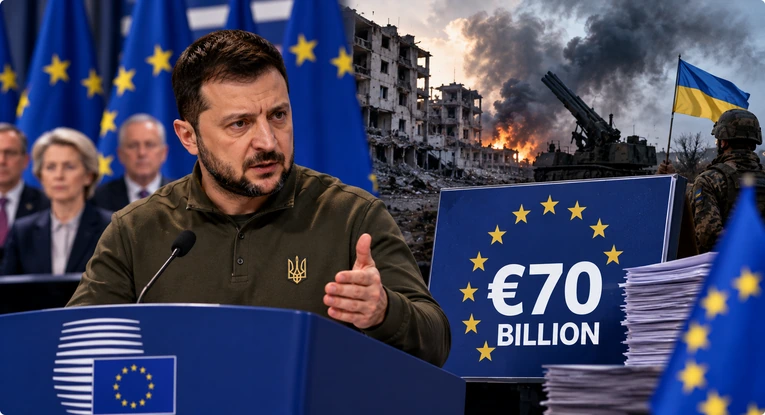
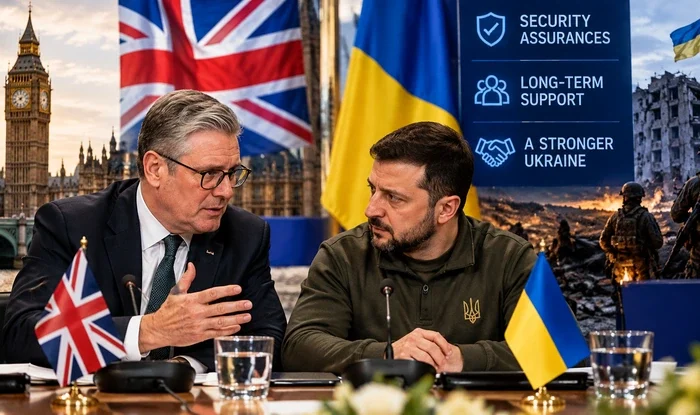
Ukrainian President Volodymyr Zelenskyy has called on European Union leaders to provide at least €70 billion in additional support for defence and national resilience, as Ukraine faces renewed Russian attacks and growing uncertainty over the future of American military assistance. Speaking during a European summit in Brussels on Friday, Zelenskyy warned that Ukraine must prepare for a difficult winter while continuing to defend its cities, energy infrastructure and front lines.
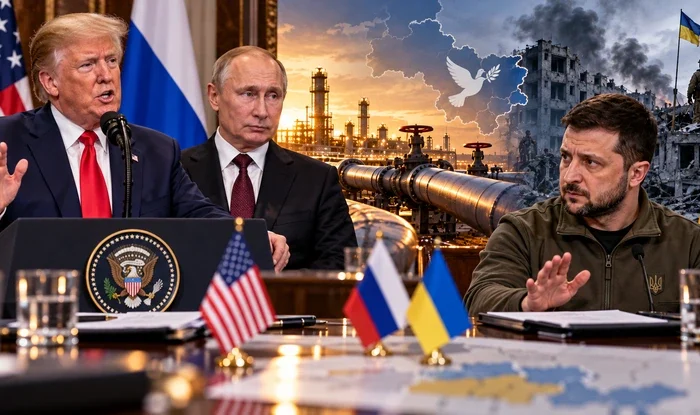
The appeal comes at a sensitive moment for Kyiv. Relations between Zelenskyy and US President Donald Trump have deteriorated following disagreements over attacks on energy infrastructure, Washington’s approach to Russia and the future of peace negotiations. European leaders have publicly reaffirmed their support for Ukraine, but questions remain over whether the bloc can provide the scale of assistance Kyiv says it needs.
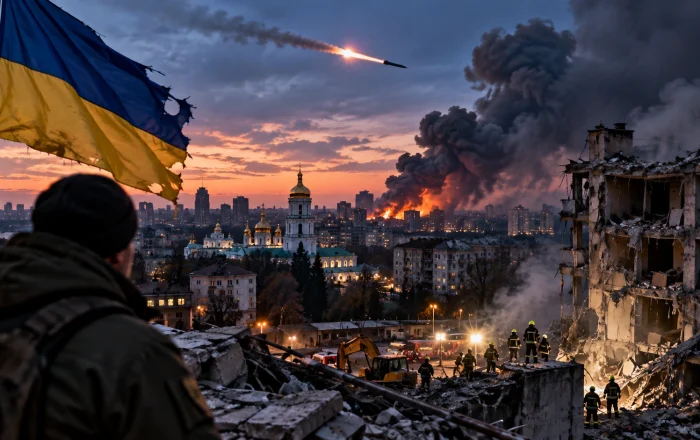
The latest diplomatic confrontation is unfolding as Russian missiles and drones continue to strike Ukrainian territory, placing additional pressure on the country’s air defences and electricity network.
Zelenskyy seeks a larger European commitment
Addressing European leaders, Zelenskyy said Ukraine needed at least €70 billion to strengthen its defences and maintain the resilience of its economy and infrastructure. He described the request as a realistic assessment of the country’s needs as the war continues into another winter.
The financial appeal reflects the enormous cost of sustaining Ukraine’s military operations while keeping essential public services functioning. Funding is required for weapons, ammunition, air-defence systems, repairs to damaged infrastructure and support for a population exposed to repeated attacks.
European governments have already provided extensive military, financial and humanitarian assistance since Russia launched its full-scale invasion in February 2022. However, the latest request comes amid growing concern in European capitals that Washington could reduce some forms of military or intelligence support.
Replacing American capabilities would be difficult in the short term. Ukraine relies on Western equipment and intelligence to detect threats, coordinate operations and defend infrastructure against long-range attacks. European officials have acknowledged that some technologies, including satellite communications systems used by Ukrainian forces, cannot easily be replaced with European alternatives.
The challenge for the EU is therefore not simply to approve additional funding. It must also determine how quickly money can be mobilised, which military capabilities are most urgently needed and how support can be sustained over the longer term.
Russian attacks increase pressure ahead of winter
The summit is taking place as Russia intensifies attacks across Ukraine. According to reporting by the Associated Press, Russian strikes hit nine Ukrainian regions, damaging property, disrupting electricity supplies and injuring at least 15 people, according to Ukrainian officials.
The attacks have heightened concerns about the country’s ability to protect civilians as temperatures fall. Previous winters have demonstrated how damage to power stations, transmission networks and other critical infrastructure can disrupt heating, water supplies and essential services.
Ukrainian officials have warned that Russia is preparing further missile attacks in the coming months. Strengthening air defences has consequently become a central priority for Kyiv, particularly as interceptor missiles and other defensive equipment remain in high demand.
The consequences extend beyond the immediate damage caused by individual strikes. Electricity shortages can interrupt industrial production, increase costs for businesses and force public services to operate under difficult conditions. Prolonged disruptions can also increase the financial burden on the Ukrainian government, which must simultaneously fund the war effort and support civilians.
For European governments, helping Ukraine maintain its infrastructure is therefore both a humanitarian priority and part of a wider effort to prevent the conflict from creating further instability across the continent.
Tensions between Zelenskyy and Trump complicate diplomacy
The Brussels meeting also exposes growing differences between Kyiv and Washington over how to approach the war.
Trump has criticised Ukrainian attacks on Russian oil refineries, arguing that such operations risk increasing energy prices and complicating diplomatic efforts. Zelenskyy, meanwhile, has accused Moscow of showing no genuine willingness to end the conflict and has questioned the effectiveness of current peace initiatives.
The disagreement has become particularly sensitive following Trump’s announcement of a proposed ceasefire covering attacks on energy facilities. Ukraine has disputed aspects of the arrangement, while Russia has continued military operations. The two sides have not reached a comprehensive agreement to end the war.
Zelenskyy’s criticism of a US agreement involving Russian diesel has added another point of tension. The Ukrainian president has argued that commercial arrangements that generate revenue for Moscow risk undermining efforts to pressure Russia over its invasion.
European leaders have expressed support for Ukraine while navigating their own economic and political constraints. Energy prices, defence spending and disagreements over the EU’s longer-term budget are complicating decisions about how additional assistance should be financed.
The summit therefore presents a difficult balancing act: maintaining support for Ukraine, managing relations with Washington and avoiding further economic disruption within the European Union.
Europe’s security debate moves to the forefront
The latest developments have renewed debate over Europe’s ability to defend itself and sustain military assistance without relying so heavily on American capabilities.
European governments have increased defence spending and expanded support for Ukraine, but differences remain over funding arrangements, procurement priorities and the distribution of costs among member states.
Satellite communications provide one example of the challenge. Ukrainian forces depend heavily on systems operated by private companies, and European officials have acknowledged that an immediate replacement for the American-controlled Starlink network is not available at comparable scale. The issue highlights how military resilience increasingly depends on commercial technology as well as conventional weapons.
A larger European role would require coordination between national governments, EU institutions and defence manufacturers. It would also require decisions on whether new assistance should be delivered through existing programmes, bilateral agreements or additional common financing.
For Ukraine, the urgency is immediate. For Europe, the debate concerns not only the future of the war but also the continent’s capacity to respond to security threats over the coming years.
What happens next?
The Brussels summit is expected to shape the next phase of European discussions on military assistance, financial support and Ukraine’s longer-term relationship with the EU. However, expressions of solidarity do not automatically translate into approved funding or immediate weapons deliveries.
The key questions are whether European governments can agree on the scale and financing of additional assistance, whether critical military equipment can reach Ukraine quickly enough, and whether diplomatic channels with Washington can prevent further disruption to allied coordination.
The coming weeks will be particularly important as Ukraine prepares for winter and European governments consider their next budgetary and defence commitments.
Zelenskyy’s request places the financial and strategic stakes clearly before EU leaders. Ukraine is seeking not only the resources needed to continue fighting, but also assurances that its partners will remain committed while the military and diplomatic situation remains uncertain.
For Europe, the decisions made now could influence Ukraine’s ability to defend its infrastructure, protect civilians and sustain its military operations. They will also help determine how much responsibility European governments are prepared to assume for the continent’s security as the war continues.