New Cancer Drug Combination Enters Clinical Testing Across Multiple Tumour Types
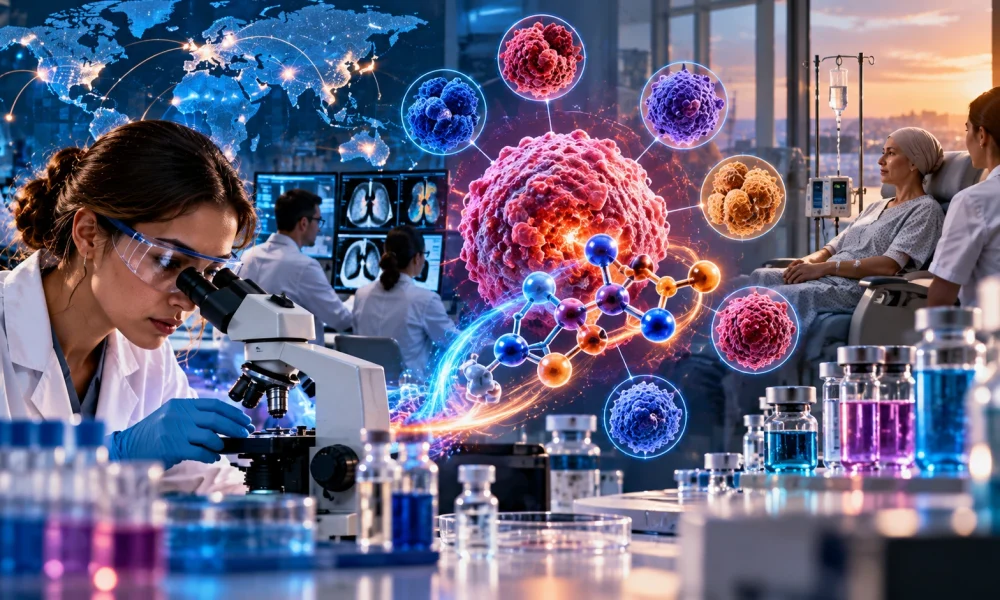
Cancer researchers are testing a new combination of targeted therapy and immunotherapy in a clinical programme involving several major tumour types.
AstraZeneca, Daiichi Sankyo and Summit Therapeutics have announced a collaboration to test Datroway in combination with ivonescimab in patients with cancers including lung and breast tumours.
Combining different approaches
Modern cancer treatment increasingly relies on combinations of medicines that attack tumours in different ways.
Datroway is an antibody-drug conjugate designed to deliver cancer-killing treatment directly to cells carrying a specific target.
Ivonescimab belongs to a newer generation of immunotherapy drugs designed to influence the tumour environment.
Researchers hope that combining the two approaches could produce stronger anti-cancer activity.
Lung and breast cancer remain major targets
Lung and breast cancers account for millions of diagnoses globally every year.
Both have also become important areas for targeted treatment and immunotherapy research.
The development of combination therapies could be particularly important for patients whose tumours eventually stop responding to a single treatment.
Clinical trials remain essential
Promising laboratory results do not guarantee that a drug combination will work in patients.
Clinical trials are necessary to establish whether treatments are effective and whether their side effects are acceptable.
Researchers must also determine which patients are most likely to benefit.
Pharmaceutical competition is intensifying
The latest collaboration illustrates the increasingly competitive nature of oncology research.
Large pharmaceutical companies are partnering with specialist biotechnology businesses to combine existing drug platforms with newer technologies.
The strategy can accelerate development while giving companies access to treatments they may not have developed internally.
A long-term effort
Cancer treatment continues to move toward more personalised approaches.
Instead of treating every patient with the same therapy, doctors increasingly use molecular information to identify which treatments are most likely to work.
The new trial represents another step in that process.
If successful, combination therapies could eventually provide additional options for patients with difficult-to-treat cancers.