Brazil Heads to the Polls as Lula and Flavio Bolsonaro Face a Closely Watched Contest
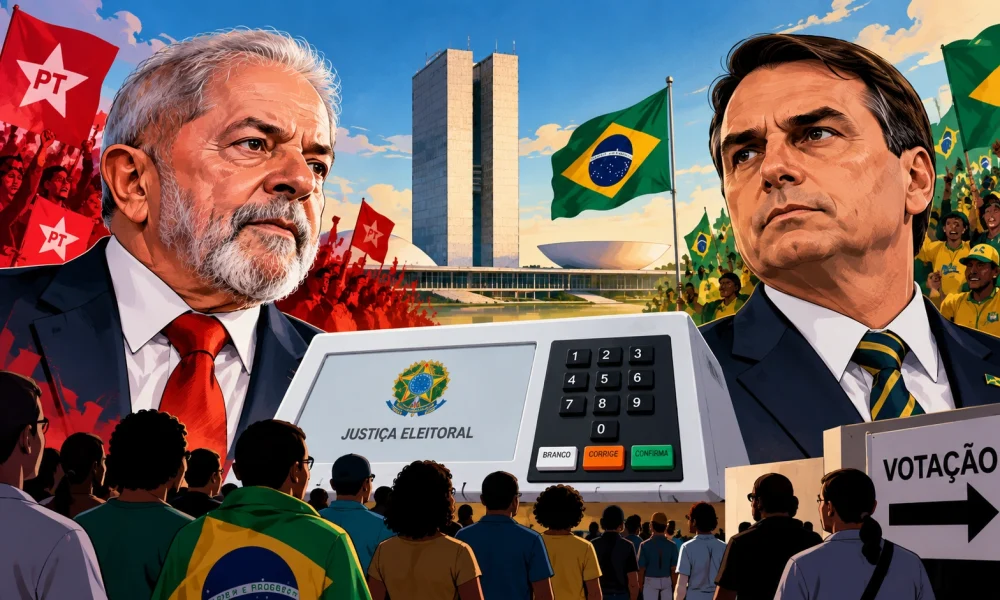
Brazil votes on Sunday in a presidential election that has become one of the most closely watched political events in Latin America this year. President Luiz Inácio Lula da Silva is seeking another term, while Flavio Bolsonaro, son of former president Jair Bolsonaro, is challenging him as the candidate of the Liberal Party.
The election is taking place against a backdrop of concerns about public spending, the cost of living, economic growth and the country’s political direction. It is also attracting international attention because Brazil remains one of the world’s largest emerging economies and a major player in global commodity markets.
Reuters reported on October 2 that Lula and Flavio Bolsonaro were running closely in the polls ahead of the first round, with a runoff on October 25 considered likely.
Economic concerns are central to the campaign
The economic debate has become one of the main themes of the election. Lula’s government has increased social spending, including a 15% rise in benefits under Brazil’s flagship welfare programme announced in September.
The administration has presented social programmes as an important part of its economic policy, particularly for lower-income households.
At the same time, investors and economists have focused on Brazil’s fiscal position. Reuters reported that rising government spending has increased concerns about the sustainability of public finances, with pensions, public payrolls and social programmes representing areas where significant adjustments would be politically difficult.
Flavio Bolsonaro has sought to make the cost of living a central issue in his campaign, positioning himself as an alternative to the current government’s economic approach.
A political contest with a familiar backdrop
The election also continues a political divide that has shaped Brazilian politics for much of the past decade.
Lula, a veteran leader of the Brazilian left, returned to the presidency after defeating Jair Bolsonaro in the previous presidential election. The Bolsonaro family remains one of the most influential forces on the Brazilian right, and Flavio Bolsonaro’s candidacy keeps that political current at the centre of national politics.
The campaign has also revived debates over Brazil’s relationship with international partners, its economic policies and the role of government in areas such as welfare, taxation and energy.
Allegations of foreign interference add another layer
Brazilian officials have also been dealing with allegations of foreign interference. Reuters reported that French and German officials travelled to Brasilia in September and were briefed by Brazilian intelligence officials about alleged interference involving the United States and Russia.
The allegations have not been publicly established as fact, and the US State Department and Russian embassy did not comment to Reuters.
The issue nevertheless highlights the wider geopolitical importance of the election. Brazil is the largest country in Latin America and maintains relationships with the United States, China, Europe and Russia.
What the first round will determine
Brazil’s electoral system requires a candidate to secure more than half of the valid votes to win the presidency in the first round. If that threshold is not reached, the two leading candidates proceed to a runoff.
The first-round vote will therefore determine not only the immediate standing of the main candidates but also the political alliances and campaign strategies that could shape the second round.
For businesses and investors, attention will remain focused on fiscal policy, inflation, interest rates and the government’s relationship with Congress. For voters, issues such as income, public services, security and the cost of living are likely to remain central.
The election will ultimately determine Brazil’s political direction for the next presidential term, while its economic and diplomatic consequences are likely to extend well beyond the country itself.