Brands Are Moving Beyond Impressions as AI Forces Advertising to Measure Intent
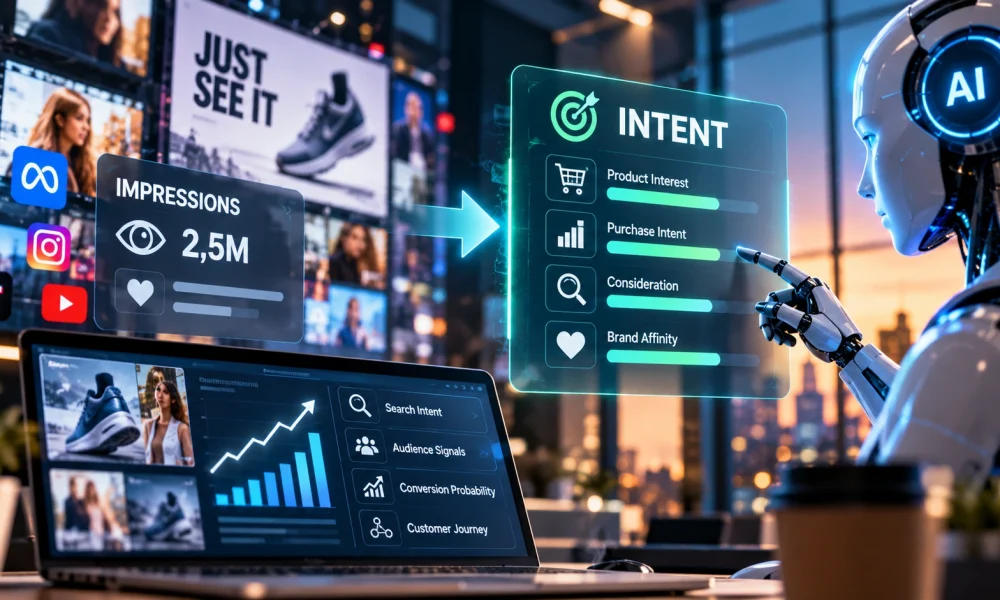
The marketing industry is entering a new phase in which advertisers are increasingly interested in what consumers intend to do rather than simply how many times they see an advertisement.
That shift is being discussed across the global advertising industry as AI, retail media and new forms of audience measurement change the way campaigns are planned and evaluated.
Industry publication Exchange4Media reported on October 7 that marketers are increasingly questioning traditional impression-based measurement and looking toward intent and behavioural signals.
The change may sound technical, but it affects almost every consumer-facing brand.
Impressions are no longer enough
For decades, advertising performance was often measured through reach and impressions.
A campaign that reached millions of people was considered successful.
The problem is that exposure does not necessarily mean interest.
A consumer can see an advertisement without remembering it.
They can remember it without considering the product.
And they can consider the product without purchasing it.
Advertisers increasingly want to understand the entire process.
AI makes behavioural analysis easier
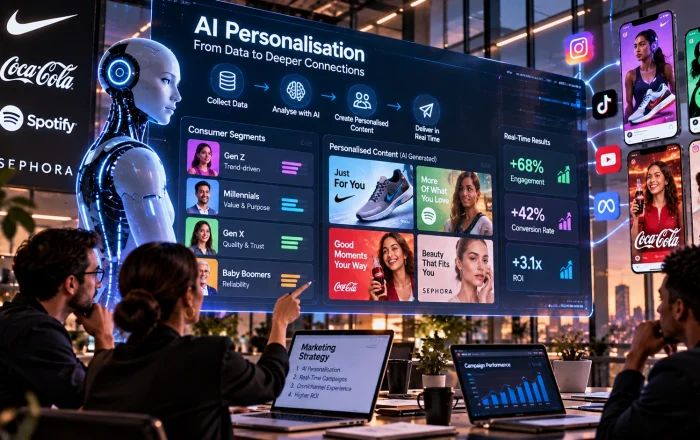
Artificial intelligence can process enormous amounts of consumer data.
It can identify patterns in browsing behaviour, product searches, purchases and engagement.
This gives marketers a much more detailed picture of consumer intent.
Instead of simply identifying a demographic, advertisers can potentially identify people who are actively researching a product.
That could make advertising budgets more efficient.
Privacy remains a major limitation
The expansion of behavioural advertising also creates privacy concerns.
Consumers increasingly want control over how their data is used.
Regulators are imposing stronger requirements around consent and data processing.
Marketers therefore have to find a balance between personalisation and privacy.
The companies that collect the most data are not automatically the ones that will win.
They also need consumer trust.
Retail media is growing
Retail media networks are another important part of this transformation.
Retailers such as Amazon and Walmart have enormous amounts of information about purchasing behaviour.
That makes their advertising businesses increasingly attractive.
Brands can advertise directly inside environments where consumers are already shopping.
The connection between advertising and commerce therefore becomes much shorter.
AI is changing creative work too
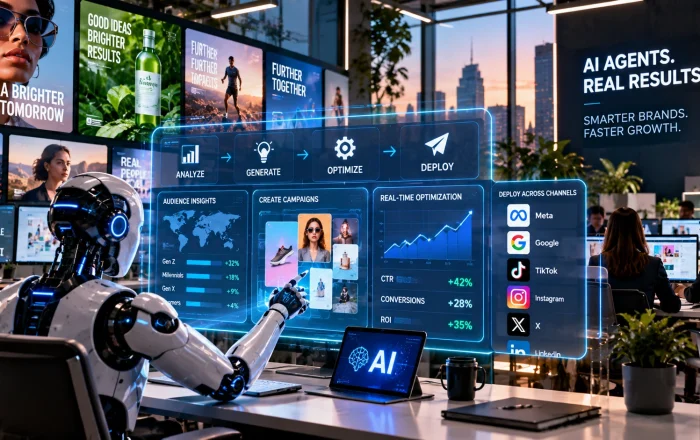
Artificial intelligence is also changing the production side of marketing.
Brands can generate campaign variations, images, video concepts and copy much faster.
That allows marketers to test more ideas.
But it also creates a new problem.
If everyone can produce content cheaply, content itself becomes less valuable.
Creativity becomes more important because brands need ideas that stand out.
The role of agencies is changing
Advertising agencies are adapting to this environment.
Routine production work can increasingly be automated.
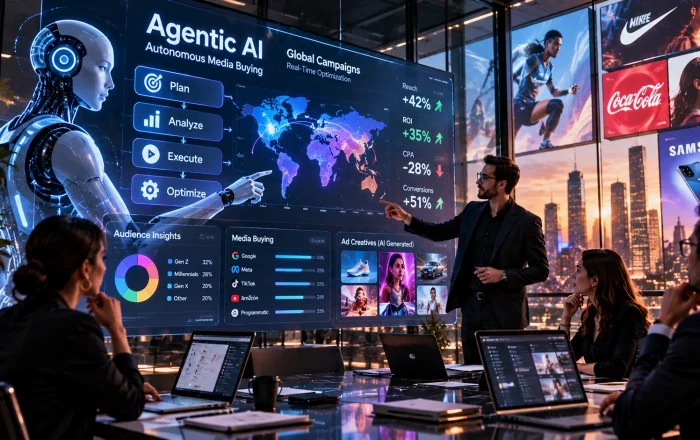
Media planning can be assisted by algorithms.
Audience analysis can be performed faster.
Agencies therefore need to focus more heavily on strategy, creativity and brand building.
Human judgement remains important because advertising is not simply a mathematical exercise.
Culture changes.
Consumer emotions change.
Political and social contexts change.
Algorithms do not always understand those changes.
Intent could become the new currency
The industry is gradually moving toward a model in which consumer intent becomes more valuable than simple audience size.
A smaller audience that is actively looking for a product can be more commercially valuable than millions of passive viewers.
This could fundamentally change how brands allocate budgets.
The next advertising model
The future of marketing will likely combine AI, first-party data, retail media and creative storytelling.
Technology will help identify opportunities.
Data will help measure behaviour.
But brands will still need compelling ideas.
The biggest change is that advertisers are becoming less satisfied with simply proving that people saw something.
They want to know whether the advertising changed what people did.
That shift could make marketing more accountable, but it could also make the industry more dependent on data and technology.
The brands that succeed will be those that use those tools without losing sight of the human reasons behind consumer decisions.