Bosnia and Herzegovina Votes in an Election With Major Consequences for Its EU Ambitions
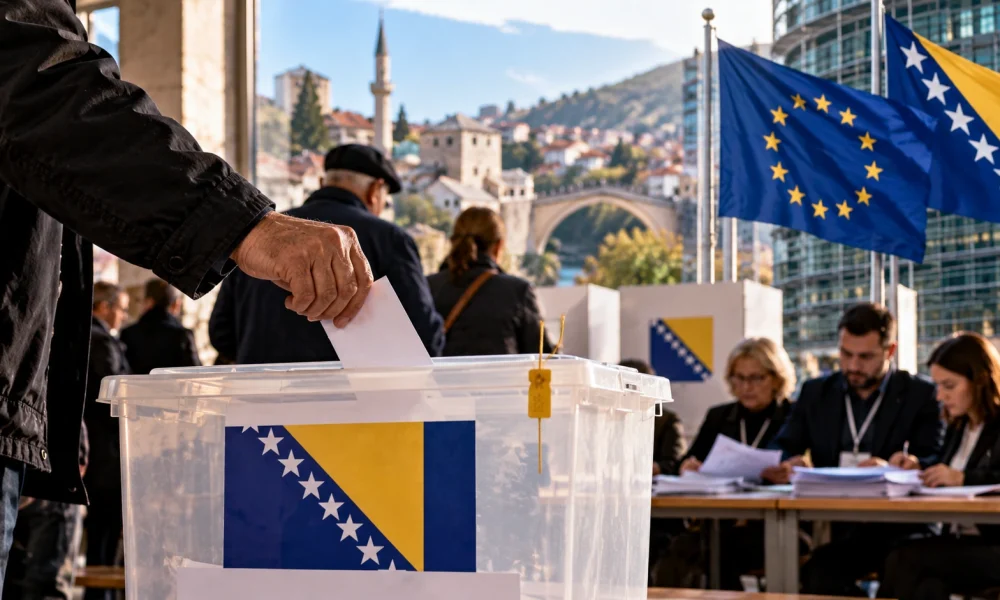
Voters in Bosnia and Herzegovina are going to the polls in an election that could influence the country’s long-delayed path toward European Union membership.
The election covers the country’s tripartite presidency, national parliament and regional institutions.
The vote is taking place amid political deadlock, economic frustration and continued disagreement between the country’s main ethnic political blocs.
EU membership remains a central issue
Bosnia and Herzegovina received EU candidate status in 2022 and was cleared to begin accession negotiations in 2024.
However, formal negotiations have not begun because the country has yet to complete several required reforms.
The election is therefore being closely watched in Brussels.
Political divisions remain deep
Bosnia’s political system is based on the Dayton peace agreement that ended the country’s war in the 1990s.
The structure divides power between different ethnic communities and political institutions.
While the system was designed to preserve peace, it has also contributed to political fragmentation.
Voters express frustration
Economic stagnation and political deadlock have contributed to declining confidence in the political system.
Reuters reported that voter turnout was only 11.94% by mid-morning on Sunday, highlighting concerns about political engagement.
The election is therefore taking place against a backdrop of frustration with the pace of change.
International interests add complexity
Bosnia also remains an important geopolitical issue.
The European Union, United States and Russia all have interests in the region.
Energy projects and infrastructure investments have added another layer to the country’s political debates.
What happens next
The election will determine the composition of institutions that must address economic reforms, EU integration and internal political disputes.
The result will not immediately resolve Bosnia’s structural problems.
However, it could determine whether the country moves closer to the European integration process or remains stuck in its current political deadlock.