Amazon Pushes AI Deeper Into Seller Operations as It Tries to Automate the Work Behind Online Commerce
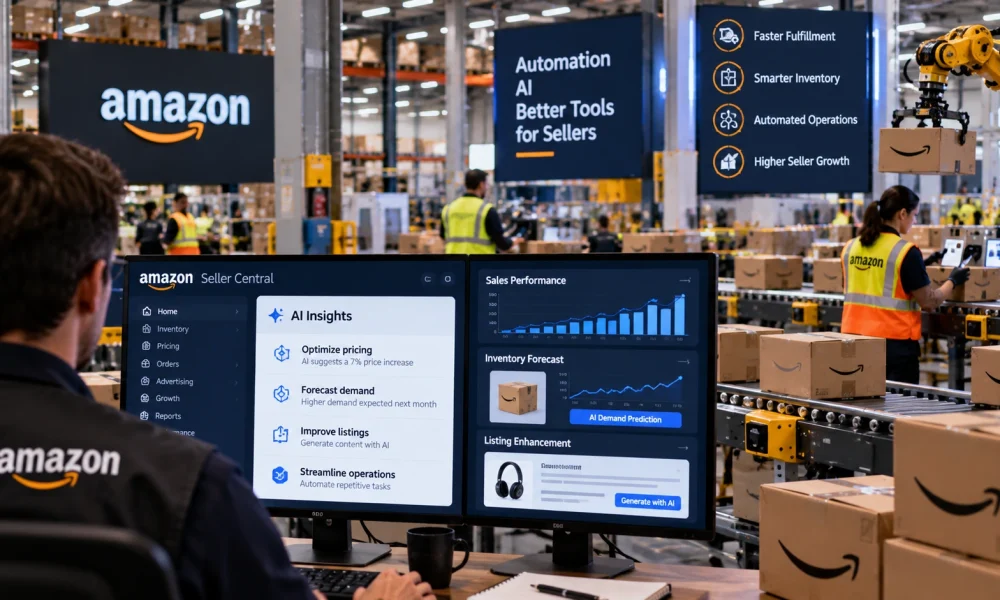
Amazon is expanding the role of artificial intelligence across its marketplace, targeting not only shoppers but also the millions of independent businesses that sell through its platform.
The company used its 2026 Amazon Accelerate seller conference to present a new generation of AI tools designed to help merchants manage listings, analyse sales, optimise operations and expand internationally.
The strategy reflects a broader change in e-commerce. AI is increasingly moving from a tool used to generate content into software that can actually perform parts of a retailer’s daily work.
Amazon wants AI to become a business assistant
Independent sellers often face the same operational problems as larger retailers but have fewer employees to handle them.
Inventory management, pricing, product descriptions, advertising, international expansion and customer service can consume a significant amount of time.
Amazon’s new AI tools are designed to automate parts of these tasks.
The company says sellers can connect their Seller Central data to external AI tools, initially including Anthropic’s Claude and Amazon’s own Quick service, allowing sellers to analyse sales trends and optimise listings through AI systems they already use.
Shopping itself is also becoming conversational
Amazon says more than 350 million customers used Alexa for Shopping during the previous 12 months.
Instead of searching for a specific product using keywords, consumers can describe a problem or a goal and ask the system to suggest products.
This changes the traditional relationship between search and e-commerce.
A shopper might no longer begin with a product category. They could begin with a question.
The AI then determines which products are relevant.
Amazon is also opening its logistics infrastructure
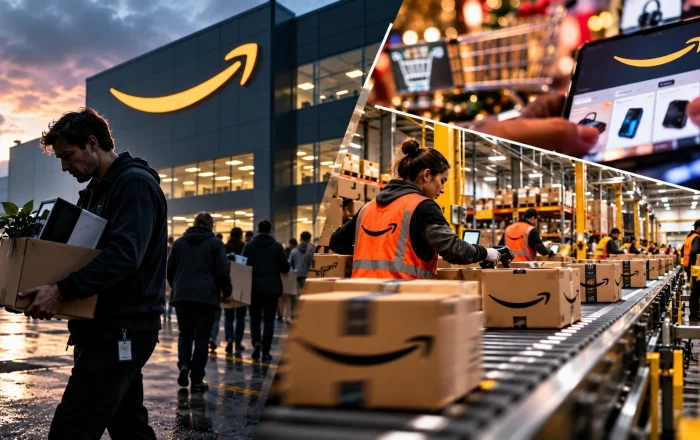
The company has expanded Amazon Supply Chain Services, allowing other businesses to use parts of the logistics infrastructure originally built for Amazon itself.
The system includes freight, storage, distribution, fulfilment and shipping.
Amazon is also promoting multichannel selling tools that allow sellers to manage catalogues, orders and inventory across platforms including Walmart, eBay, TikTok Shop and Shopify.
This is important because e-commerce is becoming increasingly fragmented.
A successful online seller may operate across several marketplaces, its own website and social commerce channels.
Managing those channels separately can create additional costs and inventory problems.
Global selling is another priority
Amazon says sellers operating in more than one country generate significantly higher average sales than those operating in a single market.
Yet only around 30% of its sellers currently sell internationally, according to the company.
Amazon is therefore positioning international expansion as a default part of its seller strategy rather than an advanced option reserved for larger businesses.
AI can help reduce some of the barriers by analysing demand, adapting product listings and helping sellers identify markets where their products may have potential.
The marketplace is becoming an operating system
The larger strategy is increasingly clear.
Amazon is no longer simply providing a marketplace where sellers list products.
It is building a broader infrastructure covering discovery, advertising, payments, fulfilment, logistics, international sales and now artificial intelligence.
For small businesses, this could reduce the amount of operational work required to grow.
For Amazon, it creates deeper dependence on its ecosystem.
The future competition in e-commerce may therefore be fought not only over customers but also over the tools businesses use to operate their stores.