Amazon Expands Its Delivery Ambitions as Retailers Prepare for a More Automated Future

Amazon is preparing to expand its delivery network across the United States, with the company targeting coverage of approximately 95% of US ZIP codes by 2029.
The strategy reflects a broader transformation in e-commerce, where major retailers are increasingly attempting to control more of the logistics process themselves.
Less dependence on traditional postal infrastructure
Amazon’s expansion comes as the company prepares for a future in which it can rely less heavily on the US Postal Service.
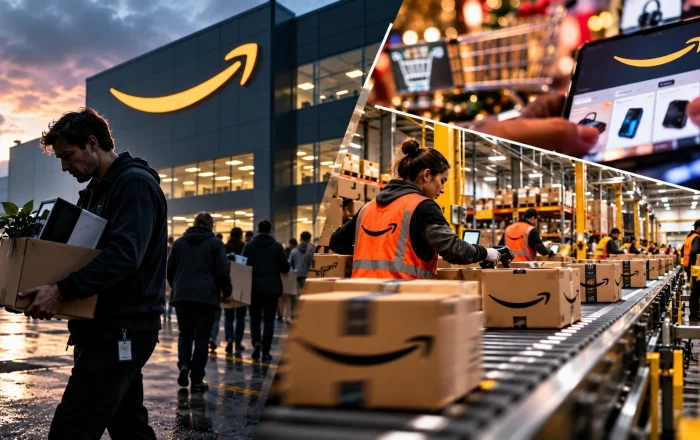
Its own delivery network already handles a significant proportion of Amazon packages.
Expanding that infrastructure would give the company greater control over delivery times, costs and customer experience.
Logistics has become a competitive advantage
For years, online retail competition focused primarily on product selection and price.
That has changed.
Fast and predictable delivery has become one of the most important factors influencing customer decisions.
Amazon’s investment therefore represents an attempt to turn logistics into a competitive barrier that other retailers may find difficult to match.
AI is entering the delivery system
The company is also increasingly using artificial intelligence in logistics.
Amazon is testing smart glasses for delivery drivers that can help workers navigate routes and identify packages.
The technology could eventually reduce the amount of time drivers spend searching for individual deliveries.
Privacy concerns remain
The use of cameras and sensors in delivery operations is also raising questions about privacy.
Technology that maps neighbourhoods and records surroundings can improve logistics, but it also creates concerns about how images and data are collected.
Amazon will therefore need to balance efficiency with growing expectations around privacy.
The next stage of e-commerce
The direction of Amazon’s strategy illustrates how online retail is becoming increasingly integrated with physical infrastructure.
Warehouses, delivery vehicles, software, AI and customer data are becoming part of one system.
The companies capable of controlling the entire process may have an advantage over retailers that depend heavily on external logistics providers.