Trump Announces Potential Energy Truce Between Russia and Ukraine, but Kyiv Says It Has Not Been Informed of Any Agreement
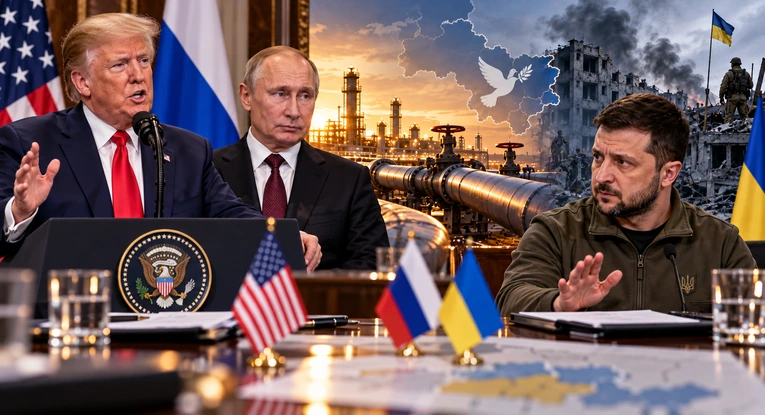
US President Donald Trump said on Sunday, October 11, that Russia and Ukraine had agreed to an “energy truce” that would take effect immediately. The announcement raised the prospect of a reduction in attacks on energy infrastructure, but the situation remained unclear. Ukrainian President Volodymyr Zelenskyy said he had not been informed of an agreement and stressed that Ukraine was prepared to halt attacks on Russian oil refineries only if Moscow stopped strikes against Ukrainian energy infrastructure and provided guarantees. At the time of Reuters’ reporting, there was no joint official confirmation from the two governments.
What the proposed truce could involve
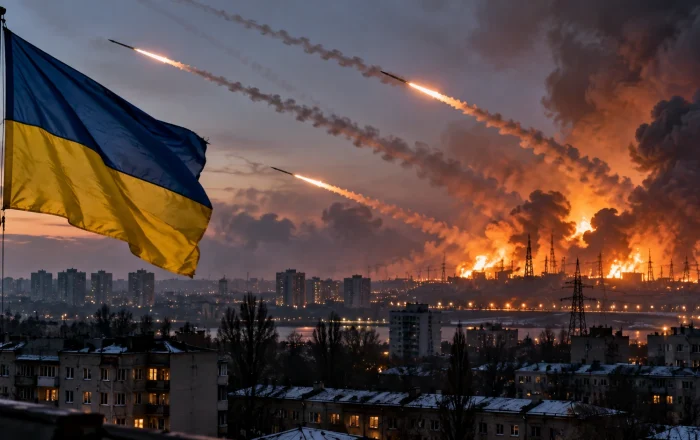
Energy infrastructure has become an important target in the war because attacks on refineries, power plants, storage facilities and distribution networks can affect both military capabilities and civilian life.
For Ukraine, strikes against energy facilities can cause electricity and heating disruptions, interfere with business activity and increase pressure on public authorities, particularly as colder weather approaches. For Russia, attacks on refineries can temporarily reduce processing capacity and affect fuel supplies or the revenues of energy operators.
An agreement limiting these attacks could reduce some immediate risks to civilians and businesses. However, the term “energy truce” does not, by itself, clarify which facilities would be protected, what types of attacks would be prohibited or how compliance would be verified.
Kyiv wants guarantees
Zelenskyy’s response highlights one of the central challenges facing negotiations: neither side wants to stop its own operations while the other continues attacking.
The Ukrainian president said that halting strikes on Russian refineries would depend on Russia ending attacks against Ukrainian energy infrastructure and providing guarantees. His position indicates that Kyiv does not consider the American announcement sufficient to confirm that an operational agreement is already in place.
The details would be critical. Both sides would need to establish whether the truce is reciprocal, how long it would last, how alleged violations would be documented and what communication mechanisms would be used to prevent individual incidents from escalating.
Without verifiable procedures, each attack could lead to accusations of non-compliance and undermine confidence in the arrangement.
Washington’s diplomatic role
The Trump administration is seeking to play a central role in efforts to reduce the conflict. The announcement suggests Washington is looking for tangible measures that could be presented as progress towards limiting hostilities.
However, there is an important difference between announcing a diplomatic understanding and confirming that both parties have accepted and implemented it. Without matching official statements and clearly defined conditions, it would be premature to conclude that attacks have stopped or that an enforcement mechanism is functioning.
For Ukraine’s European allies, the development is also relevant to energy security. Attacks on infrastructure and uncertainty over supplies can influence prices, public spending and preparations for winter.
Could an agreement change the course of the conflict?
A truce limited to energy infrastructure would not amount to a ceasefire across the entire battlefield. It could nevertheless reduce certain humanitarian and economic risks if both sides respected its terms.
Such an arrangement could create a precedent for negotiations covering other civilian infrastructure or additional confidence-building measures. Conversely, a failure to implement it could deepen mistrust and make subsequent negotiations more difficult.
What happens next?
The key indicators will be official confirmation of the terms, any military orders communicated by Moscow and Kyiv, and developments involving attacks on energy facilities.
Until verifiable information becomes available, the announcement should be treated as an important diplomatic statement rather than proof that a functioning truce has already taken effect.