China’s Golden Week Reveals How High Fuel Prices Are Changing the Way People Travel
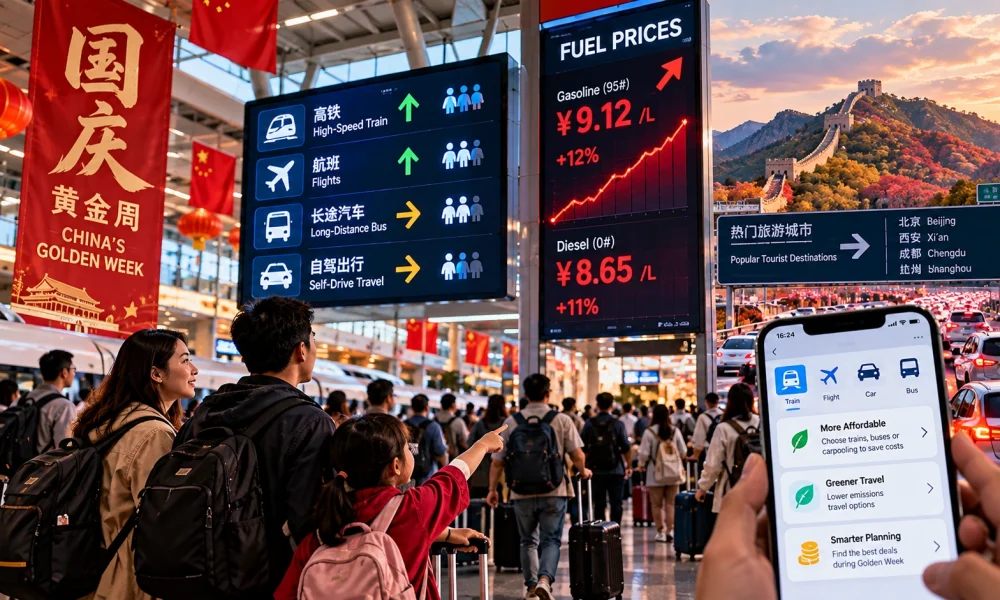
China recorded fewer private-car journeys during the Golden Week holiday this year as higher petrol prices encouraged some travellers to choose rail services instead. Government data published on October 9 showed that average daily passenger journeys by private vehicle fell 1.4% from the previous year, while rail travel increased by 13%.
The figures offer a useful view of how energy prices, transport infrastructure and consumer choices interact during one of China’s busiest travel periods.
Fuel costs are influencing travel decisions
Golden Week is one of China’s major holiday periods, when millions of people travel to visit family or take domestic trips.
Higher fuel prices can make long-distance driving more expensive, particularly for families travelling in larger vehicles.
Rail services offer an alternative on many routes, especially where high-speed connections are available.
The data suggests that even during a major holiday, travellers can adjust their behaviour when the relative cost of transport changes.
Rail is becoming more competitive
China’s extensive high-speed rail network has changed the way people move between cities.
For some journeys, trains offer predictable travel times and avoid the congestion associated with major holiday road traffic.
Rail travel can also reduce the need to buy petrol, which becomes more important when fuel prices rise.
However, trains are not a universal replacement for cars. Travellers heading to rural areas or destinations with limited rail connections may still depend on private vehicles.
Electric vehicles are gaining ground
The holiday data also showed a substantial increase in journeys using electric and other new-energy vehicles.
The number of such trips rose 35% year on year, while average daily electricity consumption at highway charging stations increased 51%.
These figures indicate that charging infrastructure is becoming increasingly important during major travel periods.
For drivers, the availability of charging stations can influence route planning and the decision to travel by electric vehicle.
Airlines face a different challenge
Air travel during the holiday period was broadly flat, according to the same data.
Higher fuel prices can affect airlines through operating costs, while ticket prices may influence demand among budget-conscious travellers.
Airlines must balance fares, capacity and fuel expenses without making travel unaffordable for customers.
The impact varies by route, competition and the availability of alternatives.
The implications for tourism
Travel patterns matter to hotels, restaurants, attractions and local businesses.
A shift from road trips to rail journeys can change which destinations benefit from holiday spending.
Cities with strong rail links may become more accessible, while locations that depend heavily on car travel may face a different demand pattern.
Businesses need to understand not only how many people travel, but also how they arrive and how much they spend.
A wider lesson for global travel
China’s Golden Week illustrates a broader point: travel demand is shaped by price as well as personal preference.
Fuel costs, ticket prices, transport infrastructure and convenience all influence decisions.
As countries invest in rail networks and electric-vehicle charging, travellers may have more alternatives when traditional transport becomes expensive.
For the travel industry, adapting to those choices will be essential. The destinations and businesses that make journeys easier, affordable and reliable may be best positioned to benefit from changing habits.