Plague Research Facility Worker Dies in Siberia as Authorities Quarantine Dozens
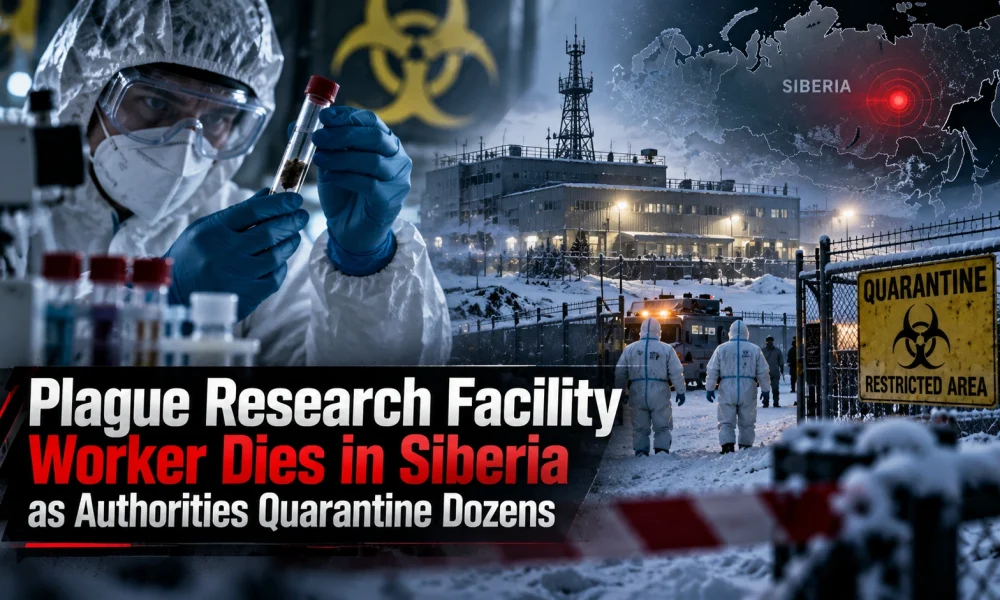
Russian authorities are investigating the death of a laboratory worker at a plague research institute in Siberia after the employee became ill and died, prompting quarantine measures involving dozens of people.
Reuters reported on October 5 that the worker was employed at a plague research institute and had developed an illness before dying. Authorities have not publicly disclosed all details surrounding the case.
The incident has attracted attention because plague research involves one of the world’s most dangerous bacterial pathogens, although the available information does not indicate that a wider outbreak has occurred.
Why the incident is being investigated
Plague is caused by the bacterium Yersinia pestis.
The disease is historically associated with major epidemics, but modern antibiotics can successfully treat it when diagnosis and treatment occur quickly.
Cases still occur naturally in some parts of the world, particularly in areas where the bacterium circulates among wild rodents and fleas.
Laboratories studying the disease operate under strict safety procedures because accidental exposure is a serious concern.
The death of a laboratory worker therefore requires investigation even if there is no evidence of wider community transmission.
Quarantine is a precautionary measure
The quarantine of people who may have been exposed is designed to reduce the possibility of transmission while authorities establish what happened.
Such measures do not necessarily mean that officials believe a large outbreak is underway.
In infectious disease investigations, quarantine can be used while doctors monitor people for symptoms and determine whether exposure actually occurred.
This approach became much more familiar globally during the COVID-19 pandemic, but it has long been used for other infectious diseases.
The importance of laboratory safety
Research facilities working with dangerous pathogens must maintain strict controls over exposure, ventilation, protective equipment and waste management.
Even with extensive safety procedures, laboratory accidents can occur.
The investigation will therefore be important not only for determining the cause of the worker’s illness but also for establishing whether laboratory exposure played any role.
Officials will also need to determine whether the worker had contact with colleagues or members of the public while potentially infectious.
Plague remains treatable
Despite its historical reputation, plague is no longer the untreatable disease it was centuries ago.
Antibiotics can be highly effective when treatment begins early.
The main challenge is rapid diagnosis because early symptoms can resemble other infections.
The disease can take several forms, with bubonic plague being the most commonly recognised. Pneumonic plague can be more dangerous because it affects the lungs and can spread through respiratory droplets.
That is one reason why health authorities take suspected cases seriously.
What happens next
The most important information will come from laboratory testing and epidemiological investigation.
Authorities will need to establish whether the worker was infected with plague, how exposure occurred and whether anyone else has developed symptoms.
Until those questions are answered, the quarantine measures provide an additional layer of protection.
The incident also illustrates why infectious disease laboratories remain strategically important.
Research into pathogens can improve diagnostics, treatments and prevention, but it must be carried out under extremely strict safety conditions.
For now, the Siberian case remains a contained health investigation rather than evidence of a wider plague outbreak.