Cancer Research Advances as Scientists Test New Drug Combinations Across Multiple Tumours
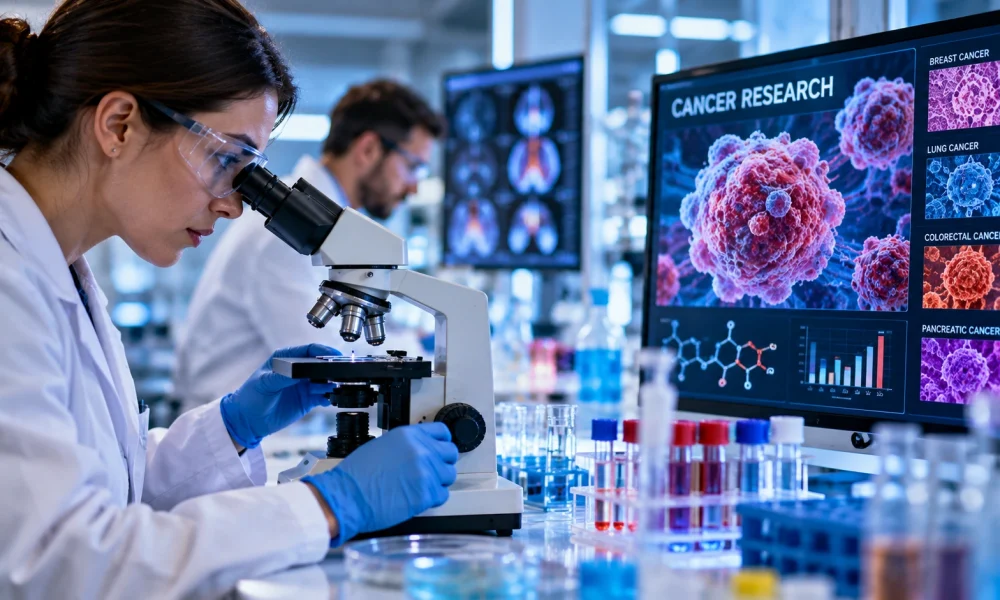
Cancer researchers are continuing to explore combinations of existing and experimental medicines as pharmaceutical companies seek more effective approaches for difficult-to-treat tumours.
A new clinical collaboration involving AstraZeneca, Daiichi Sankyo and Summit Therapeutics will test the cancer drug Datroway in combination with ivonescimab across several tumour types, including lung and breast cancers.
Why combinations matter
Cancer is not a single disease.
Different tumours can respond very differently to treatment, and even patients with the same type of cancer may have different biological characteristics.
That is one reason researchers increasingly study combinations of medicines designed to attack tumours through different mechanisms.
The objective is to increase treatment effectiveness without creating unacceptable levels of toxicity.
Lung and breast cancer remain major research targets
Both lung and breast cancers remain among the most heavily researched cancers globally because of their large patient populations.
Researchers are increasingly using targeted therapies, antibody-drug conjugates and immunotherapy in combination.
The development of new combinations can also extend the potential use of medicines that are already showing promise individually.
Pharmaceutical companies are investing heavily
The latest collaboration demonstrates the scale of investment now taking place in oncology.
Drug development can take many years and requires extensive clinical testing before a treatment can become widely available.
Even promising early results do not guarantee that a combination will ultimately prove effective.
AI is also changing research
Artificial intelligence is increasingly being used to analyse clinical data, identify potential drug targets and improve the design of trials.
Researchers hope that these technologies can reduce the time required to identify promising treatment combinations.
However, laboratory and clinical testing remains essential.
A gradual process
The latest cancer trials illustrate how medical progress usually occurs through a long series of experiments rather than a single breakthrough.
For patients, the significance lies in the possibility that new combinations could eventually provide more treatment options for cancers that remain difficult to control.