WPP brings AI directly into ad production with new London hub.
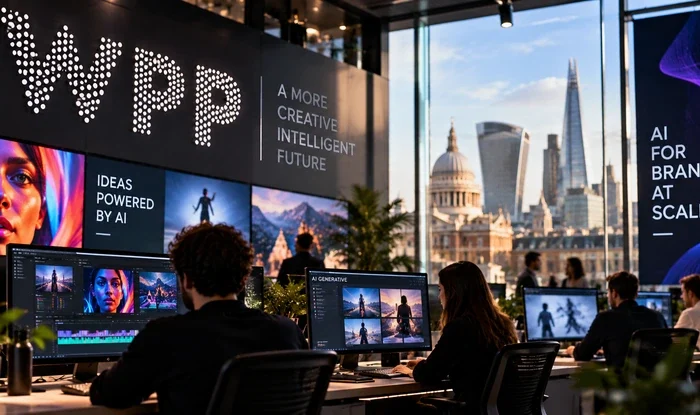
WPP is taking another step toward reshaping how advertising is produced, opening a new production hub in East London where artificial intelligence, virtual production and traditional creative skills are designed to work together under one roof.
Called Devon’s Point, the 34,000-square-foot facility officially opened on September 23 and is being positioned by WPP as the first stage of a broader international rollout. The company plans to develop similar production hubs in other major markets, as advertisers increasingly demand more content, faster turnaround times and campaigns tailored to smaller audiences and more digital channels.
The move reflects a significant change in the economics of advertising production. Brands are no longer commissioning a small number of large campaigns and distributing them across a limited number of media outlets. They increasingly need dozens or hundreds of versions of the same creative idea, adapted for different platforms, markets, languages, audiences and formats.
AI is becoming part of the infrastructure needed to make that possible.
From the idea to the finished ad under one roof
Devon’s Point brings together AI-powered production technology, virtual production, modular studios and post-production facilities. The goal is to reduce the number of separate steps involved in taking an advertising concept from the creative department to the final version that reaches consumers.
The facility includes a 7,000-square-foot main stage equipped with a 16 by 14 metre LED screen environment. WPP says the setup can be used for virtual production, allowing production teams to create digital environments around live actors and products without having to physically travel to multiple locations.
There are also creator and live-streaming studios, commercial kitchen facilities, modular content stages, photography and motion-production spaces, editing and colour-grading suites, as well as technical and storage areas.
This matters because the traditional advertising production process can involve a large number of suppliers and locations. A campaign may move between agencies, production companies, studios, photographers, editors, visual effects teams and media specialists before it reaches the final publishing stage.
WPP is attempting to compress much of that process into a connected production ecosystem.
The company’s production business, WPP Production, has close to 10,000 specialists globally. It was created earlier this year by bringing together production capabilities from across the WPP network, including the business previously known as Hogarth.
AI is becoming part of the production workflow
Artificial intelligence is not being presented by WPP simply as a tool for generating advertising images or writing copy.
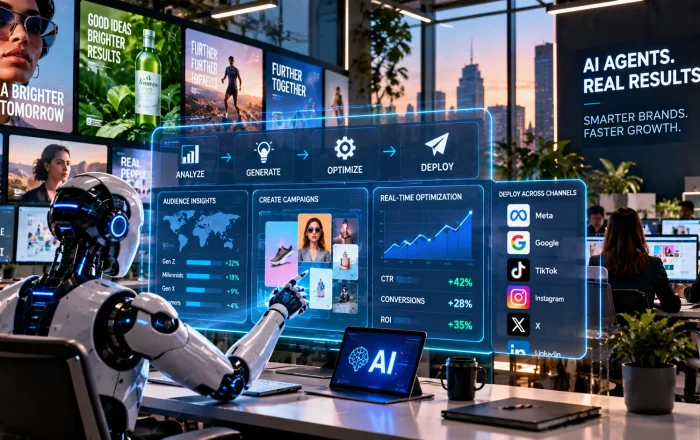
The company is integrating AI into the wider production workflow through WPP Open, its marketing technology platform. WPP says the facility will connect AI-enabled production capabilities with its creative, media and enterprise services.
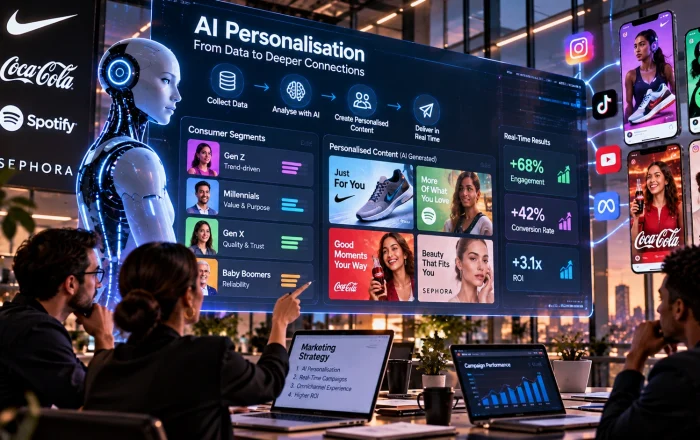
That approach reflects a broader shift within the advertising industry. Generative AI has moved quickly from experimentation into areas such as image creation, video production, campaign adaptation, audience analysis and content optimisation.
For agencies, one of the biggest opportunities is speed.
A campaign that once required weeks of work can potentially be adapted into multiple formats much more quickly. A single creative concept can be transformed into different social videos, product images, localised versions and platform-specific content without restarting the production process each time.
WPP’s own WPP Open platform claims that some creative and strategy development processes can be reduced from several weeks to hours, while AI-assisted workflows can significantly increase the amount of content teams are able to produce.
The London facility is designed to provide the physical infrastructure that supports those digital capabilities.
The rise of hyper-local advertising
Another important factor behind the investment is the changing way consumers discover brands.
Cindy Rose, WPP’s chief executive, has argued that clients increasingly need to reach consumers through hyper-local and community-led engagement. At the same time, brands need their content to be discoverable not only through traditional search engines and social platforms, but also through AI-powered services.
That creates a new challenge for advertisers.
Producing one global campaign is no longer necessarily enough. Brands may need different versions for different communities, cultural contexts and online environments. The amount of content required can therefore increase dramatically.
AI can help with the volume, but WPP is betting that technology alone will not be enough.
Devon’s Point is deliberately designed around a combination of automation and human production skills. WPP describes the model as bringing advanced technology together with creative craft, rather than replacing one with the other.
That distinction is becoming increasingly important as agencies try to convince clients that AI-generated content can be used without sacrificing quality, brand identity or cultural relevance.
A response to pressure on the advertising industry
The investment also comes at a challenging moment for WPP.
The advertising group is in the middle of a broader restructuring under Cindy Rose, who became chief executive in 2025. WPP has been attempting to simplify its structure, integrate its creative and production operations and increase the role of technology across the business.
The company has also been under pressure to improve growth while the advertising market undergoes a major technological transformation.
AI presents both an opportunity and a threat to traditional advertising agencies. On one side, it can make agencies more productive and allow them to offer clients faster and potentially more efficient services. On the other, the same technology allows brands to create more content internally and reduces the amount of specialised production work they may need to outsource.
WPP’s answer is to make AI part of its own service offering rather than treating it simply as a disruptive technology.
The company wants clients to see it as a partner capable of managing the entire chain, from creative strategy and production to media and technology.
The human role is not disappearing
Despite the focus on automation, WPP is continuing to emphasise human expertise.
Devon’s Point will also function as a training centre for graduates of WPP’s Creative Technology Apprenticeship programme. The company wants employees to develop skills that combine creative production with emerging technologies, including generative and agentic AI, immersive technology and robotics.
That reflects a wider reality in the advertising industry. AI can dramatically increase the amount of content that can be produced, but it does not automatically determine which ideas are worth producing, whether a campaign fits a brand or whether an image or message works within a particular cultural context.
Those decisions still require people.
For WPP, the competitive advantage may therefore come from combining AI’s ability to produce and adapt content at scale with experienced creative teams capable of deciding what should actually reach the audience.
WPP wants to take the model global
London is only the starting point.
WPP says Devon’s Point is the first facility in a planned global rollout covering the markets where WPP Production operates. The strategy is intended to give international clients access to similar production capabilities while retaining local creative expertise.
The underlying objective is straightforward: produce more content, more quickly, while keeping creative quality under control.
Whether that model delivers the commercial benefits WPP expects will depend on how effectively the company integrates its technology, people and client relationships. The advertising industry is already moving toward faster production cycles and increasingly personalised campaigns, but the cost, quality and effectiveness of AI-generated content remain closely watched by brands.
Devon’s Point is therefore more than a new studio. It is a test of how a major global advertising group can reorganise production around AI without losing the human creativity that still sits at the centre of the business.
If WPP succeeds, the London facility could become a template for a new generation of advertising production, where the boundary between agency, studio, technology platform and media operation becomes increasingly difficult to define.
Sources: WPP, Reuters, WPP Open, Financial Times