Luxury Hospitality Expands Into New Destinations as Travelers Seek More Personal Experiences
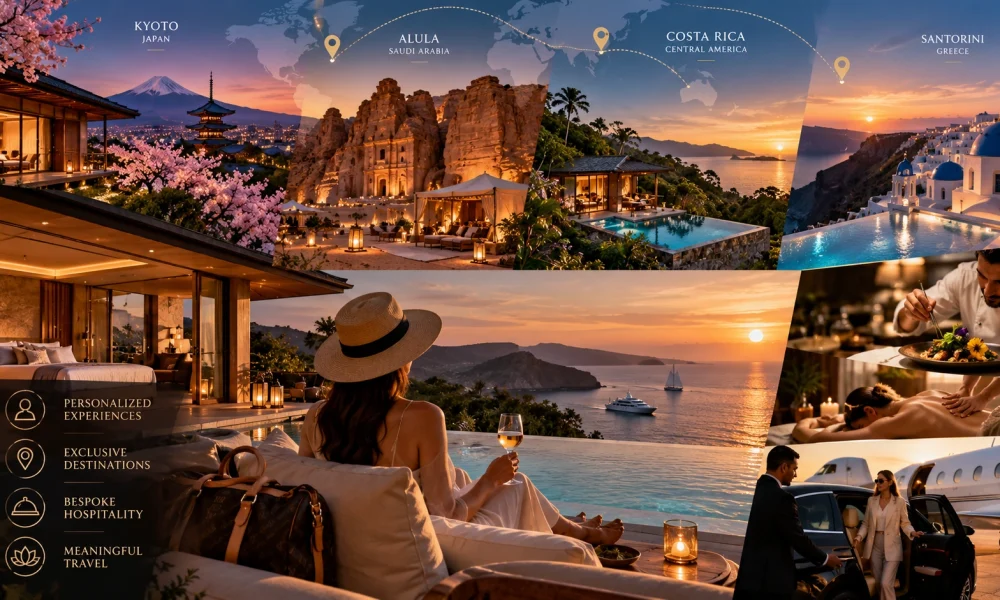
The global luxury hotel industry is expanding into a wider range of destinations as travelers increasingly look for experiences built around culture, nature and local identity rather than traditional five-star accommodation alone.
Preferred Hotels & Resorts has added 11 properties to its Legend Collection during 2026, taking the portfolio to 125 hotels worldwide. The new properties span Europe, North America, Asia, Africa and the Middle East.
The expansion reflects a wider transformation taking place across premium hospitality.
The destination is becoming part of the hotel
Luxury travelers increasingly expect hotels to offer a strong sense of place.
That can mean architecture connected to local history, food influenced by regional traditions, access to cultural experiences or wellness programmes designed around the surrounding environment.
Hotels are therefore becoming less interchangeable.
A luxury property in Morocco, for example, competes not only on room quality but also on how effectively it connects guests with the destination.
The same principle applies to resorts in Asia, Africa or emerging European destinations.
Smaller properties are gaining attention
The current luxury market is not exclusively dominated by enormous resorts.
Independent hotels and smaller properties are becoming increasingly attractive to travelers who want privacy and a more personalised experience.
That shift is particularly important for younger affluent consumers.
They may be willing to spend significantly on travel, but their priorities can differ from those of previous generations. Personalisation, design, sustainability and local experiences can be more important than conventional displays of luxury.
Wellness is moving beyond the spa
Wellness is another major part of the transformation.
Luxury hospitality companies are increasingly incorporating sleep programmes, fitness, nutrition, mental wellbeing and preventative health into their offers.
The change reflects a broader lifestyle trend in which travel is increasingly used as an opportunity to reset routines.
Hotels are responding by creating experiences that begin before arrival and continue after guests return home.
Digital consultations, personalised nutrition plans and fitness programmes can now become part of the stay.
Africa is becoming more visible
The expansion of luxury hospitality into African markets is also accelerating.
At the same time, new media platforms dedicated to African lifestyle, travel, culture and design are emerging.
Lifestyle Africa, launched this month as an extension of Lifestyle Asia, aims to cover travel, culture, design, food, fashion and entrepreneurship across African markets.
The development reflects a growing international interest in African creative and hospitality industries.
For travelers, it creates more opportunities to discover destinations through local cultural perspectives rather than through traditional luxury travel narratives.
Experience becomes the new measure of luxury
The luxury hotel sector is increasingly moving away from a simple focus on physical products.
Large rooms, expensive furniture and formal service remain important, but they are no longer enough to differentiate a property.
Travelers are looking for experiences that cannot easily be replicated.
That may be a private cultural tour, access to a remote landscape, a locally rooted restaurant or a wellness programme built around the destination.
A more diverse luxury map
The result is a luxury travel market that is becoming geographically broader.
Paris, London, New York and Dubai remain major destinations, but new properties are appearing in places where travelers can combine exclusivity with discovery.
For hotel companies, this creates opportunities but also higher expectations.
A new luxury property needs a strong identity from the moment it opens.
For travelers, the change means that luxury is becoming less about where a hotel ranks on a traditional star system and more about what the stay makes possible.