Ukraine Says It Received No Warning Before Russian Missile Strike on Kyiv as Doubts Grow Over Proposed Energy Truce
Ukraine has received no advance warning from its international partners about a Russian ballistic missile attack on Kyiv that struck civilian infrastructure, President Volodymyr Zelenskyy said on Tuesday, October 13. The statement came amid a renewed wave of Russian aerial attacks across Ukraine and growing uncertainty over a proposed energy truce announced by US President Donald Trump. Kyiv says Russian strikes on critical infrastructure have continued despite the announcement, while Moscow has yet to confirm that a formal agreement is in force. The developments underline the difficulty of translating diplomatic statements into arrangements that can be verified on the ground.
A missile attack raises questions about early warning
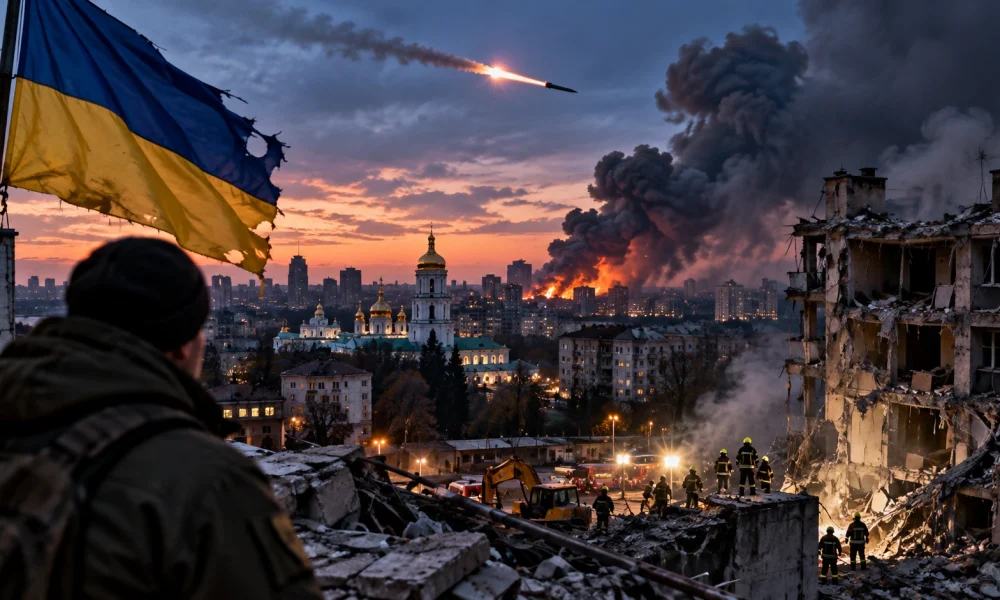
Zelenskyy said five Russian missiles hit civilian infrastructure in the Ukrainian capital. He stressed that advance intelligence from partner countries could help Ukrainian authorities prepare for incoming ballistic missile attacks and protect civilians.
Early warning is particularly important when dealing with ballistic missiles, which can travel at high speed and leave limited time for emergency responses. Even a short warning may allow people to reach shelters, emergency services to prepare and local authorities to issue public alerts.
The Ukrainian president did not assign responsibility for the absence of a warning. His comments nevertheless highlight the importance of intelligence-sharing between Ukraine and its international partners as Russia continues to rely on missiles and drones to strike cities and infrastructure.
The wider wave of attacks has also caused casualties elsewhere. Zelenskyy said Russian strikes had killed four people and wounded 41 in Kharkiv, where a residential building was hit. Other attacks were reported in the Kyiv, Lviv and Rivne regions. These figures reflect the situation reported on Tuesday and may change as rescue operations and damage assessments continue.
The energy truce remains uncertain
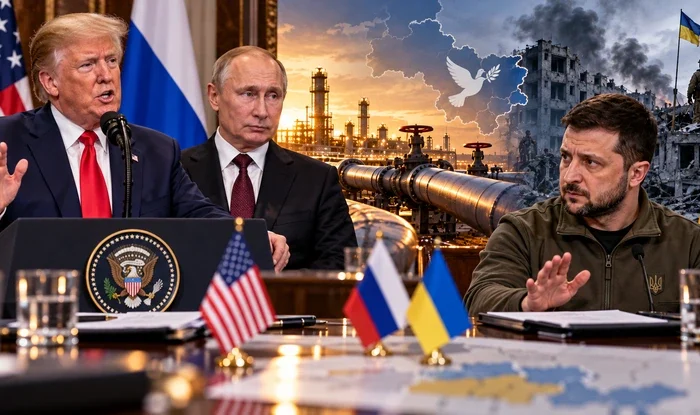
The attacks have also raised questions about the proposed energy ceasefire announced by Trump over the weekend. The US president said Russia and Ukraine had agreed to refrain from striking each other’s energy infrastructure.
However, the announcement has not been followed by a jointly confirmed set of terms. Kremlin spokesman Dmitry Peskov said on Tuesday that contacts on the matter were continuing, rather than confirming that a formal agreement had entered into force.
Zelenskyy said Ukraine had refrained from striking Russian oil refineries and other energy sites during the two days following Trump’s announcement. He accused Russia of continuing attacks on Ukrainian energy and critical infrastructure.
The Ukrainian claim that its own attacks had stopped could not be independently verified at the time of reporting. However, neither Russian officials nor Russian media had reported Ukrainian strikes on oil refineries since the announcement, according to the Associated Press.
The distinction matters because an announced truce is not necessarily an operational agreement. A functioning arrangement would require clarity over the facilities covered, the duration of the restrictions, how alleged violations would be investigated and how both sides would communicate during incidents.
Why energy infrastructure matters
Energy infrastructure has become a central part of the conflict because damage to power plants, distribution networks and fuel facilities can have consequences far beyond the immediate military situation.
For Ukrainian households, attacks on electricity and heating systems can disrupt daily life and increase pressure on public services as colder weather approaches. Hospitals, water systems, transport networks and businesses also depend on reliable energy supplies.
For Russia, attacks on oil refineries can affect fuel production and the operations of energy companies. A reciprocal halt to these attacks could therefore offer economic and humanitarian benefits, even without resolving the broader conflict.
But a limited energy truce would not amount to a general ceasefire. Fighting elsewhere could continue, and the agreement would need to be monitored to establish whether it was being respected.
The international diplomatic challenge
The latest developments put pressure on the diplomatic efforts led by Washington. The United States has sought to encourage steps that could reduce hostilities, but the lack of clear confirmation from both governments complicates the assessment of progress.
Ukraine’s partners also face questions about how intelligence-sharing can support civilian protection. Early warning is only one part of the response: air defences, shelter access, emergency services and resilient infrastructure all remain important.
For European governments, the continued attacks reinforce the connection between military security and energy security. Damage to infrastructure can create additional economic costs, increase reconstruction needs and complicate preparations for winter.
What happens next?
The key indicators will be whether Moscow and Kyiv confirm the terms of an energy truce, whether attacks on energy infrastructure decline and whether mechanisms emerge to verify compliance.
For now, the situation remains unsettled. Zelenskyy’s statement highlights both the immediate danger posed by continued missile attacks and the gap between diplomatic announcements and conditions on the ground.
Any agreement that reduces attacks on civilian infrastructure could represent a meaningful step. Its credibility, however, will depend on observable changes in military activity rather than statements alone.