Brands Face a New Marketing Challenge as AI Makes Personalisation Faster and More Powerful
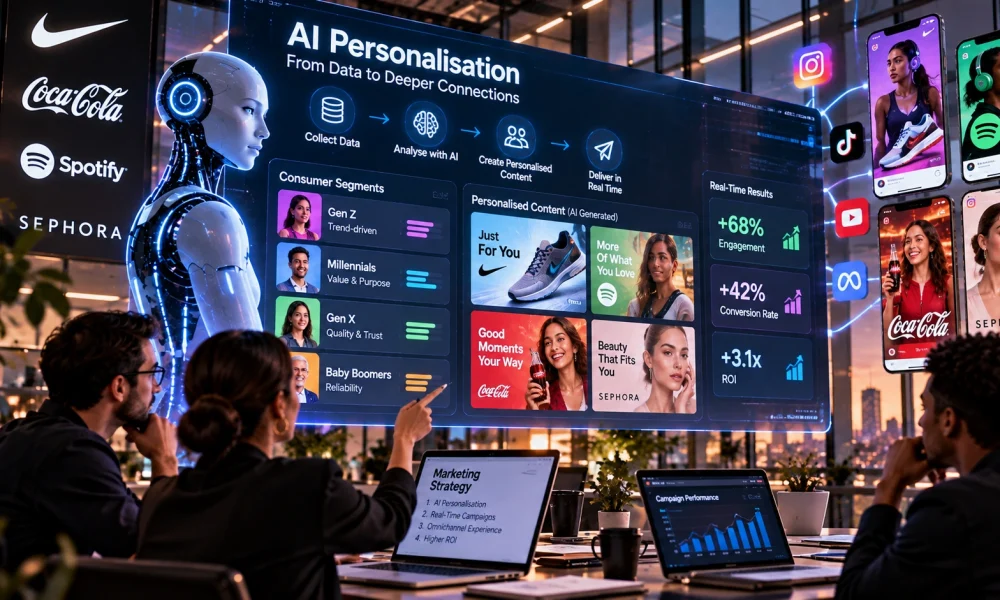
Artificial intelligence is changing how companies identify audiences, create campaigns and measure advertising performance. The latest phase of development is moving beyond automated content generation toward systems that can analyse information and recommend or execute marketing decisions.
For brands, the opportunity is significant. So is the responsibility to use customer data carefully.
From broad audiences to individual needs
Traditional advertising often groups consumers by age, location or general interests.
AI systems can combine more signals to estimate what a person may be looking for and when a message might be relevant.
In principle, this can reduce wasted advertising and help companies provide more useful information.
But personalisation depends on data quality. If the information is incomplete or misleading, a campaign can become less effective rather than more precise.
Privacy is becoming a competitive issue
Consumers are increasingly aware that digital services collect information about their activity.
Companies that use data without clear explanations risk losing trust, even if their advertising becomes more targeted.
Marketers need to understand which data they are permitted to use, how long it can be retained and whether customers can control its use.
Transparency can become a commercial advantage when consumers have a choice between competing services.
AI-generated content creates new risks
AI can produce many versions of an advertisement quickly.
This can help companies test headlines, images and messages across different audiences.
However, automated content can also contain errors, make unsupported claims or reproduce stereotypes present in its training data.
Brands need review processes to ensure that speed does not come at the expense of accuracy or reputation.
Measurement is changing
For years, digital marketing relied heavily on impressions, clicks and conversion rates.
These measures remain useful, but they do not always show whether advertising created lasting customer value.
Companies are increasingly interested in repeat purchases, customer retention and the long-term effect of a campaign.
AI can help analyse these patterns, although marketers still need to distinguish correlation from causation.
Human creativity remains important
Automation can help determine where a message should appear, but it cannot guarantee that the message itself is meaningful.
Strong campaigns still require an understanding of culture, language, emotion and context.
The most effective marketing teams are likely to combine AI tools with human judgement rather than treating automation as a substitute for strategy.
What businesses should prepare for
Companies need clear rules for AI use, data governance and approval of advertising claims.
They also need to measure whether automated campaigns improve real business outcomes rather than simply increasing activity.
The central challenge is not whether AI can make marketing faster. It already can.
The challenge is using that speed responsibly and ensuring that personalisation creates value for customers as well as advertisers.