VALORANT Champions Shanghai Enters Its Decisive Stage as Pressure Mounts on the Remaining Teams
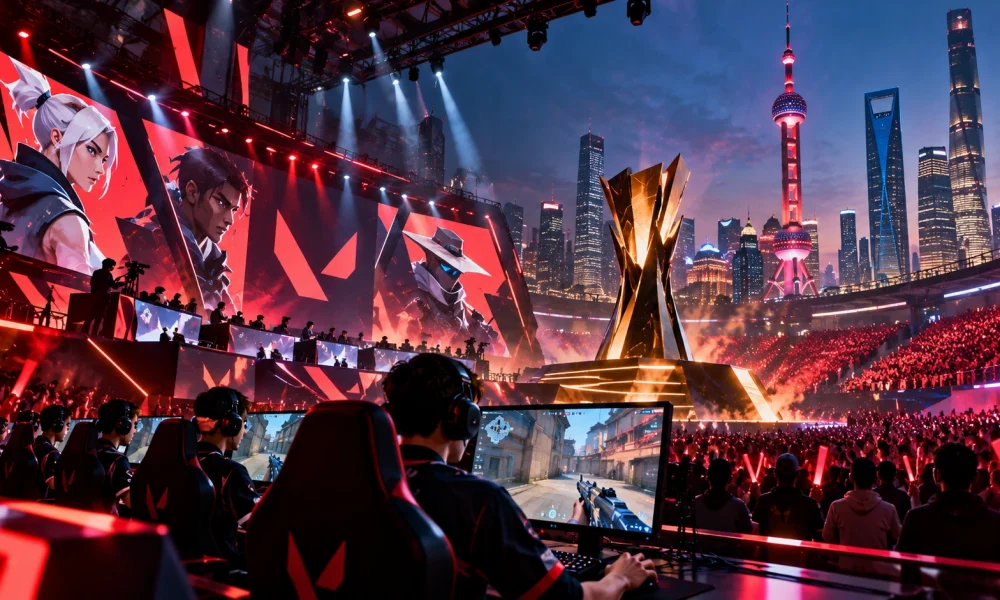
VALORANT Champions Shanghai has entered its knockout phase, with the tournament moving toward the point where the strongest teams of the season will fight for the world championship.
On October 8, G2 Esports defeated 100 Thieves 2-0 in the playoffs, while Team Vitality and Nongshim RedForce continued their battle through the upper bracket. The official tournament schedule shows that the competition runs from September 24 through October 18.
Why Champions Shanghai matters
VALORANT has become one of the most important competitive properties in esports.
Riot Games has built an international system around the game, connecting regional competitions with major global tournaments.
Champions represents the culmination of the season.
For teams, it is not simply a competition for a trophy.
It is an opportunity to confirm their international status, attract sponsors and build global communities.
The playoffs completely change the pressure
In the knockout stages, every series has a different level of risk.
Teams in the upper bracket have more room for mistakes, while those in the lower bracket must keep winning to remain in contention.
That structure creates matches in which strategy and pressure management become just as important as individual mechanics.
In modern esports, the difference between top teams can be extremely small.
A single lost round at the wrong moment can completely change the momentum of a map.
Asia remains a major centre for VALORANT
Shanghai is also an important location for the game’s global development.
China represents one of the world’s largest gaming and esports markets.
Hosting an international event of this scale gives Riot Games an opportunity to strengthen the local community and turn the competition into a truly global event.
For sponsors, it is a chance to reach a young, digital and international audience.
Esports is becoming increasingly professional
Top-level competitions have evolved significantly from the early generations of esports.
Teams now have technical staff, analysts, sports psychologists, data specialists and commercial departments.
Preparing for an international tournament can increasingly resemble preparation for a traditional sports competition.
The difference is that the game changes rapidly.
Patches, strategies and the competitive meta can alter the balance between teams in a very short period.
Audience size is no longer the only objective
Riot is also focused on developing the commercial ecosystem.
Tournaments need to support teams, players and leagues over the long term.
That means sponsorships, digital products, content, media rights and activations around competitions.
For the industry, Champions’ success is not measured only by viewership.
The ability to turn attention into a sustainable economic ecosystem also matters.
The final days will decide the season
With the final scheduled for October 18, the remaining teams have very little time to correct weaknesses.
At this stage, regular-season form matters less.
Execution under maximum pressure matters more.
Champions Shanghai is therefore more than an end-of-season tournament.
It is a demonstration of how esports continues to evolve into a global industry, with international competitions, commercial infrastructure and audiences that are no longer limited by national borders.