Higher Rates Continue to Reshape Global Housing Markets as Buyers Recalculate Affordability

Housing markets across major economies are facing renewed pressure as higher interest rates reduce purchasing power and make mortgage financing more expensive.
The effect is becoming particularly visible in Australia, the United States and the United Kingdom.
Australia sees weaker activity
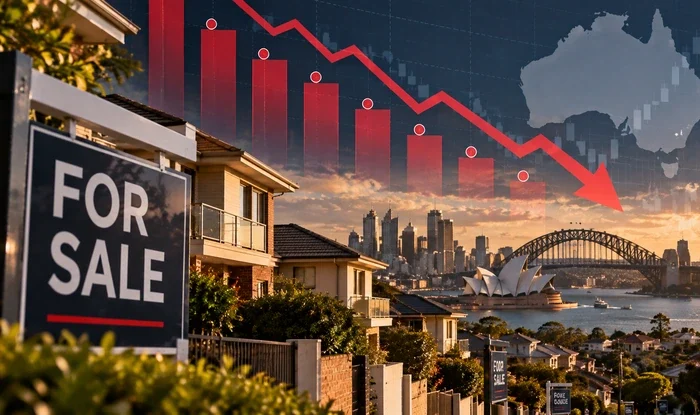
Melbourne’s property market is facing a new affordability challenge after the Reserve Bank of Australia raised its cash rate to 4.60%.
Auction volumes have fallen sharply, while buyers are reassessing how much they can afford to borrow.
Higher rates do not necessarily remove buyers from the market completely, but they reduce the amount many households can comfortably spend.
US buyers face expensive mortgages
American mortgage rates remain above the levels seen during the period of ultra-cheap borrowing.
Current 30-year fixed mortgage rates are around 7.4%, according to recent market data.
For buyers, the difference between a mortgage rate of 4% and one above 7% can dramatically change monthly payments.
That is keeping affordability at the centre of the US housing debate.
Housing supply remains important
Higher borrowing costs are only part of the story.
Many cities continue to face shortages of homes, particularly in desirable urban areas.
Limited supply can prevent prices from falling as much as affordability conditions might otherwise suggest.
This creates a complicated market in which buyers face high financing costs while sellers continue to benefit from restricted inventory.
New York focuses on affordable housing
New York City is also attempting to accelerate affordable housing development.
Local authorities are increasingly looking for ways to encourage construction and convert underused properties into housing.
The objective is to increase supply in a city where housing costs remain a major issue.
A market defined by affordability
The global property market is therefore becoming increasingly divided.
Owners who secured low mortgage rates are often reluctant to move, while new buyers face much higher financing costs.
That can reduce transaction volumes even when there is still strong underlying demand for housing.
The direction of interest rates will remain one of the most important factors for property markets during the final months of 2026.