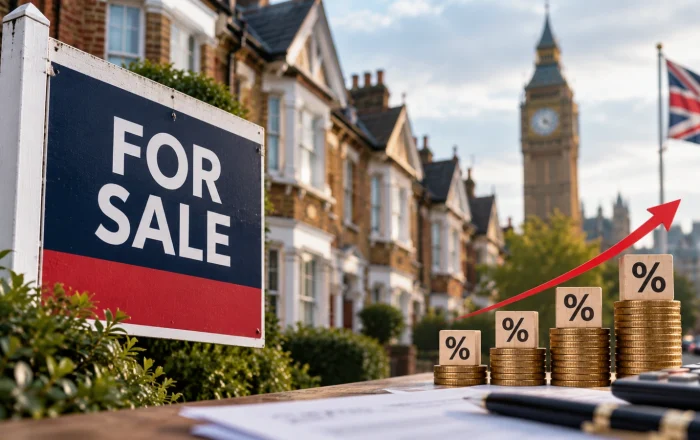
UK housing market shows signs of an autumn recovery, but buyers remain cautious.

The UK housing market is showing early signs of renewed activity after a subdued summer, with sellers raising their asking prices in September for the first time since May. The improvement, however, comes with an important caveat: buyers remain cautious, mortgage costs are still elevated and the number of properties available for sale has reached a 12-year high.
According to the latest data from property platform Rightmove, the average asking price of a newly listed home increased by 0.7% in September, adding £2,441 to reach £367,440.
It was the first monthly increase since May and slightly exceeded the average September rise recorded over the previous decade.
The numbers suggest that some confidence is returning to the market as the traditional autumn selling season begins. But the broader picture remains mixed. Asking prices are still 0.8% below their level a year earlier and 2.3% below where they stood at the beginning of the summer.
For the property industry, the latest figures point to a market that is becoming more active without yet entering a clear recovery phase.
More homes are coming to market
One of the most important features of the current UK housing market is the unusually large amount of property available to buyers.
Rightmove said the number of homes available for purchase has reached its highest level for this time of year in 12 years. That gives buyers more choice, but creates a tougher environment for sellers.
New listings were 3% lower than a year earlier, while the overall stock of properties already on the market remained unusually high.
The result is a market where sellers are competing for a relatively limited pool of potential buyers.
Buyer enquiries were 9% lower than at the same point last year, while agreed sales were also down by 9%. This suggests that the September increase in asking prices is not being driven by a comparable increase in completed market activity.
Instead, it appears to reflect a combination of seasonal factors and improved confidence among sellers returning to the market after the summer.
Rightmove property expert Colleen Babcock described the September increase as a sign of confidence after a particularly quiet summer, while also stressing that it should be viewed as a modest recovery rather than a major change in market conditions.
Mortgage costs remain a major obstacle
The biggest challenge for buyers continues to be affordability.
The average two-year fixed mortgage rate increased to 5.29% in September, up from 5.09% the previous month. Higher financing costs can have a direct effect on how much buyers are willing or able to spend, particularly among households that have limited room in their monthly budgets.
This is especially relevant for first-time buyers, who are generally more exposed to mortgage rates because they do not have equity from a previous property sale to contribute toward a new home.
For existing homeowners, higher rates can also influence decisions about moving. A household with a relatively cheap existing mortgage may be reluctant to sell and take on a significantly more expensive loan for a new property.
That dynamic can reduce turnover even when there is a large amount of housing available.
The result is an unusual combination of high supply and relatively weak demand. Buyers have more options, but the cost of financing those purchases remains a significant constraint.
London remains under greater pressure
The national figures also hide substantial regional differences.
Rightmove’s data shows that the probability of a property finding a buyer varies considerably across Great Britain. Around 61% of homes listed for sale successfully find a buyer, but the figure rises to about 91% in Scotland.
London is at the other end of the spectrum, with only around 42% of homes finding a buyer.
The difference illustrates how important local market conditions remain.
London has some of the UK’s highest property prices, meaning affordability is particularly sensitive to mortgage costs. Sellers in the capital are also competing with a large amount of existing stock.
As a result, simply putting a property on the market at a high asking price does not guarantee that buyers will engage.
Rightmove’s data suggests that accurate initial pricing is increasingly important. Properties that enter the market at a realistic price have a better chance of attracting attention before they become stale listings.
Asking prices are not the same as completed sale prices
The September figures also need to be interpreted carefully.
Rightmove measures the prices sellers are asking for newly listed properties. It does not measure the final prices at which homes are actually sold.
That distinction matters because asking prices can change during negotiations. A seller may initially list a property at a particular price but later reduce it if buyers show limited interest.
Official UK house price data, based on completed transactions, tends to move more slowly because it requires completed sales to be recorded.
The latest Land Registry data available for 2026 showed a different picture, with average UK house prices still recording annual growth. That means the Rightmove figures should primarily be viewed as an indicator of current seller expectations and market sentiment rather than a definitive measure of the value of every UK home.
For investors, estate agents and potential buyers, the combination of different indicators is therefore more useful than relying on a single monthly figure.
Buyers have more negotiating power
The high level of housing supply is potentially good news for buyers.
With more properties competing for attention, buyers can compare homes more easily and may have greater scope to negotiate, particularly when a property has been on the market for an extended period.
This could also put pressure on sellers who entered the market expecting prices to continue rising rapidly.
The current environment is therefore different from the periods of intense competition seen during parts of the pandemic-era housing boom, when limited supply and strong demand pushed prices higher.
Today, the balance is more complicated.
There are plenty of properties available, but fewer buyers are actively making enquiries. At the same time, borrowing remains expensive.
That combination means sellers need to be realistic about pricing if they want to complete a transaction within a reasonable timeframe.
What happens next could depend on interest rates
The direction of mortgage rates will remain one of the most important factors for the UK property market over the coming months.
If borrowing costs begin to decline, affordability could gradually improve and encourage more buyers who have been waiting on the sidelines to enter the market.
Lower mortgage rates could also encourage existing homeowners to move, increasing the number of transactions and potentially improving liquidity across the market.
If rates remain elevated, however, the recovery could remain slow even if seasonal activity continues to improve.
The housing market is also being affected by broader economic conditions, including household income growth, employment expectations and the cost of living.
For many consumers, buying a home remains one of the largest financial decisions they will make. Even a relatively small change in mortgage costs can significantly alter the affordability calculation.
An autumn recovery, but not a boom
September’s 0.7% increase in asking prices provides evidence that the UK housing market is regaining some momentum after a weak summer.
But the rest of the data shows why the improvement should be treated cautiously.
Prices remain below last year’s level, buyer enquiries are weaker, sales agreed are down and the amount of available housing is unusually high. Mortgage rates have also moved higher rather than lower.
For buyers, the current market offers greater choice and potentially more negotiating power. For sellers, it is a reminder that pricing and presentation remain critical.
The coming months will show whether September’s increase develops into a sustained recovery or remains a seasonal improvement.
For now, the UK housing market appears to be moving into autumn with somewhat greater confidence, but still under pressure from affordability and an unusually competitive supply environment.
Sources: Rightmove, Reuters, UK Land Registry, Which?