League of Legends Worlds 2026 Moves Into the Spotlight as the Global Season Reaches Its Peak
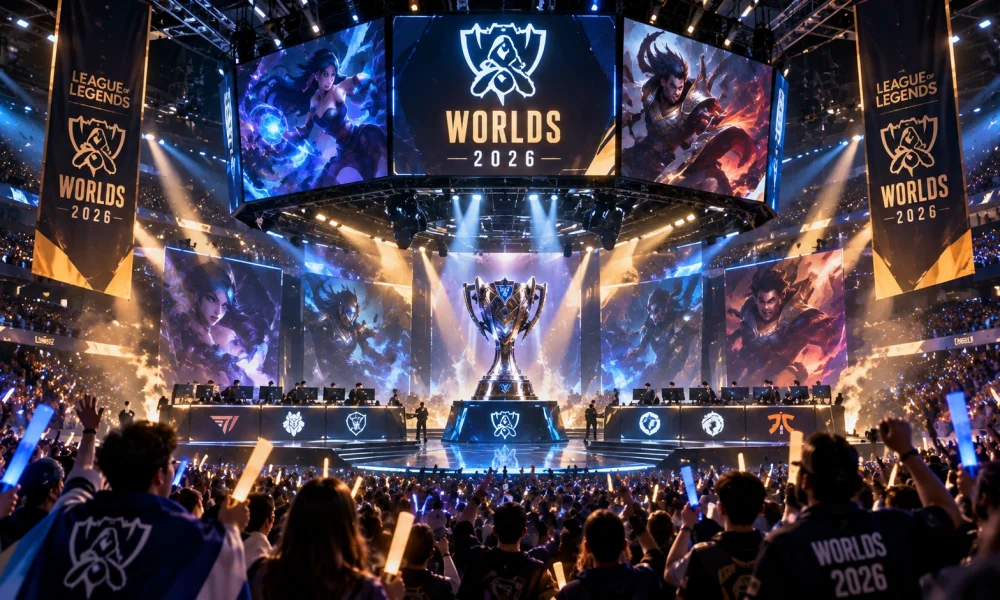
The League of Legends World Championship is entering its decisive period, bringing together the strongest teams from around the world for the most important tournament on the game’s annual competitive calendar.
Riot Games has published its 2026 Worlds primer as teams and fans prepare for the global championship, which represents the culmination of the professional League of Legends season.
For esports, Worlds is more than another tournament.
It is one of the industry’s largest annual events, combining competitive gaming with a global entertainment product that attracts audiences far beyond the core player community.
The world’s strongest teams meet
League of Legends has developed one of the most structured competitive ecosystems in esports.
Professional leagues operate across major regions, including China, South Korea, Europe and North America, while additional international competitions provide opportunities for teams from emerging regions.
Worlds brings those ecosystems together.
The result is a tournament in which regional styles collide.
Korean teams have traditionally been associated with disciplined macro play.
Chinese teams have often developed highly aggressive approaches.
European and North American teams bring their own strategic identities.
The tournament therefore becomes a test not only of individual skill but also of different competitive cultures.
The importance of preparation
League of Legends is a game in which strategy can change rapidly.
A team can dominate its domestic league and struggle internationally because opponents understand its preferred tactics.
Worlds preparation therefore involves extensive analysis.
Coaches study previous matches.
Players practise specific strategies.
Teams develop alternative approaches in case opponents ban their preferred champions.
The ability to adapt during the tournament can be as important as mechanical skill.
The business behind the championship
Worlds is also a major commercial event.
The tournament attracts sponsors, advertisers and media partners because it reaches a global audience that is difficult to access through traditional sports.
The demographic is particularly valuable for technology companies, gaming brands and consumer businesses seeking younger audiences.
Riot Games has built Worlds into a major entertainment property through opening ceremonies, music collaborations and digital content.
That model has influenced the wider esports industry.
Esports is becoming more mainstream
The biggest challenge for esports has historically been turning online audiences into a stable commercial ecosystem.
Worlds demonstrates how far the industry has progressed.
Major arenas are filled with fans.
International brands invest in sponsorships.
Professional organisations operate teams across multiple games.
Players have become recognisable figures within gaming culture.
Competition for attention is increasing
However, esports is also becoming more competitive internally.
VALORANT, Counter-Strike, Dota 2 and mobile esports all have large international audiences.
Tournament organisers must therefore compete for viewers.
Scheduling has become increasingly important.
A major event taking place at the same time as another championship can divide audiences.
This makes Worlds’ position on the calendar particularly valuable.
The future depends on regional balance
Another important issue is maintaining meaningful global competition.
If one or two regions consistently dominate, international tournaments can become less unpredictable.
Riot Games therefore has an interest in developing competitive ecosystems across multiple regions.
The growth of international competition also gives younger players more opportunities to enter the professional scene.
Worlds represents the maturity of the esport
The 2026 championship arrives at a moment when League of Legends is no longer simply a popular video game.
It is a global sport with professional leagues, international tournaments, dedicated venues, media partnerships and commercial infrastructure.
The tournament’s importance therefore extends beyond the final result.
It is a showcase for how competitive gaming can operate at global scale.
For teams, the objective is to win the world championship.
For Riot Games, the objective is to demonstrate that League of Legends remains one of the world’s most powerful esports properties.
For the wider industry, Worlds provides another measure of whether esports can continue converting enormous digital audiences into sustainable long-term businesses.